Showing posts with label Villette. Show all posts

Monday, August 3, 2015

Daily Dose


From Villette, by Charlotte Bronte

OPPUGNANT

"He was much taken up with scientific interests; keen, intent, and somewhat oppugnant in what concerned his favorite pursuits, but unsuspicious and trustful in the ordinary affairs of life."

From Chapter XXVI, A Burial

Friday, October 24, 2014

Daily Dose


From Villette, by Charlotte Bronte

I WISH

"I wish I could have spoken with calm and dignity, or I wish my sense had sufficed to make me hold my tongue; that traitor tongue tripped, faltered."

From Chapter XXXV Fraternity

Tuesday, April 14, 2009

Random Reading

"What are the books at your bedside?"

It's a common question. I've asked it myself, for want of a better. It's meant, among the bookish, to do the work of a "Cosmo" quiz, a "personality profile," or "a line" in a bar. The books at one's bedside tend to be treasures, as well as what's actually meant to be read on any given night; not just the evening's refreshment, but the leaves left at the bottom for telling.

Lazy bugger that I am, after being off work already three days, I've only just today addressed the mountain of laundry threatening to overwhelm us. I've run the dishwasher and put out the trash, (sorted now ever more carefully, due to new rules, so that shrimp tails and banana skins must have their own kitchen bin.) I've opened windows and aired the bedroom for the first time this Spring, despite the persistent chill. (This last must be done before A. comes home from his job, as he will otherwise "freeze to death!" and we wouldn't want that.) My morning looked to be productive. But I made a misstep. My sainted mother taught me never to make a trip upstairs or down with empty hands, so, having put away a load of blankets, and finding myself in just such a condition, I made the mistake of clearing some books off my nightstand to return them to my library.

This sort of thing may only be done properly when one is expecting guests, when one, in other words, is motivated by altruism or shame, or when one has a serious need of cash. To flippantly lift books from a stack so long undisturbed, unleashes not just sneeze-inducing dust, but a dangerous, long-dormant curiosity. As I'm already reading, when I ought not, a novel in verse by Arthur Hugh Clough, it isn't wise to be reminded that I am already reading Adam Bede. What besides?

That's the thing about bedside reading, at least at my bedside, there is always more of it than there are hours in the evening. Unlike daylight reading, which might more properly be done on the bus, or at lunch, or dinner, when one ought to be working (ahem,) or just come home, books to be read in bed tend to two general categories: 1) books to be continued and 2) books to be thumbed. It is the latter that tend to crowd. Like most readers of novels, I pick them up and put them down and carry them around with me, always intending to finish one before I start another. This almost never happens, of course. Working in a bookstore makes such sustained interest all but impossible. Too many new books, too many choices, good and bad, for any one book to hold me at full length. And yet, I still intend to finish Villette, if it kills me. I have no issue though with running Charlotte Bronte and George Eliot in tandem. In addition to these, there are the reader's copies, delivered by mail, to be considered by me, as a member of a prize committee. Were these not added to my nightstand, I might never remember to so much as look at the damned things. But it is the books to be thumbed, as I've said, that really mount up over time. It is the biographies and histories, the books with pictures, the anthologies of essays and poetry, of criticism and reminiscence, that tend to be considered one night, or at most two, before my eye falls elsewhere and I'm distracted. Rebecca West's 1900, while purchased who knows how long ago, is perhaps the best example of just such a book. I've browsed it with pleasure. Wouldn't know it, from the inch of dust on it now. How long has it been down there, at the bottom of the bottom stack, placed there for reasons of weight and size rather than disinterest. No idea.

Then there are my more constant companions: the last volume of Charles Lamb's letters and Montaigne's essays, which almost never leave. The idea of neither gentleman being near at hand, should I feel the need of them, makes me no little anxious, so that even when I come to clean properly some day, these two books at least will be put back promptly after dusting, where they belong, and so form the base, as it were, for future construction.

But having disturbed the established order, having carried a stack, one solitary pile, only so far as the floor of this room, before falling to and spending no less than an hour reviewing, reading and remembering why I wanted to have Andre Gide's company one night two months ago -- anticipating a possible choice for the book club -- I quite forgot the laundry and the research I'd started. I've only just heard the dryer shut off. And now it's time for lunch, and a few pages more of Clough. I made a note last night of a very early passage from Amours de Voyage, wherein an Englishman abroad detailed his disappointment in Rome. The passage, in part, now seems perfectly apt for the present and usual state of my books, and my place in the muddle:

"Somehow a tyrannous sense of a superincumbent oppression
Still, wherever I go, accompanies ever, and makes me
Feel like a tree (shall I say?) buried under a ruin of brickwork."

But then, I built my own ruin in books, and I'm frankly as happy in it as I am ever likely to be. "Superincumbent oppression" it may be, but easy to carry, one brick at a time.

And now, I really must fold underwear and make a sandwich or something. (Why am I suddenly hungry?) Claude, in Canto Two, was crowing "Victory! Victory! -- Yes!" at the barricades when I left him last night on the nightstand. Now then, where did I put Amours de Voyage?

Monday, March 2, 2009

A Task Renewed

(Pictured right: Melvil Dewey, creator of the Dewey Decimal System)

Tonight I cleared a few books from my nightstand, after months of neglect, motivated not, I hasten to add, by any sudden urge to tidy -- I easily resist all such urges -- but because I was looking for a particular book that I did not ultimately find. (No idea where it is.) The book I was hunting is easily replaced, but as it is required that I read it before a certain date none too far off, I am anxious. I do not resent the obligation, which is a happy one, but I do resent being made to shift for the damned thing at this late date when I knew to a certainty just where it was, waiting until called for, in exactly the spot it no longer occupies. Now as no one but me so much as dusts the books on my nightstand, and as I obviously do that rarely enough, there is, as usual, no one to blame but myself for having misremembered its location and or misplaced it the Devil knows where. One might justly assume I am embarrassed, but my actual emotion is, having hauled away a considerable weight of reading in looking for the one book I ought to read tonight, anger, and not so much at myself, but at the book. It seems frankly willful of it not to be where I expected it to be and to be, after half an hour's search, seemingly nowhere at all. It is as if the book, knowing it is wanted for no better reason, looked for with no kinder purpose than to be found and quickly got through, has suffered an injury to its pride and being hurt and spiteful, chooses to ignore me and not be found. Such petulance in a paperback for a book club is maddening! Damned impudent little thing, where the Hell are you?!

When I want a book for purposes of my own, I tend to seek it out with less obvious exasperation, even something like a propitiatory diffidence, as if, in expressing the genuineness of my desire at that moment for that book, I might coax it from hiding with something like a lover's sigh. And should that sigh prove fruitless, I am not above prayer, in which I disbelieve entirely. Calling on the assistance of the supernatural; the author's ghost, or even a God temporarily recalled from incredulity to aid me, I am shameless; temporarily disordered, heartsick, reduced to superstition, sudden, unreasonable, aching need, and resigned at last to trust to love, luck and juju. (When my husband hears me, disconsolately shuffling from room to room and through the piles of books here and there and there, calling, "where are you?" dear A. now assumes, from decades of experience, that it is a book rather than the consolation of his company I seek, so that even when I am searching the house for him, his trained response is, "Lost your book?")

I agreed to something just last year, another, less happy obligation, which I will not see the end of for two years yet. I am on a committee. There was a time, when I was younger and my enthusiasm for participating more fully in life had yet to be blunted by the experience of committees, when I took up such work as a compliment. I am all too easily flattered into doing. It is, I suspect, a reflexive fault, learned in childhood from kind, hardworking and credulous parents. Give me a task and I will earn your trust and goodwill by lifting, fetching, making. As an adult, I eventually learned to draw the line at committees. My experience of them has shown me the sense of the old saw that says a camel is a horse designed by committee and that committees are bodies that take a week to do what a sensible man could do in a day. And yet, one flattering invitation, received at second hand, and after how many others might sensibly have rejected it I do not know, and I am again on a committee. This committee, having to do with books, would seem more suited to my peculiar talents than those that ruined most politics and charities for me in the past, but all committees are as alike as black cats in the dark: people of disparate opinions and experience, well-meaning to a man and woman, gathered together for a singular purpose, and disinclined to achieve it in anything like a timely way. I can say this because I am among the worst committeemen of the type just described. My only responsibility being to accept the generosity of publishers, read the books proffered and state my opinion, I find I read anything rather than pick up a book I received for such a noble purpose as to be considered for a prize. I leave these books at any whim, to read books I must borrow, or buy, books that might indeed be less likely to interest me for more than a moment, because I prefer my own fancy to doing a job, however flattered I was to be asked.

" A man ought to read as inclination leads him; for what he reads as a task will do him little good." said Dr. Johnson. I do not know that he was, in this instance, right. The books I eventually read for the committee I joined were occasionally quite bad. From these I was reminded of how little that is published need be sold and might be better served by being privately, or more discretely offered for the delectation of friends and family (or the readers of blogs, yes?) And from the best of what I finally made myself by way of obligation read, I learned a great deal on subjects in which I would otherwise never have bothered to interest myself; from boats and fishing to conservation and geology and local history. It has been, looking back, a very satisfying, and educational experience. I am flattered, still, to have been asked to serve, and grateful for the opportunity to read so much that proved to be so good.

But now the books for consideration by the committee are coming in again. They arrive weekly, and will soon start coming almost daily, and when they come, they will be added to the piles by my bed. And as these books, however worthy, mount up unread, the chances of finding any book I might stubbornly prefer to read on any given night, like tonight, will eventually be buried yet further down, under all that burden of... obligation.

Just here I meant to insert a very apt quote from W. D. Howells, but I can not find the book. I know it was sitting on my dictionary stand, I'm quite sure I marked the passage with a slip of yellow paper. Why can't I find it now?!

And so to bed and Villette, if I can find it. Damn.

Wednesday, February 18, 2009

Friends of Friends


Reading Charlotte Bronte's Villette, I am reminded just how important it can be to have friends. I know, to anyone who has read Bronte, how trite that must sound; was there ever a woman more solitary than Charlotte by the time she wrote her last novel? mother long dead, brother, sisters all dead, romantic attachments dead, all but the last (if so her brief marriage can even be described,) with only her irascible, eccentric old father, dining alone, just across the hall in that horrid cold stone house. Villette is the story of a profound loneliness. But even poor Charlotte had friends. A life-long friend from childhood, and not her only such, kept her letters, or we would know so much less than we do. And Miss Bronte was the author of the famous Jane Eyre, and was well known to be, by the time her last novel was written. Must not forget, she was famous. She'd conquered London, after a fashion; Thackeray, George Eliot, all the great lions knew the little miss from the moors. But where Charlotte Bronte was luckiest, literally, was in having made a friend of Mrs. Elizabeth Gaskell.

Gaskell was, in many ways, exactly the woman Bronte was not; happily married, the mother of a brood, like Bronte, a novelist of great talent, but also a novelist of great social relevance -- something Bronte envied but knew herself not to be. They met through a mutual friend, only five years before Bronte's death at 39. Gaskell was curious, warm hearted, companionable. Bronte was uncharacteristically forthcoming. They were genuine friends from that moment. Gaskell even went to stay at the forbidding Haworth, twice or more.

And Charlotte Bronte's father, amazingly, asked Mrs. Gaskell to write his daughter's biography. It was a request that proved to be troublesome to all parties, but very fortuitous for readers. Mrs. Gaskell wrote a great book.

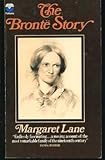
But there are other friends -- other friends of mine, met in books --that I meant in the title of this brief entry. Margaret Lane, the Dowager Countess of Huntingdon (no less) was a 20th Century novelist, traveler and, most significantly, a great biographer. Her two books on Beatrix Potter, The Tale of Beatrix Potter: a Biography(1946,) and The Magic Years of Beatrix Potter (1978,) are perfect little books. I love those books. Her Samuel Johnson and His World (1975,) is among the best modern books on Johnson that I ever read. And I have now The Bronte Story, by Margaret Lane, with charming and accomplished illustrations by Joan Hassall, from 1953, my copy a third reprint from 1961. What this book does that is proving such a boon to me, now reading Charlotte Bronte somewhat reluctantly again, is take Mrs. Gaskell's great biography, and interlace modern scholarship into it, in Margaret Lane's equally accomplished and accessible style, while relying on Mrs. Gaskell's original to tell what she told better than any since. It is a surprisingly humble, even reverent, and laudable undertaking, that honors both 19th Century authors, and by so doing, makes Lane's book that most unusual of literary associations, quite literally, a friend to the friend of the author. Lane's biography is as much the story of Mrs. Gaskell's book as it is a version of Mrs. Gaskell's book. It is a wonderful thing to read. It is the perfect help for me reading Bronte.

How many such friends of friends are likely to be found in literature? The inclination of modern biography, perhaps of all biography, no matter how famous any previous biography may have been or might still be, is to acknowledge quickly, seldom uncritically, and then dismiss. Margaret Lane can be critical of Mrs. Gaskell, but she is never dismissive. I can think of few other examples in all the many years of my reading, and none better or more deferentially accomplished.

(So, just to close with a familiar lament, why isn't Margaret Lane in print?! For once I may have an answer. Imagine being a contemporary biographer of Beatrix Potter and doing for Miss Lane's Miss Potter what Miss Lane did for Mrs. Gaskell's Miss Bronte. Hard to imagine, ain't it? Moreover, Lane's style is from another era of biography: gentle, charming, concise, enthusiastic, and never meant to be any of the things most highly prized by contemporary scholars and publishers: bloated, verbose, censorious, superior, unintelligible and or mean. No. It is no wonder at all dear Margaret Lane couldn't even get a reissue when the makers of the movie decided, presumable because Renée Zellweger looks rather like Peter Rabbit's mother, but is a "serious," Oscar winning actress indeed, to associate their production with a newer, bigger, darker and considerably less accomplished if more important looking book. I wondered, watching that movie, if anyone other than the designers of the sets and costumes actually read a word of even Jemima Puddleduck, let alone Margaret Lane.)

Tuesday, February 17, 2009

A Shrug


Charlotte Bronte makes me crazy. I know from Mrs. Gaskell's biography, with it's many letters, what a brilliant woman she was; resourceful, compassionate, supremely intelligent, a good sister and daughter, a true friend and a great and dedicated artist. I know from my many attempts to read Jane Eyre what a remarkable writer she was. But I can not like Jane Eyre, not because of her circumstances and suffering -- what great heroine does not suffer? -- but because her forbearance, her resourcefulness, her intelligence and fortitude, her character, in short, is so balefully, insufferably admirable as to be exhausting. Reading Jane Eyre is like watching someone being made to swim the English Channel alone, in mid-winter, at night, in boots. Charlotte Bronte drives me crazy because she put her there, laced her boots on, and then felt compelled to constantly call to my attention the frigid temperature, the moonless night, the solitude of the sea, the uncomplaining girl in the water.

Reading Villette, I am encouraged to find Lucy Snowe already wrecked. This is a survivor's story, told in seemingly pretty bitter retrospect. Clearly, things did not go well, and this time I've only to be told how, if never quite why. Good. I can respect a bit of furious obfuscation in an entirely less agreeable old body, reflecting on her unhappy youth. And if there is still a creeping simper, the reflexive romantic twinge or two, I can, here, it seems, trust that that will all be knocked out of poor Lucy by the time she comes to the end of her telling. Because just when I begin to think I'm doomed to spend another eternity sitting with the poor benighted creature, feverish and alone in an empty boarding school, pining for life, but afraid to go for a walk in the park, Lucy gets to go to an exhibition and describe the main attraction in the picture gallery thus:

"It represents a woman, considerably larger, I thought, than the life. I calculated that this lady, put into a scale of magnitude suitable for the reception of a commodity of bulk, would infallibly turn from fourteen to sixteen stone. She was, indeed, extremely well fed: very much butcher's meat -- to say nothing of bread, vegetables, and liquids -- must she have consumed to attain that breadth and height, that wealth of muscle, that affluence of flesh. She lay half-reclined on a couch: why, it would be difficult to say; broad daylight blazed round her; she appeared in hearty health, strong enough to do the work of two plain cooks; she could not plead a weak spine; she ought to have been standing, or at least sitting bolt upright. She had no business to lounge away the noon on a sofa. She ought likewise to have worn decent garments; a gown covering her properly, which was not the case: out of abundance of material -- seven and twenty yards, I should say, of drapery -- she managed to make inefficient raiment. Then, for the wretched untidiness surrounding her, there could be no excuse. Pots and pans -- perhaps I ought to say vases and goblets -- were rolled here and there on the foreground; a perfect rubbish of flowers was mixed among them, and an absurd and disorderly mass of curtain upholstery, smothered the couch and cumbered the floor. On referring to the catalogue, I found that this notable production bore name 'Cleopatra.'"

How hilarious is that?! And how marvelous that Charlotte Bronte's Lucy could tell that of herself without apologizing either for her youthful Philistinism or her opinion? Jane Eyre, caught out a moment later by a man, would have blushed. Lucy Snowe shrugs. I am so thankful for that shrug. So on I go.

Thursday, February 12, 2009

High & Low, or My Ever Rising Temperature and My Ever Shifting Brow


With the exception of two cocks no hen, ours is a shockingly typical American home. We eat together less often than we might, we cook less than we ought, we are happiest at home, and we watch reality TV. A little embarrassed by the first two, a little self-satisfied, after 25 years together, about the third, and forthrightly unashamed of the last fact stated. Reality TV is bad, except when it is good. It is fake, perhaps even when it is real, but feels real while being watched. I like the democratic free-for-all of it; the inclusion of the invariable gay, the diversity of race and background, the regular presence of the older, the middle aged, the beautiful young. I like the competition shows on Bravo, even though I don't give a damn about fashion, or modeling, or even really cooking to the standards of "Top Chef," though I'd thrill to eat that well. We watch all together too much of the cooking and eating and travel on the Food Network and the Travel Channel. I like the rough, low-brow sociology of "Survivor" and the browless voyeurism of "Big Brother." Hell, we giggle at average people bouncing off enormous rubber balls on "Wipeout."

If our favorite shows are still the best written television dramas, now largely migrating to cable, our habits are trending toward the cheap and silly business of watching drag queens make outfits from junk purchased at The Dollar Store. I see no reason to defend this, I will even concede that our viewing behavior may be indefensible. Yes, our interest is entirely passive. No, we are not inspired by "The Amazing Race" to run around the world together. Yes, we may be responsible in some small part for contributing to the decline of network television into something almost unrecognizably common and dumb. So be it. I pay my ridiculous cable bill the day it arrives every month. I still watch every god damned BBC adaptation of Jane Eyre they run on PBS, but I'm not going to pretend that, most nights, I'm anything other than part of the happy herd, hoping one of the new boys on some two dollar competition finds a reason to take his shirt off, and maybe his pants if we're really lucky, and run up a sand dune or jump into a crocodile-infested lagoon and - then -walk - out - wet - in - slow - motion.

So being home sick with The Cold that is making my poor store manager, who does all the scheduling, gray before her time, (so sorry, P.) I will admit I have nothing planned beyond smoking less so as not to bring up an actual lung, eating canned tomato soup with saltines, and watching trash. Hell, I might catch "Jeopardy" this evening.

But the idea that I wouldn't also be reading whenever I'm awake is absurd. It's what I do, even with the TV on. Should be taken as given. Poor A., in addition to having me home sick and unwashed and cranky, must also explain to me what I miss by not looking up at the shows we're supposedly watching together, because I want to finish a chapter at the same time in the new Adam Gopnik on Lincoln and Darwin. (It's real good, real good, so far.) Even watching the two hours of the PBS Henry Louis Gates Jr. on Lincoln my lover thoughtfully taped for me last night while I was at work, I had to be reading Villette 'cause I haven't had the chance for a week or more. Television, good and bad, is fun, but books are what I do.

Dear A. knows this about me. He's learned to tolerate my enthusiasm for books intruding into every aspect of our lives together. He's eaten burned food, because I was reading, he's missed movie show times because I couldn't put a book down. Maybe the reason we never go dancing has less to do with my impaired rhythm than his fear I'd prop a book on his shoulder and let him lead so I could read. Maybe this is why we aren't racing around the world. (That, and all the pork he cooks so well.)

When single friends envy me my contented marriage, I almost -- almost -- wish they could see what it must cost my husband. Want someone to love forever? Be carefully, because you might get me.

"What?! What happened? (cough) No, I wasn't listening. Oh. (cough) Did you know Darwin delayed publication of his book because he loved his very religious (cough) wife and worried she's be made unhappy by it? This soup is good, I can taste it. Thanks, baby. What?! What happened?!! (cough)"

I am one lucky lazy sick queen.

Tuesday, January 27, 2009

A Break from Bronte


Having got Miss Lucy Snowe to Villette, and no further, I've paused to take up another book. Such is the way of things when one works in a bookstore. I have learned to allow for this. It explains the state of my nightstand and why, when reaching each morning to turn off my alarm-clock and retrieve my glasses, my hand must snake between stacks -- some already dusty with neglect. Distractions, from any book, however good, are among the chief benefits of my present employment.

Today's distraction was the kind of book I will never be able to resist. The pull-quote writ large across the back is as follows:

"Bette Davis. That's who I'm like. Did You notice? Everybody says so."

Yes, I am that queen. Mention Bette Davis and I am all attention. But there has been much written about Miss Davis that is worth no more time than it takes to turn the book over and read the title.

But this book had me as soon as I did. Lola's Luck: My Life Among the California Gypsies, by Carol Miller, from the new GemmaMedia. Nothing to do with Miss Davis, you see, but I have other spots that are soft. From the day I read George Borrow's The Romany Rye, I have been hooked by any reference to the Roma. Jan Yoors' The Heroic Present: Life Among the Gypsies, Bury Me Standing: The Gypsies and Their Journey, by Isabel Fonseca and others, have all put their spell on me before. I took Miller's new book with me to lunch, read the first forty pages, and will now, I think, have to read the rest before I so much as acknowledge Miss Lucy Snowe's presence in the nightstand stack again.

Carol Miller, I read, is an anthropologist, living here in Seattle. She worked with the Machvaia Roma of California. She knew these people, studied them for years. She became a friend to the woman, quoted and pictured above who, as you see, looked nothing like Bette Davis, but I begin to suspect, had every right to claim that she was like her, none the less. Carol Miller, it would seem, is my kind o' anthropologist. I can not wait to read on. Charlotte Bronte will have to wait quietly until called for. I am off tonight with the Gypsies.

Sunday, January 25, 2009

Why I Did Not Go to the Party -- and instead am reading Villette


There is a party tonight at Richard Hugo House, here in Seattle. For those not in the know, Richard Hugo House is that most precious and unlikely of public institutions, a place dedicated to poetry and to the community of writers. I confess, I've never been. The fault is all my own. I live in dread of gassing away to some kind soul and being asked after, just what it is I do. I am proud to be a bookseller, but that is what I am, and unless the conversation concerns sales and cover-art, Christmas and displays, I am far less qualified to opine than I am inclined to do, specially under the influence of drink. But I may go yet. Many wonderful writers appear at Richard Hugo House regularly. Many interesting discussions take place there. Poetry is read aloud. Students study. There's a bar. At least there is a bar tonight. The party, to which I was invited for the first (and possibly the last) time tonight, is called "Get Lit," and it sounds a wonderful thing; writers and readers and librarians, poets and publishers, critics and newspaper reporters, all gathered and mixed with liquor, and chatting and buzzing and making connections and merry. I was, frankly, flattered to be asked. I had never been before. I wondered why, and how anyone would have thought to do so. I have no title in the company for which I work. I wrote, before this, all but anonymously, on a bookstore's blog, and that for less than a full year. My last and only publication was twenty years ago, and in zines assembled secretly at night, on corporate copiers, with what felt like daring but was only balls. I am not now, was never and am likely never to be "known" in even the most local and liberal sense of the word. Why, on earth, include me in?

Anonymity is my usual state, and to the few that know me well at all, I am obliged when they invite me out of it and then kindly allow for my retreat. It was not always intended that my life should be as it is. I had dreams, as a child, of becoming an actor. I went to a minor school, having been rejected by a major, to pursue just that goal, though I left after a year to become a scholar, and then left that not long after, when a man proposed we live together and I found contentment with him. I wrote, for awhile, every day and produced unproducible plays, unfinished essays, and once, after many months' labor, an unreadable novel of considerable length and no value at all. I have, on occasion, and by invitation only, introduced many actual writers in the bookstores in which I've worked. I've read the words of genius aloud, in readings meant to celebrate, however humbly and for audiences however intimate, the achievements of my betters, my friends from the bookcases all around me.

But is that enough to make me familiar to the local literati? I do not believe it is. So for me to be included on a guest list for such as I am missing even as I write, there must, I believe, have been some friendly intervention. Some coworker, with a kind heart, better connected and with a more public role, like S., I would guess, has slipped my name into an email list. Perhaps P., the host of this recurring event, remembered me from our very brief encounter while recommending books in a booth for the Christmas trade. I can't imagine why he would, but he might have done. That anyone has read what I wrote before on the blog at my job still constitutes something like a secret thrill to me, but it hardly rates an invitation to hobnob in the actual, as opposed to the virtual company of artists and enthusiasts I imagine gathered now.

The simple truth is, I am more comfortable at home. I am a coward. I am better left imagining the clever things being said and the clever people saying them tonight. For such a loud and chatty man, I am too shy of putting a foot wrong and misrepresenting the only place that would give me a platform from which to speak, the bookstore. Earlier this year, I was asked to join a committee to review books for a prize. I was flattered and agreed. I am glad I did. I read many books I would not otherwise have even seen or having seen, looked at twice. But the saving grace for me was that my service was, with the exception of one meeting, and a dinner yet to come, done at some distance. After the initial meeting, we met only in email, and then in one final conference-call. And even after only that, I believe I managed to make some reputation for myself as an irascible sort of reviewer, a hater of children's books and talking dogs, a mouthy kind of meddler in the opinions of others, a snob; in short, "a character." I shudder now to think that I am to be, for at least the two more years I've agreed to serve, now and hereafter labeled thus, no matter how much I might monitor myself, acquiesce, listen or bow to the will of the majority. "A character" is now my designation on the committee. And so, I suppose I am. But I would rather not be thought so elsewhere, when I can avoid it.

And so, though flattered and much puffed up at having been asked, I did not go tonight. Instead, I will have supper with my husband. We will watch, when I am done here, 60 Minutes on the TV, and then some recurring drama on HBO, and then, while I'm having the last brownie from the pan he made to make me feel better when I came home unhappy from my yesterday, he will doze over the paper, and I will read on in Villette -- a Bronte I'd never tried and which, so far, I seem likely to finish. I never have finished a Bronte novel, by any of those brilliant sisters. Mrs. Gaskell's biography, which I did read, for the biographer's sake, could not even make me love Jane Eyre. But you see? I live in expectation.

And if I should be invited again, perhaps I will go. Perhaps I will bore them all with why I find the Brontes unsympathetic. Perhaps I will refer them to my blog! I can't imagine anything so embarrassing, but then I haven't had a good Lemon Drop cocktail in a very long time, and maybe if I do, and if I have after that first a second, I may yet corner dear Nancy Pearl, say, and ask her to defend poor Charlotte and Emily and what was the name of the third one?

And perhaps I'll stay home and read Trollope.