There was a period in scholarly and popular biography, just at about the middle of the last century, when the methods and affectations of Freudianism seemed to derange even the most respectable authors, sending them off in embarrassingly fruitful search of unresolved "complexes," previously unsuspected "conditions," and labyrinthine explorations of "motive." That all this psychoanalysis was being done to the undefended dead, that the very premise of science would be pulled from beneath the Master's feet before the century was over, and that the biographical practitioners of all this amateur shrinking tended themselves to not be shrinks, have all contributed to the failure of nearly all the resulting biographies to last beyond their generation. Even so great a biographer as Leon Edel, when I've had occasion to reread a bit of his monumental life of Henry James, brings a blush of sympathetic embarrassment now, when he emphatically concludes from a mix of fact, fiction and Freud. (Where are the Gods of the last century gone? Freud, Marx... only Einstein still stands, and the comic, modern quantum mechanics still merrily work to undermine the colossus as I write.)
Popular biography, at least, has stepped back from the giddier heights of speculation, and using resources made newly accessible by a world smaller thanks to computers, seems again largely content to get back to cases; fuller quotation from original sources is popular now, anecdote as a means to amuse as well as explain has come back, and not every biographer feels quite the same pressing need to write the "definitive" life. Even the brief biography has come back into vogue! And all, or nearly all, to the good, I should think.
But as the pressure to analyze and define the noble dead has lessened, and the urge to celebrate and report accurately has, to a heartening extent, returned, the absence of a predominating critical matrix has also allowed for a return of the daffy crank. Never quite driven from the field, near the last century's end, the truly goofy theorists: the Baconites, and Spiritualists, the spinners of conspiracy, and the darkly dreaming faerie-folk that haunt the groves of lesser academe and spin their endless theoretical asymmetries in the damp, neglected corners of self-publishing, seemed to have at last been driven back to their nests and cracks. There was a time, not so very long ago, when it seemed at least no major American or English publisher could print a truly mad, defamatory biography without being publicly embarrassed in the literary press. Nazi apologists, tabloid hacks, and other such scum, should they actually manage to land a book contract with a major house, were regularly exposed, their books withdrawn, their publishers chastened.
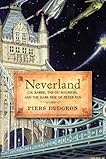
Without making too much of it, it seems worth noting that the crazies seem to be making some headway again, finding their way between respectable looking hardcovers, from previously unseen imprints of otherwise upstanding publishers. The latest example of lunatic biographical speculation to come my way, Piers Dudgeon's
Neverland: J. M. Barrie, the du Mauriers, and the Dark Side of Peter Pan, was such an unsuspected bit of flummery, looking as it does like an entirely professional piece of critical biography, from the unknown imprint, Pegasus Books, of the great W. W. Norton & Co., Inc., I took it home without thinking that in my hands I held a defining example of the kind of sinister silliness that might more appropriately have seen print from the haymakers at New Falcon Publications, the paperback purveyors of the delicious nuttiness of Robert Anton Wilson.
Poor, impotent ol' Barrie, once high among the most popular writers in English, the undeniable darling of children's literature, the undisputed master of Neverland, since at least the publication, in 1979, of Andrew Birkin's
J.M. Barrie and the Lost Boys, has had his sad, virginal preoccupation with little boys analyzed, anatomized and most cruelly exposed as a neurotic, almost certainly pedophile flaw. It is impossible, in this post-Freudian time, not to see Barrie's adoption and exploitation of those unhappy orphans, George, Jack, Peter and the lot, however well intended, as, well... creepy. Little good it did any of them, it seems, even Barrie, now he's dead and his every affection, and every word, subject to double entendre.
Even having myself read with pleasure quite a bit of Barrie's oeuvre, Birkin's book, and another, more recent biography besides, nothing could have prepared me for the wicked, hilarious, gormless biography written by Piers Dudgeon. His previous biographies, it seems, besides Daphne herself, were of such glorious, romantic hacks as Catherine Cookson and Barbara Taylor Bradford! (Anyone in search of a safe giggle, ought to try the sample of that last biography thoughtfully provided by Amazon. Pretty much a perfect match of subject and style, there.) So, just to quickly summarize this latest effort, it is Dudgeon's contention, based, so far as I can understand it, on having taken tea with Daphne du Maurier while editing a book with her, years ago, that Barrie was a devilish hypnotist, much on the model of George du Maurier's Svengali, and that Barrie's evil influence extended throughout the du Maurier clan, corrupting generations, extending well beyond the grave, sending any number of that unfortunate family to depression, suicide, and insensibility! Seriously, that is what the man says. I have to confess, with no little shame, this penny-dreadful nonsense was richly entertaining, though obviously fiction of the lowest kind. I read every word.
Had the publisher seen fit to call the book what it so obviously is, I could not really object to it's publication. I enjoyed it. But as both publisher and author would seem to insist that this is a biography rather than the rather filthy-minded faerie-tale it so obviously is, I can't help but condemn it, if only here and in the bookstore, as a particularly grotesque example of biographical fraud, and yet another recent instance of a major publisher, presumably professional editors and the like, failing to meet even the minimum standard of laughibility for nonfiction. Even poor ol' J. M. Barrie doesn't deserve this.
As for Mr. Dudgeon, I am prepared to say that I am now something of a fan. On the evidence of just the one book, and the little excerpts from his others that I found online, I don't know that I will be able to resist reading on. I can't say that he's any kind of legitimate biographer, or that his style is anything less than awful, but his absolute confidence in his own vision, and his evident, credulous devotion to rather middling authors, and to a dark nursery understanding of the world, does rather endear him to me. What fun it would be to have him out for a drink and bit of gossip. What wouldn't the man say?! Sadly though, my experience of such wide-eyed dears is that they do tend to go on too long. And I don't think he would appreciate the inevitable giggling. Still, what wouldn't he say about old Daphne's suppressed papers? J. M.'s magnetic eyes? What was just too awful too be included in his mad little book?!
Best not to speculate.
 From Peter Pan, by J. M. Barrie
 From My Lady Nicotine, by J. M. Barrie
 From Better Dead, by J. M. Barrie
 From Better Dead, by J. M. Barrie
 “The innocent and the beautiful / Have no enemy but time” -- William Butler Yeats
 This might seem to contradict not just what I said at the beginning here, as well as Lebowitz and Lang, but I don't think it does. Like reading Daisy Ashford's wonderful little novel, The Young Visiters or Mister Salteena's Plan, written in a notebook in 1890, when the novelist was all of nine, and brought to the attention of the public by the English writers Frank Swinnerton and J. M. Barrie, who wrote a preface to it, reading Marjory Fleming is fun precisely because it is only a child's effort at literature. Both girls were unusually bright, and surprisingly clever for their ages, but neither was an infant Mozart of fine letters. It is as much their "mistakes"; the odd spelling, the juvenile pomposities, the weirdness, that so satisfy the adult reader, as it is their obvious and exceptional, if small gifts. Daisy was 36 when she found her notebook in a drawer and lent it to a friend to cheer her up when she was suffering from the flu. It passed from hand to hand until it found it's way to Swinnerton, and into print.
 There was a period in scholarly and popular biography, just at about the middle of the last century, when the methods and affectations of Freudianism seemed to derange even the most respectable authors, sending them off in embarrassingly fruitful search of unresolved "complexes," previously unsuspected "conditions," and labyrinthine explorations of "motive." That all this psychoanalysis was being done to the undefended dead, that the very premise of science would be pulled from beneath the Master's feet before the century was over, and that the biographical practitioners of all this amateur shrinking tended themselves to not be shrinks, have all contributed to the failure of nearly all the resulting biographies to last beyond their generation. Even so great a biographer as Leon Edel, when I've had occasion to reread a bit of his monumental life of Henry James, brings a blush of sympathetic embarrassment now, when he emphatically concludes from a mix of fact, fiction and Freud. (Where are the Gods of the last century gone? Freud, Marx... only Einstein still stands, and the comic, modern quantum mechanics still merrily work to undermine the colossus as I write.)
 J. M. BARRIE
 From The Little Minister, by J. M. Barrie