Showing posts with label George Crabbe. Show all posts

Thursday, April 23, 2015

Daily Dose


From The Poetical Works of George Crabbe

LATE WISDOM

WE'VE trod the maze of error round,
   Long wandering in the winding glade;
And now the torch of truth is found,
   It only shows us where we strayed:
By long experience taught, we know--
   Can rightly judge of friends and foes;
Can all the worth of these allow,
   And all the faults discern in those.

Now, 'tis our boast that we can quell
   The wildest passions in their rage,
Can their destructive force repel,
   And their impetuous wrath assuage.--
Ah, Virtue! dost thou arm when now
   This bold rebellious race are fled?
When all these tyrants rest, and thou
   Art warring with the mighty dead?

Friday, November 1, 2013

Daily Dose

From The Poetry of George Crabbe

I GRANT

"I grant indeed that fields and flocks have charms
For him that gazes or for him that farms"

From Village

Monday, February 28, 2011

Daily Dose

From The Poetical Works of George Crabbe, edited by A. J. Carlyle and R. M. Carlyle

THE MIND

"The mind of man must have whereon to work,
Or it will rust -- we see it in the Turk"

From Posthumous Tales, Tale XVII, Danvers and Rayner

Sunday, February 27, 2011

Walnuts & Wine

Nearly everyone who ever knew him, loved Edward Fitzgerald. His immediate family was a rather painful exception, though he loved even that difficult crew as best he could. His friends, though, were his life. Their wives did not always have a share in this mutual admiration. A few deeply resented his interference, and not without cause. Fitzgerald could be a bit too attentive to the boys. Still, Fitz did his best to befriend even the most obstreperous among his mates' mates, and most were eventually won over, to one degree or another. But even the patience of his dearest friends could tried by the intensity of his attentions. He was never demanding, but he could be too generous with his time, his affection, his coin and his advice. He was probably at his worst with fellow poets. For a man who actually produced next to nothing in the way of original verse, at least until, ironically enough, he set seriously about translating other poets, Fitzgerald never hesitated to express his opinion of his friends' original work. He was unusually encouraging, actually had excellent taste, and could be an exact and inspired critic, but he was perhaps a little too eager to help. He knew many if not most of the major poets of his day, many well before their fame. With some, like the brothers Tennyson, he was intimately acquainted. He was always perfectly sincere in his appreciation, and did anything he could to promote the work of writers and artists he recognized as being his superiors. Whatever their gifts or accomplishments, for Fitzgerald, friends deserved his honest opinion, and he expected no less from them. Not everyone was obliged, always.

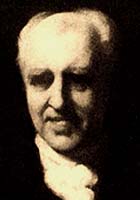
By the time his fabulously wealthy mother died, Fitzgerald was a very rich man, and quite comfortable in a more modest way even before then. He could afford to be generous. He had all the time in the world to read, and was genuinely keen to know everything about anything that interested his friends. Unlike others similarly situated, he was always willing to learn, and to be taught, and he encouraged and cultivated talent wherever encountered, and however situated. He was just as likely to befriend a poor man as an aristocrat, throughout his long life. Much of his advice may have been presumptuous, and even wrong-headed, but it was never condescending. He was quite rightly humble as to his own gifts as a writer. He fully appreciated the limitations of his own education, preferences and experience. He lived in great simplicity for most of his life, only indulging himself in books and paintings -- of which he was no very good judge -- and such music as he usually made himself, though he loved going to concerts. He depended on his friends for much of the variety he otherwise would never have had in his life. Age did not much matter. He easily made friends not just among his contemporaries, but in the previous generation as well. Even more often, he sought the company of men sometimes considerably younger than himself, with gifts quite different from his. He did everything he could to encourage these younger friends in the pursuit of their own ambitions. In fact, with more than one, he made their interests entirely his own. With one handsome boy, Fitzgerald took so active an interest in his studies of Persian, as to ask his friend's help in learning the language himself. It was under the tutelage of this much younger friend, that Fitzgerald first read the poet whose name is still linked with his own. It must be admitted that in this instance, and in others throughout Fitzgerald's life, there was an element of largely if not wholly unrequited romance in many of his most intense friendships. What of it? It might fairly be said that we owe Fitzgerald's classic translation of The Rubaiyat of Omar Khayyam to a crush on a boy. But Fitzgerald's knack for friendship, one might almost say his great need for it, was not limited to handsome lads, poets or no. One of the dearest friends to Fitzgerald in old age was his faithful correspondent, the great actress and abolitionist, Fanny Kemble, and one of Fitzgerald's best friends, nearer to home, was a local Anglican priest, named George Crabbe, the son and biographer of the poet of that name.

This friendship resulted in one of Fitzgerald's most curious literary interventions. In hopes of reviving interest in the older poet's work, Fitzgerald spent some time and considerable effort editing and abridging one of Crabbe last books for republication. Tales of the Hall, when originally published in 1819, had had some success. By the time of the elder George Crabbe's death in 1834, the fashion in poetry had changed and Crabbe was already being dismissed as old fashioned and less than properly "poetic." Fitzgerald amended a new title, Readings from Crabbe, to the little book, and trimmed it, interjecting explanatory prose to patch over the pruning, in the hope that new readers might be attracted to what Fitzgerald thought best and most characteristic in Crabbes' work. The resulting curious little volume, which I recently had reprinted for me on the bookstore's Espresso Book Machine, Homer, Fitzgerald had privately printed in 1879, at his own expense, though he wasn't able to interest anyone in distributing or selling it for him until 1882. In a letter, Fitzgerald explained "I can gain nothing from the Public, whether of Praise or Pelf; neither of which was my object -- which was simply to try and gain a few readers to this awkward old genius." I've read now Fitzgerald's bowdlerized version, and the original, and I can't say that Fitzgerald did Crabbe any favor. Still, it was reading Fitzgerald's letters that sent me to read Crabbe for the first time, so in a round about way, and if only with me, Fitzgerald has accomplished something like what he determined to do, which was to find a new reader for George Crabbe.

Crabbe was a popular and respected poet in his day, an early and life-long favorite of Walter Scott's, for example, and admired by Byron, Wordsworth and many others besides. The general consensus, even among his admirers, was that his was a most uneven production, and that even the best of him tended to be be mixed in almost equal portion with the worst. Fitzgerald, in his estimation of Crabbe's latter poems, was by no means making an eccentric or unkind estimation of their worth, when he took it upon himself to try and improve on the originals.

Having read in the letters so much about not only about Fitzgerald's friendship for father and son, but of his interest in improving and preserving in so unusual a way what he thought best in the older man's poetry, I determined to find and read something of Crabbe's poetry for myself, not just Fitzgerald's reworking of Crabbe's "Tales," but all his stuff, as well as the biography of the poet by his son, Fitzgerald's great friend. Letters, more than any other literary form, including biography, tend to make such missions attractive to me. In getting to know an individual so well, as only the best letters allow, one wants then to know something more of what they knew, of the books they read and mentioned, the writers they admired and the friends they made. No one's letters since Lamb's have provided me with so long a list of interesting possibilities for further reading. Thanks to my access to the wonder that is the bookstore's EBM, as regular reader's here will remember, I needn't wait for luck and my regular trawling in used bookstores to gratify these impulses to further reading anymore, but can instead simply pop the new name into the searchable database of Google Books and have a stack like that pictured above, produced for me in less time and at less expense than would have been required to place an order online with a bookstore like Powell's -- assuming even Powell's might have any of these books in stock -- which they didn't when I checked. Now as it happens, I've since found a very nice blue Oxford edition of Crabbe's poetry, for quite a reasonable price, just down the road at my favorite local used bookstore, but all that's meant is that my library is now better by a copy for home and another, cheaper paperback copy to lug roughly about in my briefcase.

And so, I've been feasting on a big mess o' Crabbe for more than a week now. I did read the son's biography, which is a charming document, full of affection, delicacy and a rare sympathy for both his father's virtues and his faults. To supplement and expand a bit on this, I had the later Victorian critic, Alfred Ainger's, slim volume on the poet, part of The English Men of Letters series on which I have come to rely for their concision, good style and good humor. Ainger's opinion of Crabbe differs only in a few particulars from Fitzgerald's, though neither man would seem to have had quite enough distance from the revolution wrought by Coleridge and Wordsworth, or the still fashionable taste in Ainger's day for Tennyson, to appreciate just how much a reader in the 21st Century might not care about what is or is not proper poetry in Crabbe. On one crucial point, namely the idea of elevating subjects and beauty as the only fit stuff from which the best poetry is made, the contemporary reader has blessedly been freed. One of the most consistent complaints of Crabbe, from his immediate contemporaries down to influential later critics like Leslie Stephens, was that he wrote too much about unedifying subjects: bleak coastal landscapes, poor and often ignorant people, leading small and often unhappy lives. Not a few of Crabbe's Tales, including his most famous, "Peter Grimes," from which the opera was taken, involve a kind of mean, senseless violence which, despite Crabbe's entirely orthodox Christianity, struck many of his Victorian readers as unsavory. For the reader today, there's an obvious irony in this, as it is the poet's piety, and his life-long devotion to the poetic forms of the earlier masters, like Dryden & Pope, rather than any perceptible vulgarity in Crabbe's language or distaste for his humble subjects, that might make reading his rhymed couplets a bit of a chore.

I'm glad I read 'round George Crabbe's poetry before I undertook to read much of it myself. Having the context for what and why he wrote as he did, allowed me to appreciate just how well he did what he did. Think of it: one of Crabbe's first enthusiastic critics, and an early editor was Edmund Burke, and through that connection Crabbe came to know and be advised by no less a figure than Johnson. Of humble origins, and limited education, Crabbe never the less, through such friends, found not only his place and employment as a clergyman, but also was able to establish a reputation that saw him though many years without a single published poem until the most productive period of his middle age, by which time he was much admired by Wordsworth! George Crabbe in fact lived long enough to win the admiration of other poets down even to the middle of the century after his birth, and to be subject to the truly touching efforts to sustain his reputation made by his son's friend, Fitzgerald. Tastes change however, and as I've already mentioned, by the time of Crabbe's death, his failure to experiment with form, his refusal to abandon what now seems most obviously to have been the style that suited him best, left him increasingly without a popular audience. Ainger makes the point that there is probably no other major poet in English who was so quickly and completely forgotten.

Looking for Crabbe among my anthologies, there's very little to be found. In the first place, narrative poetry has almost completely disappeared. Then there is his failure to write the kind of lines, as Pope so preeminently did, that might survive as aphorisms independent of poetry. Crabbe was not much of a philosopher, it's true. His ideas, like his religion, were entirely conventional and very much what one might expect of a country clergyman. Fitzgerald blamed Stephens for establishing the opinion that Crabbe lacked not only wit but humor, and Fitzgerald was right and Stephens quite wrong about this. Crabbe, like Cowper, had not only a good heart, but a good eye for amusing and telling detail, though unlike Cowper, it may be fair to say that Crabbe had not a specially good ear, either for dialect or a joke, or even for the felicitous word, so far as the music of the thing is concerned.

Starting Crabbe then from what was a pretty low opinion in anticipation, imagine my delight in finding the reading not only enjoyable as often quite powerful narrative, but as good poetry more often than not as well. I won't pretend to any expertise in this, but as just a common reader I was shocked at how accessible and interesting, and how superbly managed nearly all of Crabbe's verse seemed to me. If a line was occasionally misshapen to accommodate the rhyme, even that can have it's interest, as such dogged devotion to form, while sometimes producing a clumsy result, does suggest a puzzler's pleasure in making a thing work, however imperfectly. As sins go, this seems more venal than mortal, at least to my enjoyment. And there is so much to enjoy in Crabbe's stories of petty thieves, bad masters, broken loves, country courting, murder, in his portraits of fishermen, farmers, minor clerics and distracted landlords, in his surprisingly detailed portrait of a place and time and way of life now all but altogether vanished. If I can not but find the consistent invocation of an unconvincingly benevolent deity anything more than understandable, and forgivable in the poet/priest, I hardly think I need waste any time here is suggesting why. Does such religious certainty undo the power of Milton? Or the pleasures of reading Gerard Manley Hopkins? I don't mean to equate Crabbe with either as a poet. I'm simply suggesting that the reader need not be in complete sympathy with the philosophy, let alone the theology of the poet to enjoy reading the poems. And Fitzgerald was right, there are great things to be found in Crabbe. Ainger says that Crabbe introduced pity into English poetry. I think that perfect. Whatever motivation the poet may have had as a religious man, the result is often quite moving because of the honesty and the genuine sympathy with which even the most mean existence described in these stories is treated. That, to my entirely secular way of thinking, makes Crabbe a better and if you will, a more inspired Christian, than most of the poets usually entered under that heading.

Fitzgerald said of Crabbe, "... I believe every thinking man will like him more as he grows older" and that may go a long way to explaining why I have found myself liking the old boy so much that I intend now to finish reading the whole of him. However slipshod some of his lines may be, however predictably exaggerated his language or muddy his sense at some times, however conventional and antique his sentiments, however unhappy his Toryism, and however unconvincing his God, Crabbe's heart, and his soul seem to me exceptionally fine. The poetry he used to express his sympathy rather than explicate his sympathies seems to me just as fine, and sometimes as fine as any I've ever read. Maybe it is just such a sympathetic personality that one looks for in the reading to be done in middle age. My own youth I spent as much in the search of novelty and innovation as anything else. Perfectly good thing for a young person to do. Now, I usually find such things annoyingly demanding. I'd rather know, and respect, the craftsmanship of something with which I might not wholly agree, said recognizably well, than chase after the meaning in something with which, if I could figure it out, I might concur more readily. Fitzgerald described Crabbe's poetry as being of "the walnuts and wine" type, and that, it seems, is very much to my taste as well now, as it happens.

Like Fitzgerald, when he put out his private edition of Crabbe's last "Tales," I hold out little hope of actually inducing anyone else to try Crabbe by writing about him here. I do so really more to explain why I've been writing so little of any substance here for so long.

I've been reading George Crabbe, and I must get back to him.

Daily Dose

From The Poetical Works of George Crabbe, edited by A. J. Carlyle and R. M. Carlyle

LECTURING

"And deeply skill'd in sciences and arts,
On vulgar lads he wastes superior parts."

From The Borough, Letter XXIV, Schools

Sunday, February 20, 2011

Daily Dose

From The Life of the Rev. George Crabbe, LL. B., by his son, the Rev. George Crabbe, A. M.

FATHER

"Such minds covet not, envy not, the advantages of youth, but regard them with benevolent satisfaction -- perhaps not unmixed with a species of apprehensive pity; -- for their fiery ordeal is not yet past."

From Chapter X, Trowbridge.

Saturday, February 19, 2011

Remains to Be Seen

I've sent off three drawings this week, and left two others at the store, to be called for when the subject, an up-and-coming, and quite attractive young novelist, comes in to do a reading from his new book. Of the three I put into the mail, two are going to the people I drew, and one is on its way to the subject's mother. That last is a gesture to a friend, or friends, I should say, as while the writer depicted has been a friend since before his first book came out, some time ago now, his mother has subsequently become something of a friend of mine as well. Dear lady. She raised a good son. He's become quite a good writer too, though that doesn't enter into it, except in so far as that would be the reason for drawing him and posting it here. I don't draw my friends much nowadays. In fact, I almost never draw my friends, or anyone I love, any more. Used to do, but not always with the happiest results. Still happens -- both the sketching and the unhappiness -- and so while I should like to be able to say "lesson learned," obviously I can not. Anyway, this guy's mother rather liked the last drawing I did of him, and as I specially like her, I sent it off. Haven't heard back yet, from the mom, but that's the one, interestingly enough, I'm fairly confident will be best pleased. I'm generally a pretty fair judge of mothers. Most often they've rather liked me, and the drawings I've done of their sons, even when they haven't always approved of everything else I may have got up to, back in the day, with their boys.

Actually, I haven't got up to much in the way of sketching, or really had better say, anything at all much, with any one's son lately, and while that's as it should be -- all things considered -- still, it feels necessary to make the point explicitly just here. There was a time, now ever so long ago, when a #2 pencil was perhaps the surest point in Cupid's quiver, if you will allow me that without too much wincing. It's true. It may not be all that easy to believe, and believe me, I quite understand why, but there was a time when boys were quite flattered when asked if I might sketch them, and they often let me. True, that was in some ways a more innocent period, for all involved but me I suppose, and the boys back then weren't perhaps the most sophisticated models. They tended not to distinguish between what even then was really just a rather slight gift for portraiture and an eye for comic exaggeration -- to say nothing of the distinction between pure and impure impulses, admiration and lust, high and low art, etc. I had a reputation, all a little vague and not altogether savory even then, as someone who was good with a pencil and paper. The idea that what I did best, at least with a pencil, was hardly the stuff of either deathless beauty or even always kindly meant, was easily over-ridden by the novelty of anyone finding these boys -- even if just their faces, supposedly -- interesting. Boys generally speaking, just aren't very interesting. I wasn't, at the time, in most ways save this one. Most boys are aware of this, sometimes painfully so. To be told otherwise, to be asked to sit for a drawing for instance, once it was understood that they weren't being mocked for their crooked teeth or their "bad" skin, while it didn't necessarily convince them that they were more interesting than they suspected, could, and often did, suggest that there might be something there, though they'd no suspicion what or where that might be, that someone else, even if only another boy, had noticed and liked. Many of them, after some none too subtle or gentle cajoling, were at least willing to allow for the possibility and see what came of the experiment. Usually, all that came of it was a brief sketch. Sometimes though...

I've mentioned here before that, from childhood, people have been at me to draw them, and that I was quick to learn that however sincerely most people make such a request, or demand, they don't mean it. Many if not most people would like to think they have a personality and a face that might lend itself to being sketched, at least, just the once, if only by me, but very few people who ask, or demand, have actually thought much about just what it might be that provides interest in the individual human visage, or what it might mean to see one's kisser, however attractive it may be assumed to be in three dimensions, when reduced to two. Drawing a good likeness, of even a very young and attractive person, of either sex, at least for someone like me, has all to do with what makes a face individual, rather than beautiful, per se. I may have an eye for beauty, but not a very good hand for it. Put it another way: what I like best in a face, even a face I find specially attractive, need not be what its owner would think, and even if it is a dazzling smile, or lovely dark eyes, or whatever's been made mention of before by other admirers, for whatever reason I'm usually drawn to to the one sharp canine or the weary little wrinkle, to what others, including the person who may heretofore been otherwise either unaware or horribly self-conscious about these details, would either not notice or would rather that no one else did.

They've studied babies, you know, really quite new babies, and found that lovely faces make them smile. It's instinctive, evidently. And what makes a baby smile tends to be exactly what would make the rest of us older, hairier humans respond positively to another human face: symmetry, first and foremost; the equality of features and the balance in their distribution, so that one lovely eye is always paired with another on the same plane, lips and teeth likewise evenly arranged left to right, cheekbones, chin, forehead, all just where they should be and in proportion, each to the others according to some formula apparently settled long since by the trial and error of evolution or the Deity. At least among the cognizant, adult population, this obviously does not preclude the possibility of finding a face other than that of the venus de milo either attractive or lovable. If it did, of course, for the vast majority of human beings, there'd be little chance of making new human beings, those very babies who, in all innocence, seem to judge the rest of us so harshly. Character for instance, which babies, rather selfishly tend to reduce to the willingness of the beings around them to feed and comfort them, becomes a more complex business as we mature, and something we look for in other people's faces. The poet, George Crabbe, in his Tales of the Hall, says somewhere that, “The face the index of a feeling mind.” That sort of thing begins to matter more to us, one would at least hope, when we cease to be babies.

What I liked best, lets be honest, about drawing boys back in the day, was the possibility of getting their clothes off them. As I say, worked now and then, too. Adults I drew to flatter them in a different way, mostly; because I admired them, as teachers or personalities, and wanted their praise. Didn't turn out to be nearly as gratifying as I'd hoped. Most of them, if they saw the results, even if they'd asked to see them, tended to be more pained than pleased. Turns out, adult vanity is a far more delicate thing than a teenager's, a teenaged boy's anyway. Didn't draw girls nearly so much. Go figure. While adult males, much to my surprise, tended to be, as a group, if nothing else, fairly good humored, and while adult females, bewilderingly, seemed invariably to blame themselves for any flaws exaggerated by my pencil, my fellow male homosexuals have turned out to be the least likely to appreciate the gift of caricature. Might seem an obvious, even stereotypical assumption to make, but I fail to get this. If men are almost always more vain then women, then gay men, after say the age of twenty one or thereabouts, and gods know, after forty! are perhaps the most sensitive subjects of all. Even if I still wanted to, getting into a gay man's pants with a pencil would not seem to be an option anymore, at least for me. Even getting a laugh out of these queens would sometimes seem to be much harder than it ought to be. However affectionate I may mean to be, it sometimes seems that most gay men, even the most wickedly self-satirical, even old friends, do not always appreciate even the warmest of my little jokes -- if it means showing their crows-feet, or their bald-spot, or exaggerating slightly, or even just noting accurately, a paunch.

(Dykes, by the way, have been uniformly the first to laugh, and the first to ask for an original drawing. This, I should hope, rather undermines, in a small way, that business of just who it is in our community who hasn't much of a sense of humor about themselves, now doesn't it?)

But honestly, I am the problem, or rather, the narrowness of my gift would seem to be. I suppose that if I could draw people as they saw themselves, or at least as they would most wish to be seen, I might even have made a kind of living by drawing. The trouble is, I don't see that way. Even the people I might most admire, even people I think most attractive, even the people I actually love, I find... funny, for want of a better word. I see myself as a rather absurd figure most of the time. I see other people as such, more often than not, as well. I think, as human beings, as among the most remarkable achievements of evolution, we are nevertheless all surprisingly odd looking, each in his or her own way, and that frankly fascinates me. However much I may admire the way someone writes, or thinks or makes art, however attractive I may find a particular face or person, I can't seem to help myself. I find almost everyone funny. When I draw someone, even or specially someone I admire, it isn't the "flaws" I look for, or any supposed imperfections I find myself exaggerating, as it is what is most human and ridiculous in even the best people and or the most interesting faces that I try to reproduce on paper. I also find my inspiration most often in some particular of a book title, or an author's photo, or something in the publicity surrounding a new book, that tickles me enough to want to draw a picture. May be a lack of seriousness in myself, or a refusal to take anything I do too seriously, but I can't seem to take even literature, or the people who make well, it all together seriously. I have tried. Doesn't work out very well, usually. Solemnity and awe just aren't something I can successfully convey with a pencil and paper.

I once painstakingly drew what I'd hoped would be a very respectful likeness of James Baldwin, who had only just died. He was the writer I may well have admired most at that time, and I very much wanted to honor his memory. I took quite uncharacteristically long over that drawing. I was careful to exaggerate nothing, to reproduce the photo I was working from as exactly as I could. The result was hideous, a grotesque that more than one person who saw it expressed a genuine concern that that drawing was likely to get me labeled a racist. I loved Baldwin! I loved his writing, his speaking, his face. I thought, and still think that James Baldwin had one of the best faces of recent times. Yes, he described himself as being ugly, and I am not suggesting that I didn't see that, or that I somehow saw past that, but rather that I thought I might be able to show in a drawing, even more than in the photograph from which I was working, how really amazingly wonderful Baldwin's face could be, particularly, as in the photograph, when he laughed. I thought I might just have captured that joy.

When I showed that drawing to someone I trusted, someone I'd drawn and who had actually been delighted with the drawing I'd done of him, he told me, "You really must never show this to anyone else, ever." I never did. The last time I looked at it, some time later, I could see nothing of either joy, or the effort I'd made, only how ugly not James Baldwin, but my drawing was. I threw it away, and I've never tried to draw that marvelous face again.

Yet obviously, I'm still at it. I'm good at it. I'm not good at many things, but I don't think it is saying too much for myself to suggest that, at least in an amateur way, I'm good at this. I've confined myself, for the most part recently, to either quickly doodling people unawares, or drawing authors, as they are public figures, if now only in a somewhat minor way, and ought therefore to expect a certain amount of probably unwanted attention. I've had the very happy experience of hearing from some of the people I've drawn to post here, and been told that I made my subjects laugh. Nothing so gratifying. I've offered the originals to a number of my subjects, and had some who've been quite eager to have them. I've even been brave enough recently to offer the originals to some folks I knew not at all, and have been pleasantly surprised by the response from most.

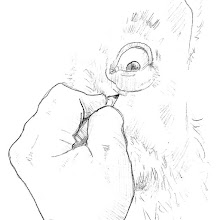
One friend who was not amused, at all by the drawing I did, when pressed, said that he neither liked nor understood the point of caricature. I don't know, considering his sophistication and education, and his sense of humor as evidenced elsewhere, that he would say such a thing of satire in any other form, or any other sort of literary pasquinade, but with unflattering pictures, at least of himself and presumably other authors, he will have no truck. Obviously, I think he's wrong. Just as obviously, had I known him better or suspected his disapproval before I spent a few hours drawing him in what I'd hoped was a no less flattering than amusing light, I wouldn't have drawn him at all. I was genuinely mortified to learn I'd offended him, specially as I'd hoped more than anything to make him smile, even laugh. I did not however destroy the drawing, or even take it down from here. It is a good one, I still think, and a tribute, I still say, however insignificant, to how seriously I take what he's written and how much I admire him. I seldom can bring myself to draw people I do not, in some way admire or at least find significant. No one does a caricature of people one would expect to go otherwise unnoticed. I certainly don't sit peering through two pairs of glasses, drawing and erasing and drawing yet again someone's left ear without thinking there is more than to the head it hangs on than I can do justice to in an evening.

(Why I'd never make much of a political cartoonist, I suppose, politicians' faces tend to be roughly as interesting as their ideas.)

If one were to detect a lingering hurt in that last bit, doubtlessly any objective observer would call that only fair. Fair enough. Nevertheless, I will defend what I do not just for the pleasure it brings me, and most of the people I choose to draw, but as a legitimate form of both art and flattery. No one would take such pains, for the most part, but to comment on a face with something significant in it. Everyone needn't like what I do, but there is thought, and feeling in it.

Which is why I'm rather hoping, if most past experience is any index, that I didn't just make a special trip to the post office on my lunch hour just to provide a few people with something with which to line a birdcage or start a small fire. Remains to be seen, hereafter -- or not.

Wednesday, February 16, 2011

Daily Dose

FromThe Poetical Works of George Crabbe, edited by A.J Carlyle and R. M. Carlyle

ON THE SHELF

"Here all the rage of controversy ends,
And rival zealots rest like bosom-friends"

From The Library

Tuesday, February 15, 2011

Daily Dose

From The Poetical Works of George Crabbe, edited by A. J. Carlyle and R. M. Carlyle

END OF THE DAY

"To other worlds with cheerful view he looks,
And parts the night between repose and books."

From The Borough, Letter XXIV, Schools

Saturday, February 12, 2011

Daily Dose

From Readings in Crabbe, Tales of the Hall, abridged and adapted by Edward Fitzgerald

TRY

"Try half a page, and then can taste no more,
But the dull volume to its place restore"

From The Morning Walk

Thursday, February 10, 2011

Daily Dose

From The Life of the Rev. George Crabbe, LL. B., by His Son, The Rev. George Crabbe, A. M.

DIARY

"9th. -- Agree to dine with Mr. Phillips. A day of indisposition unlike the former. Dine at George's Coffee-house, and in a stupid humor. Go to play not very enlivening; yet the 'Magpie and Maid' was, in some parts, affecting, till you reflected."

From Chapter IX, 1814 - 1819, from the poet's journal

Wednesday, February 9, 2011

Daily Dose

From Crabbe, by Alfred Ainger

A NEW FORCE

"What made Crabbe a new force in English poetry, was that in his verse Pity appears, after a long oblivion, as the true antidote to Sentimentalism."

From Chapter III, Friendship with Burke, 1781 - 1783

Tuesday, February 8, 2011

Daily Dose

From The Poetical Works of George Crabbe

TO THE CRITICS

"Foes to our race! if ever ye have known
A father's fears for offspring of your own;
If ever, smiling o'er a lucky line,
Ye thought the sudden sentiment divine,
Then paused and doubted, and then, tired of doubt,
With rage as sudden dash'd the stanza out;-
If, after fearing much and pausing long,
Ye ventured on the world your labour'd song,
And from the crusty critics of those days
Implored the feeble tribute of their praise;
Remember now the fears that moved you then,
And, spite of truth, let mercy guide your pen."

From The Library

Sunday, February 6, 2011

Clerihew of the Long and Short

GEORGE CRABBE

Not one to gab,
Good Parson Crabbe,
Made his talent manifest
better in an Anapaest.

Friday, October 8, 2010

Daily Dose

From Letters of Edward Fitzgerald, Volume 1, edited by William Aldis Wright

ACCURATE

"He very often arranged concerted pieces for us to sing, in for parts, he being tenor. He sang very accurately but had not a good voice."

From a note on Fitzgerald, From George Crabbe, Rector of Merton, the grandson of the poet.