Showing posts with label The Forty Five. Show all posts

Wednesday, September 29, 2010

Daily Dose

From The Forty Five, by Alexandre Dumas

HUMILITY

"Henri III, together with his mother. alone remained standing, and bent a last look, full of pride, upon those around him. Chicot observed this look, and murmured in a low tone of voice, 'Dejiciet potentes de sede et exaltabit humiles' ('He will put down the mighty from their seat, and will exalt the humble')."

The last line of the novel.

Tuesday, September 28, 2010

"ventre de bische!"

And so, all good things must come to an end. Damn it. Despite various diversions, interruptions and other, more pressing demands made on my reading, I've done the last page of The Fort-Five. I did not want the book to end. I could just pull another volume from my shelf of Dumas, and go on, and I will, but not yet. One of the best things about acquiring old books not individually, but in these great, neglected sets: no mater how long one has owns such a thing, no matter how much one has already read, it seems there's always another, and another, and yet another volume as yet unopened, the pages yet to be cut. If used judiciously, my shelf of Dumas, with my shelf of Scott, my shelf of Guy de Maupassant, my shelves of Dickens, etc., should see me through to whatever end I come. Were I to lose every other book I own, and be left with just my sets, -- heaven help me -- I might read away the rest of my days. (I'm greedy though, and wouldn't like to think I might not always add to what I have. I'm inspired by one of our regular customers at the bookstore where I work; an old gentleman, quite bent, who must balance his acquisitions on one frail arm so as to have the other free to use his stick. He shops and buys our used books nearly every week, buying history, and fiction, and whatall by the basket. Just the sight of the dear man gives me hope.)

One can never really come to the end of Alexandre Dumas. Obviously, I'll read The Count of Monte Cristo again, but even if I didn't, there are so many other Dumas novels, and so many I've yet to read, or reread. Whatever else might be said of the old boy, good and bad, there will always be another Dumas. That, of course, is one of the reasons for the failure of his reputation: he wrote too much, or rather, he put his name to too many books, whether he wrote them, in the strictest sense, himself or not. Dumas worked from collaborators outlines, wrote up what others wrote for him first, did not always acknowledge what he used, and so on. Who cares? Matters now only to scholars and fussbudgets, frankly. And Dumas' work can be uneven, tedious at stretches, ridiculously plotted, even sometimes silly. What of it? Is Balzac any less bombastic, any less dependent on coincidence, etc.? Not everything from the pen of either Frenchman's a masterpiece, but then, who else wrote so much so well, and then who wrote only masterpieces? Name one major author without minor work. Besides, I've always been fond of my favorites even in their minor turns. Half a Dumas might yet be better than none, or a whole Scott, in some books, for that matter.

Another reason he came so late into the Pantheon? Dumas wasn't important. Sounds silly, but that argument's been made. Dumas might have given us immortal fiction, his Edmond Dantès and his d'Artagnan might be better known and loved than any other characters in the whole history of French literature after Gargantua and Pantagruel, but Dumas wasn't serious, somehow. Romance was not thought the proper stuff of literature. Dumas wrote only for popularity and money. Dumas' books were the sort of thing read just by boys. It's all been said about Twain, too.

The bones of Alexandre Dumas, now however white, belonged to a man who wasn't, quite. That may well have been another reason they were left so long in a provincial grave.

"The basis of these theories was an idea which in our opinion was quite as good as any other; it was as follows: chance is God's reserve." -- That's Dumas, explaining the philosophy of Chicot, near the conclusion of The Forty Five. Dumas might have smiled to find that more than chance would ultimately determine his place in literature, and in France.

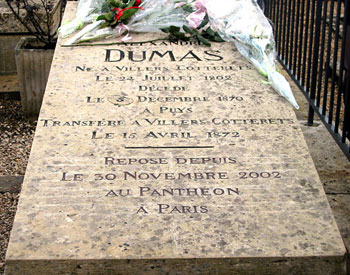
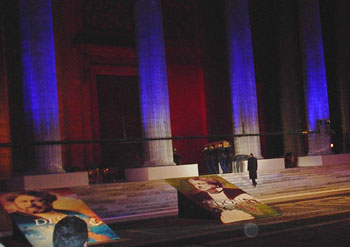
There's not, for me, much to admire about Jacques René Chirac. Had he not done this one noble thing, I don't know that as an American, I would now give the old bastard a thought, but I am grateful to him for what he did for Dumas. On the 30th of November, 2002, the then President of France brought Dumas back to Paris. Calling the great novelist one of France's, "most turbulent children, one of its most talented and one of its most creative geniuses," Chirac presided as Alexandre Dumas was reinterred in the Panthéon of Paris. His coffin draped in a blue velvet cloth on which was written, "tous pour un, un pour tous", -- "One for all, and all for one," carried by an honor guard dressed in the uniform of The Musketeers, Dumas, at last, was laid to rest with Voltaire, Rousseau, Victor Hugo, Émile Zola...

"With you, it is childhood, hours of reading relished in secret, emotion, passion, adventure and panache that enter the Pantheon. With you we dreamed. With you we still dream," Chirac said, and then bowed to Dumas.

As Dumas père himself famously said, "All generalizations are dangerous, even this one," yet some things are true, no matter who says them, and worth saying, even late.

I add my thanks again, to all the rest.

Friday, September 10, 2010

Day Trip to the Dordogne

"Although the hotel had appeared almost uninhabited, he locked the door and placed a heavy table and a chest of drawers against it. He then put his purse under his pillow, and repeated to himself three times the translation of the king's letter. There was an extremely high wind blowing, and as it howled in the neighboring trees, it was with a feeling of great satisfaction that Chicot plunged into a very comfortable bed. He had a lamp by his bedside; before going to sleep -- and partly that he might go to sleep -- he read a very curious book which had just appeared, written by a certain mayor of Bordeaux, called Montagne, or Montaigne. This book had been printed in Bordeaux in 1581; it contained the first two parts of a work since then well known, entitled 'The Essays.' It was interesting enough to read and reread -- by day. But it had the merit also of being tedious enough not to keep a man from sleeping who had traveled fifteen leagues on horseback, and had taken his bottle of generous wine at supper. Chicot had a great liking for that book, which on leaving Paris he had slipped in his pocket, and with the author of which he was personally acquainted. Cardinal du Perron had called it the breviary of an honest man; and Chicot willingly took it for his breviary. Nevertheless, in reading the eighth chapter he fell into a deep sleep."

Here's a snare set by Dumas just for me. It caught me on page 221, Chapter XXXV, "The Four Winds," of the first book of The Forty-Five. Our friend Chicot is on a mission for his master, the last Valois, Henri III. Chicot has a letter for the king's brother-in-law -- and enemy -- Henri of Navarre. Fearing the letter might be captured, Chicot has translated it into Latin and then destroyed the original after memorizing the translation. Typical invention for the always cautious Chicot. The king's emissary has stopped at an inn for night and waits for the thieves and or assassins he knows are after him. He doesn't have to wait long. Chicot sleeps. Chicot wakes to the winds howling, the door is busted from it's hinges, his blockade fallen, the lamp is out, the room is smashed to bits, and, Chicot yells an alarm. Naturally, the intruders retreat, without the letter they came for but with all poor Chicot's clothes. Next time, the reader may rest assured, there will be swordplay. Again, typical.

I reproduce the whole paragraph above not because there is anything remarkable in the episode, or anything specially representative of Dumas in it. As always with the great novelist, there is always as much fun in his feints as in his fights, but obviously what thrilled me when I read this was the portion I've highlighted.

What does our hero bring in his saddlebags to pass the time between intrigues and attempted assassinations? A newish book by this clever fellow, what was his name, knew him slightly at court, always liked him... Montaigne!

How delightful to meet with the great essayist's first edition in this unexpected way! Dumas does not actually bring the Mayor of Bordeaux (RET by then, actually,) onto the scene -- he never crowds his history just for the sake of expanding his cast with cameos -- but he can't resist introducing the greatest name to survive the time he describes, and how amusingly, and lightly he manages this! Dumas, never one to let such an opportunity pass, even gives his cheeky "jester" the chance to pass a perfectly fair, and very funny judgement on the great book. Quite right. And then the great novelist makes a joke of his own, by making his hero, often accused unfairly of indolence, fall asleep reading one of Montaigne's most famous essays -- unnamed in the novel but easily identifiable from the number -- "Of Idleness." Merveilleux!

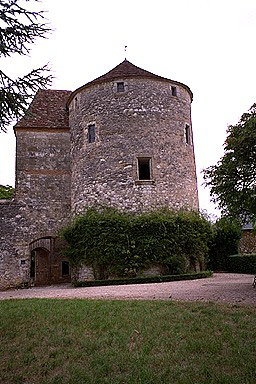
Now I've already been babbling here about how reading this kind of grand romance, I find myself unable to resist following after some of the many tributaries in print that seem to lead me off the page and into other books. Having already Michel de Montaigne much in mind while reading this novel set in the age to which he might rightly give its name, how could I resist looking up that essay? Then, myself having managed to reread the essay to it's end before getting dozy myself and stopping for the night, how could I not the next day follow Montaigne the whole way back to his chateau in the Dordogne?

As I was reading already in l'ère de Montaigne, what, I wondered, might I not find to know of the essayist beyond his essays? It is a curious thing that I have never read a full-length biography of this, the father of the essay, the greatest essayist, and my great favorite. How could this be? Well, I'll tell you. I couldn't find one. It is a curious fact that this writer who made a new literature of himself should be so poorly served by biographers. So I went hunting.

Ah, the miracle of the Espresso Book Machine, that great, good resource for the reader ill-served by the catalogue of only the books now in print! So to the bookstore's convenient website for searching out the out-of-print, and there was just the thing. I have had some experience with being disappointed by the Google books project and their regular and to me inexplicable failure to find and scan all the volumes in multi-volume works. (Dumas' own marvelous memoirs are to be found, for instance in only 3 stray volumes of the total six, at least in English. Maddening.) This time, however, I was not disappointed. It took a deal of hunting, but I did indeed find just the thing: Montaigne the Essayist: A Biography, in Two Volumes, by Bayle St. John,published by the venerable Chapman and Hall, then at 193 Piccadilly, London, in The Year of Our Lord, 1858.

Naturally, I begged my kind coworker, the mistress of the machine, Homer, to print me both volumes, tout de suite, and -- here they are, those two dear, Victorian little volumes, right in my hot little hands.

Bayle St. John, as it turns out, was of a distinguished family of writers and scholars, and having already read 120 pages of volume one, I can say I am glad to have met with the fellow. True, he is, as I expected he might be from the date of publication, a bit sniffy about the admittedly appalling conduct of the nobility in 16th Century France, but this can be rather endearing, specially considering Montaigne's famous candor, at least as to his own appetites and the like. But perhaps it takes an Englishman and a Victorian to make me see with what discretion and reserve Montaigne actually wrote; never for example naming the lady who St. John is convinced broke his heart. (I have my doubts about that. I'd say it was only the death of Montaigne's "great friend," the poet Étienne de la Boétie, that shattered that noble ticker.)

St. John does another very Victorian service to the 21st Century reader, by using not just the Essays and the very scanty facts of Montaigne's early life to tell the first half of his story, but allowing for what we might deduce from what we do know of Montaigne's times to suggest, if not where the young man was at every given moment, then at least where he was likely to have been, and what he might have been doing there, and just generally what it might have been like to be, say, a young lawyer or courtier at the time. St. John manages to do this without ever quite overstepping the biographer's privilege and inventing. The result is sometimes a bit thinly stretched, but the thick, Victorian style has just enough elasticity to it not to break his narrative at any point. Most satisfying.

So now I'm reading this biography, and Dumas, and the book about the horrid Guise, and will reread, of course, the great Essays when I get to them, and I am most happy.

I will apologize now for so seldom going too far, and in so doing perhaps not getting nearly far enough away for my own readers, from this little project of mine to hold anyone's interest but my own. But then, I might, tonight, have told you all about that Cardinal, Jacques-Davy Duperron, mentioned above, who told Chicot that the Essays were "the breviary of an honest man." Terribly interesting character, as it turns out, the Cardinal.

Perhaps, another day.

Enough.

Instead, I'll let Dumas close as he opened:

"Chicot replaced the chest of drawers against the door, got into bed again, and read till daybreak..."

Tuesday, September 7, 2010

Reading Dumas Again...

Reading Dumas again, I'm reminded how a great artist -- because that is what Alexandre Dumas, père, was, a great artist -- says what he means to say by whatever means he may choose or take up of necessity or in keeping with the fashion of the times, and in whatever medium, or genre, or material that may be, finds not only the way but the reason to make art. Unlike Hugo or Balzac, for whom I suspect the reason came first, Dumas might almost be said to have become an artist because, being poor and finding he was suited to little else, but being being ambitious, and clever, he took to writing for want of other opportunities. In this, Dumas is more like Dickens than either Hugo or Balzac, for both of whom the writing of fiction was always mixed with the politics of their time, with philosophy, and poetry and the traditional preoccupations of serious young men determined to make, not only art, and a reputation, but their mark, and ultimately to not only influence but change the world around them. For Dumas, like Dickens, writing was first a way to make a living, to make something from nothing, to make a reputation yes, but also a popular success. Both became immensely popular, and both became rich, and the nakedness with which they both pursued this worldly success has been used ever since to indict them both as being inferior artists. It's perfectly true that both popular novelists relished their popularity, and the money it made them, but that doesn't mean that either had nothing very important to say, or that they did not ultimately come to say things that were not necessarily popular. Each man, having found that he might do very well indeed by way of writing novels, found he might also, by the same means, without actually compromising his popularity or his income, or his principles, say exactly what he thought. If Dickens, almost unable to help himself even so early as the second half of his first great success, The Pickwick Papers, could not keep from being angry, and expressing that seriousness that marked him out as more than just a comic writer, and in so doing make his eponymous little retiree not only go to jail, but see it as it was; filthy, corrupt, a tragedy and a shame, and be changed by the experience, so too Dumas, the supreme romancer, was never satisfied that his heroes should win and their enemies lose. Everyone loses in Dumas. If not now, then later, if not life, then love, if not everything, then what matters most. Not even in the greatest revenge ever written, does the Count of Monte Cristo sail away without regrets. At peace? Perhaps, but off he goes, none the less. Do we know why?

That's what makes Alexandre Dumas, père, the greatest romancer, greater even than his master, Walter Scott. There are questions in Dumas for which he has no answer.

Dumas wrote romances for a number of reasons, not all of them noble I suppose, and he used a whole factory of hacks and researchers to produce his books. A recent film biography produced in France created controversy, not only by casting the great Gérard Depardieu rather than a black actor to play the novelist, who was a direct descendant of a Caribbean slave, but by showing something of the shabby way Dumas sometimes treated his collaborators. I haven't seen the film, which I don't think has ever been released here, so I can't speak to the accuracy of the portrait, or Depardieu's performance, or the controversies that the film created. What I've read of Dumas' biography does suggest that he was subject to a certain and persistent racism, used by his critics as just one more way to attack him, and that while the writer was extremely proud of the memory of his father, a Napoleonic general and son of an aristocratic Frenchman and an Afro-Caribbean Creole of mixed French and African ancestry, Dumas seems seldom, at least in his novels, and the memoirs I've read, to concern himself much with race; either his own or as a topic to explore. He did write one short novel, Georges, with a protagonist of mixed race, but the subject didn't seem to interest him much, if at all, even that one book aside. Dumas was a Romantic and well as as the supreme romanticist, and as such it was always the individual, as hero and antagonist, in love, war, intrigue, and most supremely in dialogue, that speaks to him and for whom he speaks most eloquently. Gascon or Parisian, king or commoner, black or white, even, somewhat surprisingly for a man and a writer of his time, man or woman, for Dumas, any human being, every human being, is a story, a history, heroic and cowardly, weak and strong, but never simply one of many, and never banal. I don't think, for all his patriotism, all his pride, that Dumas really believed much in nations, or even peoples. Dumas believed in Dumas. Recognizing his own moral complexity, his own character, he invested nearly every character he wrote, historical or invented, with something of the same contradictions he found in himself. He relished his own, rather ruinous humanity, and saw no reason to deny even his villains something of his own humor and generosity, just as he always invests even his greatest heroes something of his own weakness and pride and lack of sobriety.

I've just read Dumas' portrait of Henri of Navarre at his court, well after he escaped the Valois, and before he claimed France as his kingdom. It is an astonishingly good likeness, as I understand it, but it is more than just a portrait of a king in a small kingdom who would go on to become the great king who restored France. For Dumas, there is greatness in Henri, but we do not see it in him, as indeed did not most of his contemporaries, until it can be proved. Indeed, even Chicot, Dumas' brilliant portrait of an exceptionally perceptive and able man, hobbled by loyalty to an inferior prince, Henri's brother-in-law, Henri III of France, fails to fully appreciate the King of Navarre until he is bested by him, and comes in fact to love him. It is an amazingly deft and believable transformation that Dumas makes, of both men, and dangerous, not only in the exciting context of the story, and history, but as a bit of narrative. The reader presumably knows more than either man what will happen next, and yet Dumas still surprises. Chicot, one of Dumas' supremely clever men, is outfoxed and kept from escaping the hospitality of provincial Navarre, not by force, but by ruthless good manners. The king, thought to be something less than a soldier, and even rumored to be a coward, does not cease to be a coward in battle, when he undertakes to make war. He shakes with fear. Chicot sees this just as we do. Like Chicot, the reader may well be astonished to see Henri of Navarre, rather than deny his terror, admit it, even shame himself with it, and not so much overcome it as use it to force himself to continue, and to triumph. Chicot, the great friend of the Valois king, as great a cynic as he is loyal, while he will not betray his master, admits freely that he has met a better man in Henri of Navarre, and pledges his friendship, should he ever be free from his obligation to the house that has never brought him anything but disappointment and grief, but which he will not abandon.

Dumas' genius is in not only his adventurous story-telling, or the plots he took from history and the hands of his collaborators, but in his dialogue, which is unmatched for it's telling character, it's wit and it's magical facility for being both very like what what may or must have been said by the people in the time of which he writes, and better, probably, than anything a witness to these scenes would actually have heard. Dumas was first a playwright, and so he was at his best as a novelist, taking the highly theatrical settings of French history, and the conventions of romance, and elevating both by giving voice not only to the character of his characters, so to say, but to all the complexities with which conversation at its best might be made by exceptional men, moving in and making history.

Dumas does something we now longer accept in our history; he makes great men say great things, not in speeches, but between themselves. The advances in technology and the disappearance of privacy for even the leaders of nations has sadly proved how unlikely it is that princes and generals and politicians ever spoke this well. And yet, the magic of romance, and what Dumas, like Shakespeare, understood perfectly, is that we want men and women not only to do great things, but to be greater than just their deeds. Again like Shakespeare, Dumas knew that it is not always the winners who are the most eloquent witnesses of events, that it is not always good that wins, or the best who survive. But Dumas believes even in his fools and his failures, in his murderers and his assassins as much as his heroes, and believes they all deserve a hearing, and at their best. So reading Dumas, must we. It is glorious to be in such a world, if only in a book!

As for Dumas putting his name to other writers work, he may well have done. The Two Dianas, set in the reign of Henri II, and so set just before the Valois novels I'm finishing now with The Forty-Five, is now widely assumed to be almost wholly the work of another. What I have read is that even Dumas most regular, and possibly most misused collaborators were nevertheless quick to point out that whatever they did, it was Dumas who took it and made it into literature, by whatever means or magic. (One has only to read some of the unauthorized sequels to his Musketeers, like The Son of Porthos, to which Dumas contributed nothing, to appreciate how necessary his genius was to elevate the material to something more than sentimental melodrama.)

What Dumas gave his books was not just life, as great novelists do, but joy, as only the greatest artists understand. It isn't just the adventure, the victories or the defeats, it isn't just the romance of love and politics and honor and war, it is the joy of it all, and in spite of it all, of living, that one knows best perhaps in Dumas. Say what you will of Alexandre Dumas, he had as much or more to say about that than almost anyone else I can name in literature, or life.

Monday, September 6, 2010

A Moon in the Sky

I seldom find myself but in complete concurrence with the lyrics of the great Lorenz Hart, but just now, I'm afraid my romance does indeed require a moon in the sky, a castle rising in Spain, etc. I've been reading submissions for the prize committee on which I still serve and I desperately need a change of scene. I'm not finished reading for the committee, you understand, far from it, but for tonight and the immediate future, I'm done. Taken in gulps of twenty five or thirty pages each, I've had a steady diet of mostly middle class Americana and BFA prose for two days now, and I can't take another bite. Nothing wrong, really, with any of it, you understand, I just can't face another serving. I'm sorry, but I can't be made to care today about the contemporary state -- straight subset --of the American marriage, walking tours of Alaskan wilderness, or how one's kitchen garden teaches patience. I need to read something that isn't about you, whoever you are, nice as you are. I need something with savour, something with wit, history, adventure, and yes -- romance.

I try a noirish looking thriller. Why not?

Plop. Onto the pile it goes. Raymond Chandler may well have been a genius. Maybe it required a fastidious, expatriate, old English soak to really make art out of the American argot of gats, gumshoes, and dangerous dames. Maybe this kind of thing, besides a bottle of rye and a facility for alliterative names, really does require an old-school-tie. All I know for sure is, Raymond has a lot to answer for as an influence in American popular fiction, and it ain't all harps and roses, bub.

Twelve books in two days, that's what I've been through. I've taken to tossing each new book after the last to a heap on the floor by my bed, and then kicking them out of the way when I get up to make my lunch. Obviously, I'm hungry. A sandwich with good Parma ham and a nice, ripe cheese, makes me feel better. This, followed by the glory that is the Twice Baked Almond Croissant from Bakery Nouveau is nearly enough to restore to me my more usual delight in life, but then, I pick up the last book in the stack of submissions, the one I've been saving in hopes of something satisfying, and not even the last bite of croissant can keep the smile on my face.

It's a novel. It has a thoughtful premise. It is well written. I am bored beyond endurance. Over the side it goes.

It's a commonplace nowadays to bemoan the influence of the writing programs and seminars that teach to a standard that does not encourage innovation, experimentation, etc. This is nonsense. I've read far too many books by graduates of and or instructors in American writing programs that disproved this. If I have any complaint about the contemporary workshop prose I've been reading, it would be that too much of it seems satisfied with writing well about people every bit as dull as myself -- even, it seems, when they are traveling through time, solving mysteries, hiking a glacier, teaching, or having an affair with the neighbor. Ho hum. Yes, the author has captured exactly the way we talk nowadays, the way we think and dress and eat and write novels -- what of it? What I need is a book where the protagonist is better than me. I need a book where nearly everyone in it is smarter than I am, braver, wittier, more interesting. I need a romance.

So, I kick the last of my required reading under the bed, climb the back of the couch in the living room, and retrieve from the high shelf the last of Dumas' great Valois novels, The Forty-Five. Chicot Lives!

If you haven't read Alexandre Dumas père, or haven't read him since you read The Three Musketeers in a "Classic Comics" edition, well... you must. Dumas is the master of the romance. Scott was his master, but the student far surpasses elder writer in humor, invention, sophistication and sex. I am an evangelist for the Musketeers cycle, in toto, which is I think far and away the greatest romance ever written. The Valois novels, set in the successive reigns of the last Valois kings -- capons all three -- tell a thrilling story, with one of Dumas' greatest, and now least known heroes, Chicot. A loyal servant to bad masters, a swordsman, a wit, and a philosopher, Chicot deserves to ranked with D'Artagnan and Edmond Dantès as among the very best of Dumas.

I've held off reading The Forty-Five simply because I was reading so many other things and because I did not want to run through my Dumas. But today, I deserve a proper romance, castles and all. And so, off to the Louvre and the brave men of Les Quarante-cinq.

Bores be damned.