Showing posts with label Bayle St. John. Show all posts
Showing posts with label Bayle St. John. Show all posts
Sunday, September 1, 2013


Daily Dose

FOR WANT
"For want of better support I sustained myself with courage."
From Chapter XVIII
Saturday, August 31, 2013
Dropping by Versailles

 He was Louis de Rouvery, duc de Saint-Simon, -- or "the Duke of Saint-Simon," as his translator, Bayle St. John has it here. He was godson of the king, a soldier, a diplomat, a courtier and resident of Versailles, and author of Memoirs of Louis XIV and the Regency. Here's the three volume set, from a series of "Memoirs and Secret Chronicles of the Courts of Europe," by the St. Dunstan Society, Akron, Ohio, "Illustrated with photogravures on Japan Vellum" and so on. 1901, M. Walter Dunne, Publisher. (I've seen other stray volumes in this series drifting around used bookstores for year, always in the red cloth covers, with the lovely old photogravure illustrations, etc. This would be the first time I've actually thought of buying something from the series myself.)
Helene Hanff, in a letter to "84 Charing Cross Road," describes spending cold winter evenings, curled in her armchair with only dear, silly ol' Saint-Simon for company, and as always with my favorite reader and guide, craving more, bless her. I do not doubt she was reading the translation of Bayle St. John, though not in an edition from Akron, Ohio, considering she got all her books from London by then.
I discovered so many books and authors because Helene read them first, just as she discovered most of what she read because Arthur Quiller-Couch, or "Q", editor of The Oxford Book of English Prose, among other things, read them before her. Saint-Simon is one of these, though I've never really tried to read the Memoirs straight through before, never having had anything like a complete, or even a proper selection come my way before. Now here it is.
Bayle St. John, curiously enough, is a name I only really came to know in the past couple of years, after the bookstore where I work acquired an Espresso Book Machine and I discovered a whole new way to search out obscure titles and have new, paperback copies printed up for me on the spot. I'd read Sarah Bakewell's delightful book, How to Live: Or a Life of Montaigne in One Question and Twenty Attempts at an Answer. I decided I needed to read another, more traditional biography of Montaigne thereafter and went looking for one, but never did find one. Then I discovered Bayle St. John (1822 - 1859) on a search of the database of titles available for reprint on the EBM, and had his Montaigne, the Essayist, a Biography (1857) run up for me in two wonderful, thick, ugly little volumes. It was everything it should have been for a biography of the period and I enjoyed every bit of it.

Now here's my old friend, Bayle St. John, again, this time the translator of Saint-Simon's Memoirs, that same Saint-Simon who kept Miss Hanff company one long winter in a cold-water flat in Brooklyn, thanks presumably to the recommendation of her teacher via books, "Q." See how this works?
I hadn't thought to buy this three volume number, either to sell in the store or to read myself and had actually put it back in the bag it came out of, once I'd looked it up online. We don't keep such things on the shelf at the bookstore where I work, or rather we don't anymore, at least not for any length of time. The chances that anyone other than me would ever buy it seemed a bit risky as an investment, even of so little money, if more than an inch or two of shelf-space. I kept reconsidering. Then there was the fact that I am still trying to shed books, not acquire them just now. Had to consider that -- if I was thinking of buying the book for myself, which I wasn't until I did.
There are long winter nights coming my way soon enough, and generally in my experience what's good enough for H. H., is good enough for me.
I've been dipping into all three volumes for a week or more, ever since it landed on the desk. I see the appeal now in a way I probably hadn't the last time I read Saint-Simon. There's not the company of a friend and a philosopher, as there is in reading Montaigne, but there is the pleasure of a faithful correspondent from a lost time and place. And Bayle St. John, the translator, seems to me every bit as reliably readable as Bayle St. John the biographer and essayist. The world of The Duke of Saint-Simon seems to be at least as interesting as that of Samuel Pepys, of whose diaries I've come to be more fond as I reach the age at which, I suspect, again, H. H. read them.
Long books to replace many briefer ones. Maybe that's the idea.
Meanwhile I dip. Some of Saint-Simon's stories, already seem to me to fall a bit flat, the joke perhaps requiring if not French, then something French in the way of sensibility, despite the yeoman efforts of the translator. Likewise, more than once already I've found myself getting a bit impatient with absolutely ridiculous nature of life at Versailles. (I've experienced a similar irritation reading about court life in Tales of Genji, where there was at least the chance of a bit of fencing.) Still and all, I can see the pleasure in visiting, if not for an extended stay. After all, friends reccommened the place.
Daily Dose

HERE
"Here was to be my great trial, for the major-domo major and the nuncio of the Pope were to be present at the ceremony, and according to the infamous and extraordinary instructions I had recieved from Dubois, I was to preceed them! How was this to be done?"
From Volume III. Chapter XXXIII
Friday, September 10, 2010
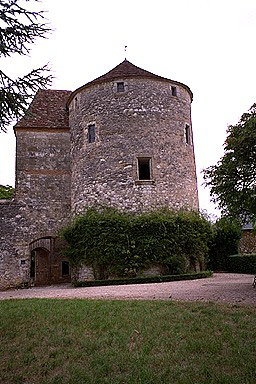
Day Trip to the Dordogne
 "Although the hotel had appeared almost uninhabited, he locked the door and placed a heavy table and a chest of drawers against it. He then put his purse under his pillow, and repeated to himself three times the translation of the king's letter. There was an extremely high wind blowing, and as it howled in the neighboring trees, it was with a feeling of great satisfaction that Chicot plunged into a very comfortable bed. He had a lamp by his bedside; before going to sleep -- and partly that he might go to sleep -- he read a very curious book which had just appeared, written by a certain mayor of Bordeaux, called Montagne, or Montaigne. This book had been printed in Bordeaux in 1581; it contained the first two parts of a work since then well known, entitled 'The Essays.' It was interesting enough to read and reread -- by day. But it had the merit also of being tedious enough not to keep a man from sleeping who had traveled fifteen leagues on horseback, and had taken his bottle of generous wine at supper. Chicot had a great liking for that book, which on leaving Paris he had slipped in his pocket, and with the author of which he was personally acquainted. Cardinal du Perron had called it the breviary of an honest man; and Chicot willingly took it for his breviary. Nevertheless, in reading the eighth chapter he fell into a deep sleep."
 Here's a snare set by Dumas just for me. It caught me on page 221, Chapter XXXV, "The Four Winds," of the first book of The Forty-Five. Our friend Chicot is on a mission for his master, the last Valois, Henri III. Chicot has a letter for the king's brother-in-law -- and enemy -- Henri of Navarre. Fearing the letter might be captured, Chicot has translated it into Latin and then destroyed the original after memorizing the translation. Typical invention for the always cautious Chicot. The king's emissary has stopped at an inn for night and waits for the thieves and or assassins he knows are after him. He doesn't have to wait long. Chicot sleeps. Chicot wakes to the winds howling, the door is busted from it's hinges, his blockade fallen, the lamp is out, the room is smashed to bits, and, Chicot yells an alarm. Naturally, the intruders retreat, without the letter they came for but with all poor Chicot's clothes. Next time, the reader may rest assured, there will be swordplay. Again, typical.
I reproduce the whole paragraph above not because there is anything remarkable in the episode, or anything specially representative of Dumas in it. As always with the great novelist, there is always as much fun in his feints as in his fights, but obviously what thrilled me when I read this was the portion I've highlighted.
What does our hero bring in his saddlebags to pass the time between intrigues and attempted assassinations? A newish book by this clever fellow, what was his name, knew him slightly at court, always liked him... Montaigne!
How delightful to meet with the great essayist's first edition in this unexpected way! Dumas does not actually bring the Mayor of Bordeaux (RET by then, actually,) onto the scene -- he never crowds his history just for the sake of expanding his cast with cameos -- but he can't resist introducing the greatest name to survive the time he describes, and how amusingly, and lightly he manages this! Dumas, never one to let such an opportunity pass, even gives his cheeky "jester" the chance to pass a perfectly fair, and very funny judgement on the great book. Quite right. And then the great novelist makes a joke of his own, by making his hero, often accused unfairly of indolence, fall asleep reading one of Montaigne's most famous essays -- unnamed in the novel but easily identifiable from the number -- "Of Idleness." Merveilleux!
Now I've already been babbling here about how reading this kind of grand romance, I find myself unable to resist following after some of the many tributaries in print that seem to lead me off the page and into other books. Having already Michel de Montaigne much in mind while reading this novel set in the age to which he might rightly give its name, how could I resist looking up that essay? Then, myself having managed to reread the essay to it's end before getting dozy myself and stopping for the night, how could I not the next day follow Montaigne the whole way back to his chateau in the Dordogne?
As I was reading already in l'ère de Montaigne, what, I wondered, might I not find to know of the essayist beyond his essays? It is a curious thing that I have never read a full-length biography of this, the father of the essay, the greatest essayist, and my great favorite. How could this be? Well, I'll tell you. I couldn't find one. It is a curious fact that this writer who made a new literature of himself should be so poorly served by biographers. So I went hunting.
Ah, the miracle of the Espresso Book Machine, that great, good resource for the reader ill-served by the catalogue of only the books now in print! So to the bookstore's convenient website for searching out the out-of-print, and there was just the thing. I have had some experience with being disappointed by the Google books project and their regular and to me inexplicable failure to find and scan all the volumes in multi-volume works. (Dumas' own marvelous memoirs are to be found, for instance in only 3 stray volumes of the total six, at least in English. Maddening.) This time, however, I was not disappointed. It took a deal of hunting, but I did indeed find just the thing: Montaigne the Essayist: A Biography, in Two Volumes, by Bayle St. John,published by the venerable Chapman and Hall, then at 193 Piccadilly, London, in The Year of Our Lord, 1858.
Naturally, I begged my kind coworker, the mistress of the machine, Homer, to print me both volumes, tout de suite, and -- here they are, those two dear, Victorian little volumes, right in my hot little hands.
Bayle St. John, as it turns out, was of a distinguished family of writers and scholars, and having already read 120 pages of volume one, I can say I am glad to have met with the fellow. True, he is, as I expected he might be from the date of publication, a bit sniffy about the admittedly appalling conduct of the nobility in 16th Century France, but this can be rather endearing, specially considering Montaigne's famous candor, at least as to his own appetites and the like. But perhaps it takes an Englishman and a Victorian to make me see with what discretion and reserve Montaigne actually wrote; never for example naming the lady who St. John is convinced broke his heart. (I have my doubts about that. I'd say it was only the death of Montaigne's "great friend," the poet Étienne de la Boétie, that shattered that noble ticker.)
St. John does another very Victorian service to the 21st Century reader, by using not just the Essays and the very scanty facts of Montaigne's early life to tell the first half of his story, but allowing for what we might deduce from what we do know of Montaigne's times to suggest, if not where the young man was at every given moment, then at least where he was likely to have been, and what he might have been doing there, and just generally what it might have been like to be, say, a young lawyer or courtier at the time. St. John manages to do this without ever quite overstepping the biographer's privilege and inventing. The result is sometimes a bit thinly stretched, but the thick, Victorian style has just enough elasticity to it not to break his narrative at any point. Most satisfying.
So now I'm reading this biography, and Dumas, and the book about the horrid Guise, and will reread, of course, the great Essays when I get to them, and I am most happy.
I will apologize now for so seldom going too far, and in so doing perhaps not getting nearly far enough away for my own readers, from this little project of mine to hold anyone's interest but my own. But then, I might, tonight, have told you all about that Cardinal, Jacques-Davy Duperron, mentioned above, who told Chicot that the Essays were "the breviary of an honest man." Terribly interesting character, as it turns out, the Cardinal.
Perhaps, another day.
Enough.
Instead, I'll let Dumas close as he opened:
"Chicot replaced the chest of drawers against the door, got into bed again, and read till daybreak..."
Thursday, September 9, 2010
Daily Dose
 From Montaigne the Essayist: A Biography, by Bayle St. John
AT THE COURT OF CATHERINE DE MEDICI
"Indeed, as soon as the the influence of Catherine de Medici began to be felt in reality, the corruption of France increased, but became more gorgeous and refined. There was a perfect fury for adornments and costumes; and, as a historian naively remarks, 'modesty suffered.'"
From Chapter X, Montaigne as a Lover
Subscribe to:
Comments (Atom)