Showing posts with label Peter Enright. Show all posts

Friday, June 13, 2025

toute la vérité


 Not but a week or two ago I opened a satchel from the back of the closet and found twenty years worth of correspondence, drawings, posters for marches long past, writing, notebooks. I was meant to be cleaning out the closet. I did not. I sat on the bed and read letters from friends living and dead and then I ate my lunch and read a one act play I wrote when I was twenty two. Time and forgetfulness had not improved the thing at all. It was still not a very good play. When I was done I sent it to live on a farm with the not very good novel I wrote when I was thirty. 

Just today I opened a drawer in my dresser and I found for no reason a nude photo of me. I was looking for something else — it really doesn’t matter what — and there it was -- there I was -- under all the other junk, the keepsakes and whatnots: myself naked on someone else’s bed, smoking, frankly carnal or more probably postcoital. Rather startling there amidst the antique valentines, stopped watches, and old eyeglasses. How did that get there?! It is an actual print, this nude, not a Polaroid, which means, for anyone too young to know or care that it was taken with a camera and the film was developed by someone else, probably at a camera shop or drugstore in Pittsburgh, Pennsylvania. There’s a time-stamp on the print that tells me that the photo is roughly forty years old, so I was not exploited in any way when it was taken, in case that was anyone's first thought (Nobody made Coco take her blouse off this time, honest.) Still, it was a daring thing to have done then, take a nude photo and get it developed commercially. Lucky no one noticed or reported it. We could have been arrested, me and the photographer.  From the pose it's pretty obvious I did not take the photo, and just as obvious that I didn't mind it being taken. 

Bless whoever did, or rather his memory. I confess here and now to not remembering the gentleman's full name. Pretty sure he's long dead so it frankly does not matter now to anyone but me. Frankly I'm glad to have it. It’s not like I posed for a lot of nudes. Wish I'd posed for more! Interestingly, I don't remember being given the photograph and I don't actually remember posing for it, though that looks like a lot of consent right there. Of course I remembered the photo as soon as I saw it, but it's not the sort of thing one keeps by the bedside or framed in the guest room. I don't remember putting it in that drawer either. As for where else it may be in the world, I rather doubt I was his only model. Perhaps there is somewhere a whole album or shoebox extant of like mementos. So old as to be of historical interest now, I should think. Still, if anybody finds that negative and wants to exploit that windfall, have at it. The hair and glasses cause my only blushes now, and they date it almost as accurately as the time-stamp. Not sure who the audience would be, but you never know. Turns up on some vintage porn site, you let me know. I'd be thrilled.

It is not the photograph in the photograph I made to go with these words. The picture above includes another photo I found in that drawer, a snapshot of my late friend Peter on a beach in San Diego where he lived at the time. Peter died of AIDS a long time ago/yesterday and will always now be young. I really like this photo too. Don’t remember the dogs. Dogs four and two footed simply found Peter. Dogs, children, cats, people bumming cigarettes, friends, strangers with no reason to confide in him other than his smile, they all found Pete. He had an open face, very attractive, easy to love. Lord knows I did. I chose this picture of my friend because he was so beautiful and we were young then together, if not so young as I was in that nude shot. Still, Peter is youth, forever. 

He can be that here as well.

We were something, once, the pair of us -- which is just another way of saying we were young together.

At the time of Peter's death there were still a handful of stunning Polaroids that I dutifully, regretfully destroyed as he'd asked me to some time before. He was breathtakingly beautiful in some of those. At best in my one nude, I look young. I might even go so far as to say cute. Happy. In Pete's he always looked deadly earnest; determined, concentrated, poised. I look damp. Pete looked dewy. I looked sated. He looked insatiable. Comparing those remembered photos with the one in my hand, I'd say the primary difference is that he was a dancer and completely in his body and I was only very briefly forgetful of mine.

Just so you know, I’m not showing anybody my nude — not that anybody’s likely to ask, but just to be clear. I’m not ashamed, not of having posed for the picture, not of anything in it, not of keeping it. Actually I'm thrilled to see how good I look in it, how unselfconscious. I nevertheless decided not to share it. Not online. Not at all.

A few years ago I posted a black and white picture of my young father holding his firstborn baby, my older brother. Clearly taken at a summer picnic, my father was shirtless in the picture. My brother is in a blanket. Facebook took it down for nudity “not meeting community standards.” 

Primitives, these commercial censors, these algorithmic aunties, prudish and lazy and dumb. Homophonic too. Fuck ‘em — yeah, but maybe not pick that fight again today. Can't win. More important battles now anyway, some in the streets.

The other reason not to share my nude isn't anything to do modesty or embarrassment, or even privacy as some abstract absolute, come to that. A retired acquaintance who has recently taken up writing and started his first novel asked me if, in my opinion "great writing" needs to be "ruthlessly honest." Don't entirely remember my answer but I hope I had the sense to back away as quickly and as gracefully as I could from any suggestion that "ruthless honesty" was among either my virtues or my vices, or that I had ever aspired personally to "greatness." Maybe that sort of thing is necessary to art. I could not say. In my small experience though all art isn't necessarily about ambition or expectation, just work. To my mind, that's where the ruthless honesty might best be applied. Nobody said your novel has to tell all the truth, honey. It just needs to be better.  As for integrity, there's more than one may to measure that too. Everything I've written, most of it now in the first person? There are still other people, living and dead that I would rather not hurt. If that's a curb on  my artistic integrity, well so be it. Why not tell all? Show my ass? Shit, who am I still trying so hard to impress? My parents are dead. Doesn't mean all my business needs to be in the street. My ass, honey, is my own.

When I was stretched out on that stained duvet in my all together, you can be sure I was very much not thinking about posterity. I pretty clearly hadn't so much as a thought in my shaggy head. If I had to guess, I'd bet I was hungry. Who knows? My only responsibility to that earlier version of me is to maybe remember him less harshly than I am usually inclined to do, perhaps forgive him everything. How's that for a start? Truth is I barely remember him most of the time -- until I am reminded by something he wrote or something someone else remembers him saying or doing or until, as happened today, he stumbles ass-out into the present day and actually puts his junk right in my face.

Who are these people who seek to preserve their own youth? What really is the point of that? My own is as extinct as the Pharaohs, sweetheart. I'm not saying that I am as old as all that, just that who I once was or might have been is not indeed who I've turned out to be and that is fine. Honestly, in many ways it could not have gone better. 

Because my youth was scary as Hell. People were scary. Sex was scary. Politics, strangers, family, my quaint, charming little hometown were all scary as fuck. I made it to a city, more than one, and men died all around me anyway. Some friends succeeded and others failed and some died before they had a chance to do either. Some of it was fun -- witness the existence of my one sexy nude -- and some of it was wonderful, and much of it was just shit. So what exactly would I be looking to preserve? 

Was my skin ever flawless? Does anyone remember me dancing? Did I change the world?

Some of us survived. I did. All the evidence of that is sat right here in this chair. Count me: present. That is actually something.

My memories are slim enough to slip between the pages of books other people wrote. My past is in envelopes, under embroidered handkerchiefs, tucked up behind souvenirs, tangled in a string-tie I wore exactly once and a jet necklace I used to wear with a black silk blouse I bought in a thrift store when I was sixteen. I used to wear that blouse with high-waisted, wide-legged gray pants, cuffed and creased and sharp as fuck, baby.

Honestly, I remember that outfit I haven't worn in better than forty years better than the sex I had forty years ago commemorated in that photo. Who knows why? At the time I’m sure I was convinced I looked better in my clothes than out. Maybe that's why. Thinking about it nowI realize that I wish I had a picture of me in those clothes!

My memory could be better. I used to learn whole roles, I memorized poetry, Shakespeare. 

But what's more tedious than some old bugger expecting sympathy for not knowing why he walked into a room? Forget about it. Who cares?

And clearly this is not how memory works anyway. That was work. Mostly this is just chat. Very different stakes. Besides, who knows what one used to know? Don't care. Maybe a sonnet, still, or two. That's something. I'm convinced that this disorderly preservation of irrelevant specifics and the not very interesting detail is all but entirely random. It is just stuff for making stories even if the only person to whom one is telling them is one's self. So far as I can understand it memory is constantly recasting even things as seemingly set as photographs into whatever narrative may suit present purpose. That's Clio who makes sense of the past, that's history's business, not memory's. Memory doesn't rate a muse, it's not an art. Forgiving the self-indulgent pun, there's no Craft in it either. It just is. "A thing of rags and patches." 

As I write I am anticipating a period of adjustment in the circumstances of my employment. Not going to lie, scared. Also? Missiles are flying. There is new/old war, and rising authoritarianism and grave and great injustice all around us every goddamned day and the very worst people for the very worst reasons are making all the very worst decisions and it is awful, as you know.

Just this week, the Souther Baptist Convention, that bulwark of deep-fried idiocy and home-canned hate, announced plans to prioritize the repeal of Marriage Equality -- and why not? Fuckers are on a roll. 

And it's June, so it is also Pride.

And Edmund White died. Some of my memories aren't so much mine as his. He wrote parts of my life for me. No other writer took me further in the acceptance of my self, taught me more of how to navigate the world as a gay man, gave us collectively a better appreciation of our sexuality as both the means and subject of our revolutionary movement, as well as better fucking fun than the Baptists, and the Larry Kramers, and the Andrea Dworkins could ever imagine. He literally wrote the instruction manual. No one amused me more, moved me more, directed more of my reading. No one I can think of, not even his hero Genet, did more to make us interesting to ourselves as sexual beings and with better reason than we'd ever known or assumed.

I believe he made Foucault laugh. Imagine that.  

As a reader of his work since the year I graduated high school, it feels like he has always been here. And -- AND -- No aging writer in my lifetime more fully embraced his full, final, glorious, hilarious, monumental and complete disregard for discretion, decorum, and bullshit. No other writer, particularly of his generation that I know of so absolutely gave up a giving a FUCK about other people's embarrassment and discomfort and affectations of dignity. In his seventies and eighties he wrote a whole new shelf of wicked little wonders and fabulous fare-thee-wells: comedies, criticism, memoirs, interviews, and sex, sex, sex. 

Of what other writer am I likely to say that his very last book may well be my favorite?!

Holding what may be the only hard evidence of me naked at twenty one, I can't say Ed White made that picture possible, though maybe he kinda did, but he certainly comes to mind as the only major American writer I'm sorry to have missed the chance of showing it to. 

That's the story today for Pride, for me, my tribute to the great and good Edmund White. I wish he'd met Peter. I am grateful for the work and his example. I wish I'd shown Ed White my ass at twenty-one. 

And in his memory?

Let's show ALL these fuckers our asses tomorrow.  

Friday, July 15, 2022

The Night Oberon Tapped the Nutcracker


 I have a story. Starts one place and ends in another, the way stories do. If it isn't quite a Christmas story -- meaning it hasn't much of a moral and neither Santa Claus nor the baby Jesus makes an appearance hereafter -- at least there's Christmas in it.

 I noticed him because he looked very like me. Not so interesting as you might think. Lots of people look like me now, or rather, I look like a whole lot o' people now because -- older: white beard, close cropped hair, glasses, wider than high. After a certain age it takes real effort to stand out in a crowd, effort that requires energy, which requires effort, which require energy, which most of us aren't willing to waste on things like audacious new looks or putting in the real work at the weight-bench. Kudos to them what do. Nothing I personally like better than ropey gym daddies and eccentric centenarian fashion plates like Iris Apfel! Bless 'em. Most of us in the range of sixty settle for statement frames for our bifocals and the occasional bold plaid. I can't remember the last time I looked at my footwear and thought I needed to step up my game. There are a lot more of us than not, which is what makes the exceptions notable. So we all play a role, don't we?

This uniformity of age isn't about sex or gender either. I've known a lot of professional men in their fifties who look a lot like famous female basketball coaches; boxy suits, gray crop, dark turtlenecks, thin necklace. I've known a lot of women in their sixties who look just like me without the beard, particularly in winter gear -- which is designed to do three things well: retain heat, make it hard to find one's keys, and neutralize secondary sex characteristics. Even the distinction in summer resort wear tends to relax after a certain age, at least if you still run with the right crowd. I've know just as many women who swim in T-shirts and boxers as I have men who host deck-side cocktail hours in kaftans and diaphanous wraps. Gendered clothing is bullshit. The young people taught me that. All good, so far as I'm concerned. Better in fact, as anything that undermines patriarchy and allows me to wear a loose-fitting cotton and a wide-brimmed sunhat is a personal plus as well as a blow against hetero-normative conformity.

So the man -- and yes, it was a man -- who looked like me was only noticeable because he didn't look like me now but rather looked very like me when I was about nineteen years old. That's what struck. Back then I had oodles of auburn hair, a bright orange beard, and a twenty-eight inch waist. I wore corduroys so tight a dime couldn't fall out of my pocket and collared sports shirts in colors not associated with any professional club. Not a combination you saw every day back then and certainly not someone I've seen much of since. 

He was in a crosswalk half a block in front of me so I can't speak to specifics like eye-color or the full extent of his beard, but at less than fifty yards away it really did suggest time travel, or one of those television visitations so popular now in the final season of an hour drama when the past drifts into a wide shot. I didn't run up on him because I don't run. Also, it's worth mentioning that I wasn't attracted to him. Would that have been creepy? Yes, I think it would have been. I just kept walking and so did he and we walked in different directions. We didn't make eye contact or anything like that. He was there. I noticed him, was struck by the similarity, and then I lost him. He didn't evaporate or anything, I suppose he just turned a corner. End of doppelgänger moment. End of story.

What I wish is that I'd been close enough and quick enough to snap a picture of him for my beloved husband, A. That was the boy he met, pretty much the one he took home. T-shirt rather than a pink and green Izod, tight jeans instead of tight cords, and I'm going to say sneakers rather than canvas flats but I really didn't look at his feet. I wish the beloved husband had had that glimpse of me then in the crosswalk now. Hasn't seen that kid in years. 

It takes a certain cast of mind to mistake the living for the dead, to see previous incarnations passing in the street and I don't think I have whatever that is that allows for this. Based on this brief experience I think it must be wonderful. I was surprised and pleased as long as it lasted. I've known people who saw lost lovers in subway stations, long-gone friends at the foot of the bed, or their dead mother at the foot of the stair, telling them that they will be alright. When my best friend Peter died I believe I actually looked for him in crowds, not as he was at the end which was heartbreaking and awful, but as he had been when I met him and when he was still going out dancing. I've scanned more than one dance floor in more than one club looking for someone who moved like him. Never saw him again.

Some people dance naturally, as if utilizing a second language. Seems they've always known how, unsuspected until required. Block-parties, weddings, bars, there are usually at least a few people who hear music and move with it. My paternal grandma knew how to dance, my dad did too. Didn't pass on to my generation. We three inherited our mother's shy feet. I've also known a few professional dancers and I noticed that in social settings, whatever the music and whatever the state of their sobriety, they use their bodies like instruments, the way they've been tuned and practiced, the way a classical violinist might play a reel or an opera singer might sing jazz. (One of my all time favorites things, by the way, divas who swing.) Once a real dancer, always a real dancer. All the world's a stage, and every club has an otherwise unseen proscenium arch. The training will out one way and another. However free and easy the mood or the music, there will always be bits of remembered choreography in their muscle, just how far they will kick a foot and no further, what they do with their hands. When I was young I went out with little knots of theatrical kids, musical theater types, ballet and modern dancers, and they all uniformly, unselfconsciously did this. Always dazzled the locals. (I learned to take off my glasses when I went out dancing with dancers. If I was going to have any fun at all, I couldn't hear the music and watch them at the same time. Always an audience, me. If I was stood too close to that kind of talent and let myself look too long I'd just stop stock-still and watch.) 

Peter danced a little the day I met him, right up the aisle of our freshman orientation at college. (We went to that theater school you went to when you didn't get into the good one.) Peter danced the same way the rest of his life. He took class, danced in musicals, dated dancers and his dance teacher and he loved going out. He was good. He had the steps. He used his whole body. He was a beautiful dancer, sexy, but he did not change. If he had the music he wanted he was on the floor. Didn't need a partner but he could lead or follow as the need arose. But if the song was wrong, or the floor was too crowded, or he wanted to drink he would walk right off the floor without a moment's hesitation until something he like pulled him back. If he couldn't dance to it, it wasn't worth trying. He knew what he liked and he knew what he could do, and do to anyone watching, and he did not much vary from the first time we went out to the last.

He's been dead a long time now. Never saw middle-age or a white hair. On the infrequent occasion when I see gay men of our generation out dancing nowadays, I remember a night a quarter of a century ago when we were still young. I went to a party hosted by an older gentleman, very much of the Castro clone type from his brush mustache to his Disco boots. Really he was of the generation just previous to ours culturally if not chronologically, but already in those endangered days he was a bird increasingly rare. At some point rather late in the evening he took command of the music and put some early Sylvester or something like that on the turntable. The man turned it out! Snake hips, big, gestural arms, pony-kicks, it was like a tutorial on how nobody danced anymore. The little ones scattered. We all stood and watched. I wonder had he lived long enough Peter would have been just such a figure. Cameo, or Kool and the Gang, Whitney, and Pete would rise up and show the children how it was done in the day!

He always started the same way: right hand on his chest, elbow out, left hand in the air, head down, back arched and relaxed, arched and relaxed, and kicking, kicking, kicking. It was tight. At some point that long S would start in his neck and work its way down his spine and back up. His legs were incredibly strong but not long and he kept everything centered in his chest. He would drop forward from his waist and let his legs keep his balance, knees bent while he rolled his torso. He'd let his ass drop onto his heels and pull up with his hands still flat on the floor. To be honest, it was always about that ass. That was always when the sailors in San Diego really noticed him, when a big man would bump up against his backside in the after-hours club in Pittsburgh, when the guy he'd been flirting with at the bar held up a fresh drink. That ass was everything.

I watched him dance in at least six cities, in every kind of club, parties, my living room. Same dance, just as good the last time as the first. Best he ever was? We were freshmen in college and for our make-up final -- theatre majors, remember? -- we had to do a full character: make-up, hair, costume, and then go to our instructor's Halloween party. Our host was there to greet us, dressed in a perfectly tailored half man/half woman number. Exquisite human. We got our final grade from him at the door. Fun. Not for everybody though. I can still remember the poor soul ahead of us who came as Raggedy Ann. Failed. (That may have been the first time I heard the word "basic" used as a withering put-down.) I was The Mad Woman of Chaillot. Picture hat, shawls, boas, Edwardian dress and button shoes all borrowed from the stock room. To hide my beard, I'd made a sort of turtleneck/snood. Worked. Grade? "A bit operatic, but then you're near-sighted, right? Next time have a friend blend you. B+." Peter went as Oberon. People didn't actually wear glitter going out much then. Peter sparkled. He was naturally handsome in a rather Mephistophelian way; sharp nose, sharp chin, wide mouth. He'd done his make-up in browns, umbers, and forest greens. Stunning. He got an A at the door. The fact that he was only wearing green tights and little collapsed leather boots didn't hurt. I remember his teeth chattered when he took his parka off to be judged. We didn't stay long at the party. Then we went OUT!

We went to the club. We got in easy. Nobody checked our IDs, ever. The place was understandably packed. We danced. At some point on the dancefloor, we were joined by a whole troupe of actual, professional dancers. (Here's where the Christmas comes in!) There was a Canadian company in town already touring the Tap Nutcracker. One very handsome if far from tall fellow dressed as a Valentino sheik gave me a whirl. At some point he leaned right into my ear and asked if I was a "real" woman. Back then people still asked that sort of question. We knew no better, kids. To answer him I pulled down my Kate Hepburn turtleneck and out sprang my long, red beard. He seemed to like me all the better for it. Around Peter's Oberon the fairies circled worshipfully. He was golden then; actual glitter, broad shoulders, muscles everywhere, tiny waist, the aforementioned big booty -- in tights. By the time I retired from the dancefloor dripping with greasepaint and sweat, Peter had picked a fairy queen. Big guy, no costume but a cute leather harness the same color as his perfect skin so that the buckles and studs looked like they occurred naturally on his magnificent frame. Those two danced hard. People moved back to watch. It was magical, truly.

I'm not being coy when I say that I don't remember how the night ended. I honestly don't. I can imagine. My sheik was too drunk to offer rides on his stallion, so to say. Oberon went off with his tap-dancer-leather-daddy. Saw myself home in a cab. It was still magic. I can still see the two of them dancing, and the glitter Peter shed on that magnificent man's chest.

The problem with doppelgangers and time travelers and that whole lot is that one never sees the person one looks for. All I saw was me. Me as I remember me, but what of it? My past is not a place I go to in search of myself. Found me ages ago and grew into him. Didn't do a bad job of it, though I might have paid more attention to keeping the vehicle oiled and in good trim. Non, je ne regrette rein. 

Nobody I've ever known loved Christmas more than Pete. Literally, actually, altogether loved Christmas, did our Pete. I say "ours" because he was never mine, never just mine. Instead we were best friends so we fought like old married people and we laughed more together than was either rational or necessary. I made terrible fun of him, in part because he would never have sex with me and because he loved me like a brother, but also because he was vain, and dizzy, and reckless, and maddeningly sweet. And he knew just how to kick me right in the ass too. Trained dancer, remember. He used fewer words than me, but then he didn't need them the way I did, do. Christmas was his absolute jam. Wherever he lived, whatever the state of him, he had a beautiful tree -- up too soon, down shockingly late -- plus decorations, records, Santa hats, reindeer horns, punch-bowl, Christmas cards taped up on the wall.

After college he always had tiny studio apartments. Just where he slept after all, mostly. Peter was a going out guy. And in each and every one of his tiny studio apartments he had Christmas parties. All of his Christmas parties, all of his parties were dreadful in the same wonderful way; too many disparate people, in too small a space, never enough food, too much booze, noise, and mayhem, and the tree knocked over. Every time. Peter knew everyone and invited them all: neighbors, cooks, club owners, dancers, drinkers, landlords, tricks, the prostitute from 3B and the fireman from when the building almost burned down and the doctor from the clinic and the sweet Polish couple that managed the building. ("Dammit, Piotr, too many peoples!") And when it was finally breaking up, out came that damned Carpenters album he loved above all things. At least everyone knew when it was over, except Peter, bless 'im.

He also loved shopping in malls and fancy shops and for cards and perfect wrapping paper. He sang along to carols on the escalators and wished a Merry Christmas to the girls at the perfume counter. Out was where he always wanted to be, where he lived. Out into snow or sunshine, out to eat, out to drink, out to cruise. Peter didn't come out so much as stay. (And yet I never met anyone better suited to live alone, as happened even when he briefly had boyfriends, with one of whom at least he lived for awhile.) He liked having things just so and as he preferred them when and if he came home. He liked having his own room, possibly because he came from a large family. He liked seeing other people's Christmas trees and decorations, but he judged them rather harshly. That was not where one put the candlesticks, bitch. He could be particularly harsh about other people's creches. 

It sounds an exaggeration but everywhere he went he danced; down aisles, and up streets, and around what he didn't want to discuss. 

I can't talk about our last Christmas. That was horrible. My fault mostly, but also there was so much wrong by then anyway. He stopped speaking to me. Then his mother died and he had to. Then he was back in his old apartment on Polk again and I was at the other end of California. Horrible. The worst part of being present at the end is that the end is what one remembers. Always thereafter have to get around the end to see past it and that is very hard to do. It's been twenty years and I still have to make myself not go to the one memory of all my memories I least want when I think of Peter. Bitter but so.

Of all my dead he is still who I would most like to see, even if only in passing on the street. Peter as he was in his glory; Oberon in green tights, Peter in a wide-necked sweater and a swimsuit, sat smoking on a pier in San Diego in November, Peter in a Christmas sweater and chandelier-drop earrings that weighed more than they were worth, Peter dancing. Peter dancing. Peter dancing.

When Christmas comes again I will make the effort again. Dickens made Christmas, among many things, an occasion for ghosts and visitations. I will sit in my quiet house in Seattle where my friend never was and I will look at the photo I keep of sweet Pete in a tin reliquary from Mexico, shaped like a heart, and I will try very hard to see Peter dancing, Peter Dancing, Peter dancing. How his eyes still dance in that picture and oh, how lovely he was.

Saturday, December 1, 2018

World AIDS Day 2019 (For Peter)


LOVE AND GRIEF

Out of my heart, one treach'rous winter's day,
I locked young Love and threw the key away.
Grief, wandering widely, found the key,
And hastened with it, straightway, back to me,
With Love beside him. He unlocked the door
And bade Love enter with him there and stay.
And so the twain abide for evermore. 


-- Paul Laurence Dunbar

Wednesday, March 11, 2015

Why "Soldier, Rest"


Maybe it's as simple as this: I've been reading Sir Walter Scott.  I read The Lady of the Lake straight through a few weeks back.  Then I read this poem -- from that longer work -- again three days ago, in an anthology.  It is a song, really, the poem I read aloud and posted here last night.  Scott wrote many such, and collected many more in his three volumes of border ballads.  He loved nothing better.  He did nothing better.  I've only just heard it sung, Soldier, Rest! in a lovely recording I found online.

However then it's come to mind, I have it now and it's made me think, not of Scott, or his ballads, or of war and soldiers, but of rest, and of a good man only just gone, too soon, to his.

It may not suit the occasion, or better say, there may be other, better poems that might.  He wasn't a soldier, the man who's died.  His was a gentle soul.  The violence he knew was, so far as I know, all or nearly all interior, his struggles with and within his mind and illness.  Maybe that's why the poem reminds me of him nonetheless.  He fought.  Reading his obituary, I am touched and proud to see how much he won.

Mental illness was not what killed him, at only sixty.  Cancer killed him.  Cigarettes killed him, it may be argued I suppose.  His pleasures were few enough and simple, I should think that it would be hard now to argue even against this one.  I wasn't privy to his last struggle.  I hadn't seen him for a decade, or thereabouts.

I knew him because I loved his brother, Peter, as he did.  Because I knew Peter, I knew Mike.  One couldn't know my friend Peter and not know his family.  Hell, one could not sit by Peter on a long bus ride and not in the end know something of his family!  I like to think I knew Peter as well as anyone not related by blood, certainly better sometimes than the man knew himself.  He knew me the same way.  I doubt, however that Peter remembered my brother's name from one telling to the next.  Family with Peter however was often nearly all he had and if one wanted to know him, well, he brought them with him.  More, they welcomed me, all of 'em, as was and is their nature, as it was his.  I loved them, and do.  Peter's gone, as are his parents, his brother Tom, and now Mike.

Mike was a special case.  When his older brother's illness came, Peter was still a boy, with all of a boy's understanding and a little brother's natural resentment of the attention it drew away from him.  Boys can be selfish, parents distracted with worry, families complicated even before they are tested.  Mental illness is unlike if it is anything at all.  My family has had some similar experience of it.  I've seen the devastation it can bring in it's wake, to both the sufferer and those who suffer with and 'round him or her.  I don't equate my experience with theirs.  Tolstoy's famous line, "... each unhappy family is unhappy in its own way" is true.  By the time I knew Peter, his brother's illness was managed, the family survived more or less intact.  By the time I knew them they were not, I should emphasize, unhappy, at least no more nor less than any other.

And when I was with them, more often than not they were more joyful than not.  A loud, dramatic, big and boisterous family, by any standard, a fact only emphasized when first encountered at the dinner table, and at the Holidays!  They were, I admit, a shock to someone more used as I was to shy affection and quietly smoldering resentments.  The noise of them!  I loved it.

Mike was very much of them, always, though his illness put him, as only such an illness can, somewhat apart, always.  Schizophrenia separates those who have it from not only other people but in many ways separates the ill from themselves; from their lives before the illness, and from the trust we all have, most of the time, in ourselves.  I saw Mike struggle, even when he was well, to trust himself, to read the reactions of others right, to trust that he was in fact well.  I saw my friend Peter, his brother, struggle to trust his own reactions, testing his patience, struggle sometimes to trust his love for his brother and let that be enough.

People who have been forced to doubt themselves as profoundly as only such an illness can, will, I suspect always thereafter be at some disadvantage in company.  I saw members of my own family, including a smart, even witty woman, well educated and professionally accomplished before her illness,  withdraw further and further into an agonizing uncertainty that eventually exhausted her.  I watched her with embarrassment as she faltered in commonplace situations, heard her lose the thread of simple things, and give up.  As with many people so circumstanced, we none of us knew how to help her.  I was a boy when all that happened, what could I do?  I still blush to think how little I might have done and didn't.  Eventually, my aunt lost the struggle to regain herself.

Mike did not.  Even the last time I saw him, years ago now, he was as he had almost always been when I was in his company, valiant.  It is a martial word, and now I think, apt.  It is no accident after-all perhaps that Scott's poem should so remind me of Mike.  If his first resort was to his faith and to those familiar and familial expressions that can sound to the better armed conversationalist regimented and rehearsed, the affection expressed was no less sincere for that.  It took a remarkable discipline I realize now to make that effort, to maintain, express and to emphasize love above any doubt and despite the very real disappointments even a more expansive life than Mike's might find, day to day.

I never knew him, in all the years I knew him, once I knew him, not to say he loved me, and mean it.  He loved me because I loved his brother.  That was enough.  That was brave, even noble.

It is no reflection on the character of those who can not do as he did that sometimes even love fails them.  I loved Peter, and I failed him, as in the end he sometimes disappointed me.  Peter was sick for a long time.  We were often separated and for a long time.  His illness changed him in ways neither of us could have anticipated.  It changed me too.  Illness only takes from us, and from some it simply takes too much.  I see no gifts in suffering.  It is human to want sometimes more than we can have or keep, but all we lose is lost.

Peter's family never failed him.  Sometimes he was disappointed in them, and they in him, but they never failed him.  Nothing good came of Peter's death.  Nothing.  Even in his dying though there were chances to see his better nature and the better natures of those around him.  His family loved him and I loved him.  People loved him who hardly knew him, believe me!  (He was a wonder that way.)  His brother Mike loved him as in the end I must admit I did too, without the luxury of conditions.  For Mike, with all his struggles, this one thing seemed easy.  Took me a long and intimate friendship to learn that lesson with Peter.  Peter I think, I hope, learned it sooner and from better examples, like his brother, Mike.

Scott's poem is an inducement, almost a lullaby, sung to a soldier to convince him he deserves to stop where he is and find peace.  I learn only now, reading Mike's obituary just how much, in the last ten years he earned his peace.  I knew he worked, and worked hard at being a man who contributed to the family and community that cared for him.  I had no idea how hard he had worked, and how much he had achieved in making that community a better place for people who had struggled as he did with mental illness.  When he died, he was a respected and recognized contributor to that most important fight for access to care, to dignity and self-suficiency for a population too often ignored and neglected by the rest of us.  His family must be proud, and well they should be.

Was he not a soldier, then, in his way?  And was not his way valiant, then, for all it was of peace?  Has he not earned his own at last?

Oh, how I wish him, and his family, peace.  I send my love, in memory of my good friend, Peter, and his good brother

MICHAEL OWEN ENRIGHT

(Donations may be made in Mike's memory to People's Oakland, 3433 Bates Street, Pittsburgh, PA 15213)


Saturday, December 1, 2012

World AIDS Day


Come O Thou Traveller unknown,
Whom still I hold but cannot see,
My company before is gone,
And I am left alone with Thee;
With Thee all night I mean to stay,
And wrestle till the break of day.

Monday, December 6, 2010

Ghosts at Christmas

There is a tradition in England, or rather there was, of telling ghost stories on Christmas Eve. No idea to what extent, if any, this has survived. I've read some speculation that suggests this tradition extends so far as to Celtic and pagan customs associated with the Winter Solstice. That's as may be. I wouldn't know. It was Washington Irving, so far as I can tell, who first described -- and quite possibly elaborated -- for an American audience, many of the old English customs at Christmas time that we continue to most associate with the holidays. In "Old Christmas" he writes, "Many of the games and ceremonials of Christmas have entirely disappeared, and like the sherris sack of old Falstaff, are become matters of speculation and dispute among commentators." To some of these at least, in describing them, Irving lent his own popularity, thus preserving and possibly reviving traditions that were, even in his own now remote day, already fading away. Irving's English Christmas was a country scene where:

"Even the poorest cottage welcomed the festive season with green decorations of bay and holly--the cheerful fire glanced its rays through the lattice, inviting the passenger to raise the latch, and join the gossip knot huddled around the hearth, beguiling the long evening with legendary jokes and oft-told Christmas tales."

As a regular contribution to this "domestic hilarity" on Christmas Eve, Irving elsewhere specifically described the telling of ghost stories. Just what these stories might have been, I couldn't say, but obviously, at least one Christmas ghost story -- other than that of the holy -- has rather triumphed over all the others. In 1842, at a dinner in his honor in New York, hosted by Washington Irving, Charles Dickens expressed his veneration of the older writer, saying "I do not go to bed two nights out of seven without taking Washington Irving under my arm upstairs to bed with me." What Irving then had helped to preserve, Dickens, in 1844, went on to make a universal part of the Holidays, in A Christmas Carol in Prose, Being A Ghost Story of Christmas -- to give his little book it's full, original title.

Most famously, Dickens himself launched his unique career on the podium, and the custom of reading his story of the redemption of Ebenezer Scrooge aloud, at a charity benefit in 1853. When the author returned to America, in 1867, he brought his Christmas stories with him, and A Christmas Carol, his first and best, proved his most popular selection. In America, reading Charles Dickens' Carol on Christmas Eve quickly became as much a part of our tradition as reading the story of the Nativity. F.D.R., among many, read Dickens' little novel to his family every Christmas Eve. This is to say nothing here of the stage and film and television adaptations that have, in their turn, become as much a part of Christmas as actual carols, family misunderstandings and credit-card-debt.

A more modest tradition can be claimed for Truman Capote's A Christmas Memory. Originally published in 1956, and never out of print since, in one form or another, Capote's story can now quite fairly be claimed as a classic. If by no estimation the equal in popularity of Dickens, or the Gospels of Luke and Matthew, nevertheless, as part of an American Christmas tradition, Capote's short story is perhaps inferior to just these two. (Though I would be remiss not to mention just here the wonderful stories in Jean Shepard's In God We Trust, All Others Pay Cash, and Wanda Hickey's Night of Golden Memories that formed the basis of of the classic Christmas movie, "A Christmas Story." Everybody in America now surely knows the sound of Shepard's voice narrating Ralphie's quest for "an official Red Ryder carbine-action 200-shot range model air rifle.") Since at least it's republication in book form in 1966, and it's adaptation, twice, to television, Truman Capote's A Christmas Memory has become yet another Christmas perennial. I first heard it read aloud, quite expertly, in the San Francisco bookstore, A Different Light, roughly twenty years ago. It is Truman's voice that narrates the classic television version starring Geraldine Page. Since then, thanks to the Internet, I've even been able to hear a recording of the author reading the full text aloud, as well as a marvelous reading for the radio, in the 1990s, by the American actor John Shea.

And this year, in fact, marks my fifth to read it at University Book Store.

While Capote's is not strictly a ghost story, I would argue that it is, nonetheless, in keeping with the tradition. Like Dickens', at the heart, Capote's story is a visitation; a return to what was best in Christmas as we choose to remember it, in the case of Capote, to the scene of his last, perfect happiness in childhood, if such a thing has ever actually existed, for any of us.

Truman Capote was already nearing the peak of his success when he wrote this story. He wasn't there yet. That would come after the publication in 1958 of Breakfast at Tiffany's, which included A Christmas Memory, and his masterpiece, In Cold Blood, in1965. Perhaps his triumph could best be awarded to the evening of his still remembered Black & White Ball, in 1966. Still, Capote was already an established writer, and something of a celebrity when he wrote A Christmas Memory, as he said later, alone, in a hotel room on the other side of the world from Monroeville, Alabama, where Truman spent a good part of his early childhood, and where his most famous and most perfect story is set. This story, he wrote not simply for the art or profit of the thing, or just to remember, and to be less lonely come Christmas, but as a conjuration: to travel again with ghosts of his childhood, and to return to the person who had then loved him best, and the place where, in her, he made his first true friend.

I love Christmas and all its attendant traditions and trimmings. I love the lights and the music and paper and presents and the food. I love the making of Christmas, and the selling of it, and the buying, and the celebration. This then is my favorite time of year.

December however has also, for me, come to be more than a little melancholy, as the years have rolled on. I am far from family, and the most familiar traditions of my own childhood. Like most gay men my age or older, I have had other losses as well, some I can no longer separate from December 1st, and a birthday coming soon, not my own, but of a friend, no longer here to mark it. My friend, like Truman's, lived for Christmas, loved and kept it with more enthusiasm than any other full-grown person I ever knew or am likely to know. Born in December, into a large family, it was surprising that he should never the less love Christmas, however it inevitably dimmed the celebration of his birthday. Didn't matter. For my friend Peter, Christmas was a justification for his joy in excess. Even when he first moved to California, and lived in cramped, rented rooms, he had to have a proper Christmas tree. Later, when he was better established, his tree grew, even if his apartments remained modest. Christmas decorations, presents, parties, and his pleasure in various private and public pageants, at least near the end of his time, threatened to extend his Christmas well beyond the New Year. His last few Christmases, in fact, he parted with with such reluctance that a Christmas tree remained a feature of his living space nearly year round.

Truman Capote would have sympathized. His Christmas celebrations, once he had success and money, became legendary. He loved giving gifts almost as much as he liked getting them. Someone, though I forget now who, once joked that in December, Truman's apartment in New York's UN Plaza Building could be mistaken from the street below for lights of the Chrysler Building, and from his doorway, for a window at Macy's. My friend never had that kind of budget, but he tried almost that hard.

I will never forget a Christmas, when Peter had moved up to San Francisco from San Diego, and had just moved into a place of his own. Walking up his noisy, not altogether welcoming street and being buzzed into his rather shabby building, I looked down the long dark hall to see Peter's door lit up with Christmas lights, his favorite Christmas album blaring The Carpenters out into the hall, and two or three of his otherwise reclusive neighbors, all elderly gentlemen of somewhat dubious incomes and characters, congregating with paper-cups by his open door. I heard Peter's laugh -- the sound I now most miss in life; a great honking brass of a noise -- before I saw him. He was pouring an inexpensive champagne for his new neighbors and wearing an elaborate Santa hat, alight with blinking stars. That his "guests" seemed unaccustomed to such goings-on and perhaps more than a little uncomfortable at this impromptu celebration, mattered not a damn, at least to Pete. It was Christmas, or near enough to being, and everyone must be made to share in my friend's happiness. That is how I will always best remember Peter; laughing, dancing, and a little drunk, defiantly willing the world not to enjoy Christmas with him.

Christmas then, to me, will in large part, for the rest of my life, be as much his as it is mine. I mark it always, decorating our tree, wrapping gifts, singing carols, thinking of him. He is my Christmas ghost, now, and that the scene to which, come Christmas Eve, I will most likely close my eyes and return.

And so, I will read Capote's A Christmas Memory, come this Tuesday night, in a way, in the spirit in which Capote wrote it, and offer, I think, without further explanation, only this dedication:

To Absent Friends!

Wednesday, December 1, 2010

Daily Dose

From Poems of Mourning, Selected and edited by Peter Washington

David's Epitaph on Jonathan

Here lyes the fairest Flowre, that stood
In Isr'el's Garden; now, in Blood;
Which, Death to make her Girland gay,
Hath cropt, against her Triumph Day:
Here, here lies Hee, whose Actions pen'd
The Perfect Copie of a Frend,
Whose milk-white Vellam did incurre
No least suspition of a Blurre:
Here lyes th'example of a Brother,
Not to bee follow'd by another;
The fair-indented Counter-part
Of David's Joy, of David's Heart:
Rest then; For ever, rest alone;
Thy Ashes can be touch'd by none,
Till Death hath pickt out such another:
Here lyes a Flow'r, a Friend, a Brother.

Frances Quarles

Thursday, August 6, 2009

Uncloudy Day

The point of going back to Pennsylvania, the only reason I now have for doing so, will always be family, so long as it lasts, and the few friends that might still be there. My affections, like my affectations, are now largely settled, unquestioned, set, and so much so that I need hardly go anywhere but where I happen to be to be as I am. (Not a bad definition of adulthood, that.) Going back now is an obligation I feel not to the past, even my own, but only to the living. I love those I love now much the same way I walk, speak, sit in a chair, or hold my hands. I make that little list because I do not now do any of those things as I might once have done them. My posture, for example, bad as it is, was once a subject of some anxiety to me, as was my accent, my vocabulary, my gestures. I understood, perhaps even before I understood why, that if I was to ever make a place, however modest, for myself in the world, I would have to change some of what was natural to me -- from my overly sibilant "s" to the lazy way I let my hands hang in the air, to the words I'd learned at home and in my hometown that would, had I used them without irony at least, always have marked me; as a redneck, a racist, a provincial. If I was to pass, both safely through adolescence and out into a life I knew would allow, ironically, for greater personal authenticity and safety, I had to be mindful, and I had to change. Not all the change was radical, I don't mean to make too much of them here, and I now regret nothing of what I struggled to be rid of, but neither am I particularly proud of the strategies and practice I studied then to make myself both less like and unlike who I knew and or assumed myself to be. If my affections, like my habits, are, as I've said, largely settled, it was not an easy thing, finding the confidence required, or the place, or the friends, the partner, the life, that would allow me to be so. Anything I did to survive the place I came from, I can't regret. Anything I am now that is good and honorable, I may owe as much or more to the people I love who I have left behind me when I went than to anyone in my life since, other than my dear A., who has taught me so much, but to the place I came from, I now owe nothing. My debts there were all paid long ago. I don't regret it, save perhaps for the sake of the unhappy boy I was there, but neither do I feel what I assume is the more usual nostalgia for the places of childhood and early youth. Other than my parents and my brother, there would frankly be no reason for me ever to go back. I am not bitter, so much as indifferent to the place. The past, as embodied in that quaint town and the increasingly unfamiliar people in it, when I visit now, looks harmless enough, even charming, but almost none of it and nothing there has much of anything to do with me. I am, happily, now something more of a tourist there than I ever imagined I might be. I wish the place well, I suppose, but neither more nor less than I might driving by.

This isn't something I can easily explain to anyone not from the place I grew up, to anyone not gay, to anyone younger. I am confident that what was ugliest in that small town I knew as a child is passing. I hope, in a way, to not be understood someday, in looking back with less than perfect affection. May that day, for any who need it, be soon. True, there is nothing so very unique in the sad little autobiography suggested here, and I am already embarrassed at having gone on so, for fear I will be accused of protesting too much, but I should at least like to think I have been fair, if not perhaps altogether just, in everything I've written to date about going back. It is important to me that no one reading this assume I know myself so little that I don't see how ridiculous I might make myself by insisting, even as I write yet again about this trip, that I might as easily not have gone. Obviously, that is not so. It is important, for reasons, again, I can't quite explain, that my friends understand, that I understand, why I went, and will go again. My reasons, as I've said, all but one, are among the living.

I had one other reason to go back. One memory did require my presence. I had someplace I needed to see.

I have no confidence in any afterlife but memory. I am, reluctantly, an unbeliever. The dead are with me only in so far as I keep them 'round me, tell their stories, say their names aloud. That so many names come now to mind, when I am not yet myself so old as to see this as right, is, again, nothing unique to me or to the gay men of my generation. Beyond the family lost to me in the natural course of things, there are those I've lost well before their time, without the justification of age, in a conflict more pointless even than war, a conflict not with enemies, or even, finally, between ideologies or with prejudice, though an argument may be made for all that, but with indifference. The deaths I speak of, the dead I speak for just now, these were losses suffered for nothing, justified by nothing, not made significant even by their unimaginable numbers. These dead men died fighting for nothing but the days still owed them, for the health and dignity and happiness not sacrificed to some purpose greater than themselves, but taken from them, arbitrarily, by a disease too many chose to ignore, refused to name, or infamously even acknowledge, until it was already too late for so many. Disease kills without thought or judgement, without moral justification or reason, without any intention but that with which so simple and insidious a thing as a virus may be said to possess. Any other explanation proffered is an obscenity. But human beings, by their indifference, in their disdain, confident in their theologies and sure of damnation, can, and have and may yet still, allow for some deaths, some disease, and feel nothing, or worse, ascribe meaning to that which has none, and in so doing, sleep as if innocent of any fault or failure. I have seen this. I am a witness. It happened here. Do not forget.

The night of the day he died, I was already gone. I'd spent that day with him. I'd washed his eyes and wet his mouth with water. All that I said to him then is mine. I won't tell it now. That at least belongs to me. His family I'd spoken to often, spoken to that day. They were seeing to his things. I couldn't. I didn't care to. I knew they would do everything that was right. I wasn't needed for that. In truth, I don't know that I was much needed then even by him, yet I needed him. I needed to be there, to wash his eyes, put water on his lips, to touch his feverish skin, to let him go. At last, I had to leave. I had a job I thought I needed to get back to, a life that was miles away. So I left. He was still there when I left, some fragments of my friend that still clung to the wreckage of what had been so much beauty, such vitality and vanity and youth. It was hard to see any of what he had been in what he became before he died. It required an act of will, the greatest of my life, to love what was left of him, to insist that he still loved me then.

I can not describe just how beautiful he had been, the wonder of him, how he had radiated life. I have never known, and will never know another soul so much alive. You can't know. You can't.

In his long illness, through days we were together and times we were not, when he lived in my house and when he didn't, I bullied him, fought with and for him, that was my role then, as he had cast me years before, when he'd refused me more; to be his conscious and his confidant, the friend who took him seriously and refused to let him take himself so, the one who did not indulge him, pity him, let him die. It was a hard thing to be that, thankless, and near the end I'd been made to pay for it, that privileged position in his life as the supporting scold and goad. I'd seen him through numberless lovers and infections, jobs and cities and night-sweats and tears. I'd refused his delusions when they first came on him, when he thought strangers
angels and decided I was not his friend. Later, living hours away, I drove all day, more than once, when he insisted I come to him and then, confused and frightened, tried to send me away. When his mother died before him, and he by then in her house waiting himself to die, he had decided never to speak to me again. I'd bullied and joked too long, I seemed indifferent, I'd been cruel. He wanted nothing more to do with me. He was mad. When his mother died, he called me and I came. He was insane with grief, with guilt. She had insisted to me so many times that she dreaded nothing so much as living to see her son die. She didn't. He was horrible when I came, he kept me up all night, accusing me of endless betrayals, of unforgivable selfishness, of old jealousies and forgotten slights. And I yelled back. The next day, slipping in the wet snow, I helped him take his mother to the grave.

I don't tell this now to spite him. He was right to resent me, to fight and hurt me. He was hurt, so often, and by me. I had left him, following the man I loved better, no less than I loved him, and that was unforgivable. We were friends. Friends are not always kind. Try as we might, we are in the end no better than we can be. There had been nothing noble in my love of him, I'd sacrificed nothing, really, that I missed. Anything imperiled proved strong enough, in the end, to survive. Loving him, knowing him, having been so helplessly in love with him, in the beginning, even being disappointed in that love, had been so central to my life that I can not now imagine my life without him. He was so funny, outrageously brave, foolhardy and romantic and wonderful. He was a good friend to me. He was my best friend. I was the best friend to him I could be. I know he loved me.

After his mother died and he came back to San Francisco, where we no longer were and where he insisted he had to be, he lost too much too fast. I felt helpless, as I know his family did, as his other friends did. When his brother called me and told me to come, I knew it was going to be the last time I would have with him. Once, just a day before he died, he woke up and found me staring at him, petting his hand, indulging in the kind of woeful expression I'd not been allowed for years. He did not much like that.

"Don't stare," he said, and meant it. I tried to excuse myself, with a joke, telling him I'd been staring at him for twenty years and that he'd never much minded before. "That was different," he said, and frowned. He was right, it had been.

The night of the day he died, I was home. I'd driven back, as I'd gone to him, alone. I knew I ought not to leave him, not leave him again as I'd left before. I knew he was going to die. I wanted to be there. I wasn't. I'd wanted to be forgiven when I went. I wanted to be forgiven when I left. It doesn't work that way. We die alone, with those we love in the room or wherever they might be. He died as he lived, just as it was, just as he'd always done, just as he'd always been, much loved, much, much loved, but later than was convenient to anyone else, to me, and far, far too soon. He died alone, someone just having stepped out of the room.

I spoke at his funeral, to thank his wonderful family, to speak for my friend. I saw him to his place, next to his parents, his mother, who loved him better than anyone. I went back to her house afterwards, where another son was by then living, I was made welcome again in his family, as I've felt myself ever since. And then I left.

I'd never been back to his grave. I'd never seen the stone. I don't know why this mattered to me, but it did. His dear sister and her son, handsome and now largely grown almost to a man since I saw him last, drove me out to the cemetery, found the place for me, stood with me and let me make them laugh a little, with stories of my friend, of his mother, of the days when. His sister let me talk, and talk too much I suppose, for such a solemn place. But he was seldom solemn, and I was never allowed much so to be in his company. He did that for me, too. He gave me that. He gave me so much, so much joy, so many stories, adventures, courage, trust. I owed him this. I know he isn't there. I know he's gone. But this is what we do. He was the first joy I found out in the wider world. His face was the first I ever forgot myself in. I loved him, as best I could. He loved me the same. I love him still. I always will. I will miss him every day for the rest of my life.

It has been nine years. It was time.

I came back, Peter, my dearest friend, never quite my own, my own sweet Pete. I love you. I came back. Forgive me?

Thursday, April 9, 2009

A Man Blessed With a City Like This

Poems travel. The best poems cross borders, languages, time. The best poems, those that last, are renewed as they go with new readers, to new generations, translations, editions, collections, study. How poems come to us, or rather, how we come to them, matters. The voice in which we first hear a poem may not be the author's, may only be an echo. Yet, the poem as it is first heard, first encountered, first read, may determine if that poem stays with us, or is left behind, is forgotten or misremembered or becomes the first of many poems we will know from the author of that first. The voice determines if the poet speaks to us, if we will seek him out again, if we will willingly return to the place he takes us and to him.

I am tired to death of being reminded that writers in translation are not the writers themselves, that the peculiarities, or glories, of any language not my own, and I have but the one, are the very thing that make this poet, from that tradition, in whatever language the poem was written, "untranslatable." That word! As if Shakespeare, in Russian, say, is somehow not different, but unrecognizable, ersatz, impossible. As if Dante in any language but Italian is unreadable. Whatever Dante was, in English he continues to be Dante. If he is not all he was, he never the less is. The suggestion that every reader of Dante, of Shakespeare, of Rimbaud, of Li Po, must know each and all the languages in which those poets wrote, or read them not at all, or incorrectly at best, is ridiculous. And yet, it is the common condescension of specialists that even the best available translation is far from good enough. Sniff. The whole point is lost. Sniff. The mood, the true atmosphere of the poem is
utterly undone. Sniff. And the humor of the thing, the joke, is lost. Sniff. The whole poem turns on this one word for which no other human language in the whole of human history has ever had just the right equivalent. Sniff. The sniff is as expected as the next translation, from the next expert, even the next poet. May we not all agree, at last, that there is little or nothing the poet or reader will gain by being reminded that Babel fell? Translations may be fair or literal, good or bad, but they are and they are for a reason, and that reason is not to just to provide translators with Sisyphean employment. Translations exist that poets may be read by readers elsewhere, that poems may travel. I am tired of being told that the road to enlightenment is impassible even as I am issued a passport, given a guide and translator, and have paid for transportation.

Some voices can be understood immediately, even in translation, coming from whatever place or language. If I concede not all, or without regret for the depredations of the journey, may that not be allowed, in exceptional instances, enough? Some poets, the greatest poets, survive even their first and their latest translators, may inspire admiration, even love, in a language other than their own. I should think, if not everything, that would be proof enough that Berlitz does not hold the only key to The Pantheon, that even the humblest of foreigners is welcome, if nowhere else, at least there. Some poets met in inferior translations remain familiar, admirable, loved, even in new and better ones. New translations, multiple translations, ought to be the occasion of new or renewed pleasure, if only the reader has the sense to skip the translator's "note on the translation." I do.

The place where we find the poet, the place in our lives, the place where the poem was first read, or read again, the place from which the poet and the poems came, all matter. For a poet to live beyond death, beyond translation, those places must all be made to intersect, again and again, the poems crossing and crisscrossing our lives, definitive and adaptable. If and when that happens, the poet ceases to be parochial, the poems become ours, the poet lives in a language he may never have known. The translation is or ought to be the means of such encounters, the best translations are. So when a new translation is announced and a new edition published, if the poet is known to me, has already crossed and recrossed my life, I am happy. How well the new translator does by the poet and the poems, I can judge only by his or her English, but my hopes are always high.

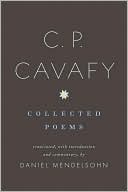
Just today I picked up two new translations by of a poet I love, if only in English.

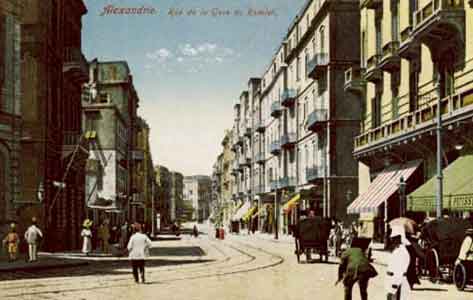
A cultivated little clerk, no more nor less than that, writing and correcting his poems over many years, poems in a language little read, in its modern form, outside his own country, begins publishing, or rather circulating among his friends, only those poems he is sure are his best. He speaks more than one language. He has lived in England, in France, he has travelled, but the language he writes in is his own, usually, as is the city he comes to live most of his life in. It is the city of his birth, the city where he will die seventy years later. Before his death his poems travel, but only so far. He will die with a secure reputation. He will be remembered. After his death, more poems will be found and published and his poems will continue, will travel further, will find new translators, find new readers in English, in French. In his poems, the world will find Alexandria, his city, ancient and alive. Alexandria, for me, is Constantine Petrou Cavafy. And now, thanks to Daniel Mendelsohn, whose criticism and essays I've enjoyed before, I get to go again.

I first read Cavafy because E. M. Forster knew and wrote about him (just as I read Forster first because Isherwood knew and wrote about Forster, just as I read Isherwood because I fell in love with Michael York... you get the idea.). If my first Alexandria was from movies and children's histories, and my next from Shakespeare, E. M. Forster's Alexandria introduced me to Alexandria's poet, Cavafy. I read his poems walking. I took the Rae Dalven translation (Cavafy's second translator in English, I think?) with me and read him in the streets of Pittsburgh, Pennsylvania. Auden wrote the introduction. I was in love and not loved. I was, what? Sixteen? Cavafy's elegiac poems spoke to me of admired beauties, of a hand held just above touch, of lonely walks, of encounters more meaningful to the poet than to the men he loved. Cavafy pressed an abandoned bandage to his lips and kissed the blood. He spoke to me. But he spoke to me of other things as well, of other times, other civilizations, other lovers. He spoke to me of Alexandria, his city, and we walked there together. I heard the street vendors and the shutters opening in the morning and closing at night. I heard them even on a noisy, filthy street clogged with buses, on a cold American morning in December. I did not envy the Greek poet his Egyptian city, because he shared it with me.

When I found another, later translation, I bought and read that too. I'd loved again, just as unhappily, since I'd read Cavafy first. Later still, when I'd found a love of my own, when that beautiful boy I'd loved last was dead, I read and read Cavafy, and found my boy, found Peter, in the streets of Alexandria, with Cavafy, sleeping in Cavafy's bed. Cavafy gave him back to me, with roses at his head and jasmine at his feet.

Now Daniel Mendelsohn has given me Cavafy again. The introductions look to be good, his notes extraordinarily extensive, presumably quite informative. I may read all that some day. But tonight, I'm reading Constantine Petrou Cavafy, my old friend. I hear the shutters open in the morning and closing at night. I walk with my friend again in Alexandria.