Showing posts with label C. P. Cavafy. Show all posts

Friday, November 18, 2011

Mr. Cogito Finds a New Reader

So a friend reads Zbigniew Herbert and now I have to read Zbigniew Herbert? The friend in question is one of those straight men who cook, you know, big, soulful eyes, balding in a gentle way, traveled, an artist -- he reads Polish poetry, for Heaven's sake. Still, I would resist even his recommendation, had we not had an unread used copy come in. Simply put, it's a beautiful book.

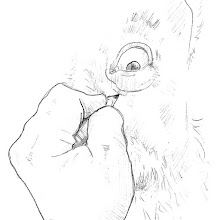
It's true, I judged this book by its cover. It's nearly as attractive, in it's way, as my friend S. I'm already reading the newest translation of Cavafy finally, properly and straight through so I do not need another poet just now. But then I look at the nice new book, and I'm reminded of my friend's dark eyes, and, oh hell, why not? It is a good cover, a great cover maybe. Look at all that uninterrupted black, no title on the front. What there is, is that great photo by Anna Beata Bohdziewicz, of just the author and of the author, just the necessities: a hand, the match, the cigarette, the face -- coming out of the dark. The match-light on his fingertips might be from a Vermeer. And that head! That head is a glorious thing in black and white, isn't it? The mouth's tight on the cigarette, but to my mind at least it suggests just a pause, the brow, ever so slightly knit but not cross, and then the dome and that tightly swirling atmosphere of hair. It looks a large and wise head, doesn't it. The cover tells me I should know the poet, though I don't, didn't anyway, even after the book's been turned in the hand to read the name on the spine. Ah, but I had to pick the book up there, didn't I?

That kind of thing doesn't always, doesn't often work with me. I tend to resent the suggestion that I should know or recognize by sight a writer I don't, specially somehow a poet. (How many poets not long dead would you know just to look at, even poets one likes, might even revere? In every photograph I've ever seen, William Carlos Williams might have been the Grand Sachem of some Midwest lodge, e. e. Cummings, at least in middle age, some city sign-painter at the end of the bar.) Perhaps this cover works for Herbert because, not even looking up, let alone out at me, there's no suggestion of awkwardness, no introduction offered or recognition expected. Just a handsome fellow of a certain age, lighting up in the dark. It's intimate already, but observed, objective. Anyway, I like it.

I like too that that shiny black book jacket, even before I've put a mylar cover over it, even though the copy is unread, the book's already showing fingerprints, and little scratches, imperfections, though I've cleaned it carefully and the book is new. Normally, I find a design with too much solid color, let alone a solid black or a solid white, off-putting. I know how good it must look at the editorial meeting, but I sell books. I know how quickly and how bad a book can look as soon as it's come off a truck, let alone after that clever design has lived for a while shifting on a table and coming on and off of a shelf. But, with this book, I don't know why, I like it. I like the evident imperfections in the black. I like the subtle whorls and buff smudges that the shiny new mylar somehow accentuates. I like the perfect design undone already, if subtly.

I wouldn't care about any of this though, If I didn't want to sit and do nothing tonight but read more of this book. I wouldn't be staring at Herbert's face, if I didn't want to keep reading Herbert's words. (Even that name! The poet, Herbert, for me means the Welsh divine, George Herbert, 1593 - 1633, you know, the Herbert of The Flower: "Thy word is all, if we could spell." So how then, this Polish fellow, come to be "Herbert"?)

Without knowing much more than what I read in the translator's introduction -- mention of C. P. Cavafy as an influence just for a moment's serendipity -- and I'm off.

May I say, right off, I like the length of the individual poems? I know that's an odd thing to admire, and I'm not prepared to defend the statement in any educated way, but the best I can say is that the lines, at least in English, are blocked in a a pattern that's both immediately sensible and satisfying to say, both good things to me. Witness this, all but at random, from "Mr. Cogito on Magic":

Joe Dove dreamed
that he was a god
and a god nothingness
he fell slow as a feather
from the Eiffel Tower

Isn't that simple and good? Yet there's a bit of mystery to the thing too, and not, I should think, I would hope, just from the translation.

But back to my point and the length of the poems. Of the poems I've read, and I've read about half the book already, the few that are organized in prose paragraphs, as well as the more usual stanzas of varying lengths, none that I've read are longer than five short lines, all the poems run to a page, or two and a bit at most. None seems defined by the page, and while I can see some longer poems ahead, starting with those written after 1986 it seems, I can see more poems that have larger parts, but my point at least is simply this, that every poem has a natural breath to it, as well as a finished thought, or at least a completed question if not always a clear answer.

How I like that idea! Cavafy has a narrative -- both a short narrative or scene in each poem, and a larger narrative that makes reading his poems sequentially very much a story. Not that Cavafy's narrative progresses, you understand. It doesn't, really. The nights and afternoons and encounters with lovers, these just repeat and vary, more like a dance or a piece of music than a novel, but the music suits him, the poet, and his suits me. (The newest translation's good, by the way.)

I mention how I've been reading Cavafy because now I'm reading Herbert (who read Cavafy) and he's made a narrative too, though it's neither so intimate nor as repetitive as Cavafy's. Instead, with or without the regular figure of "Mr. Cogito" through whom he often addresses the reader, Herbert talks and talks and talks. No, no, it's wonderful, believe me. If a Cavafy poem can feel like some miniature Arabian Night's Tale, something told over coffee, with just a palm fan to stir the air -- sorry, can't be helped -- then these one-sided conversations of Herbert's feel like they last just the length of that cigarette he's lit on the books cover. Many if not most of these poems, even the ones that end, as say even the relatively long poem, "Mr. Cogito Thinks About Blood" does, on a very strong, even a violent image, all have a shrug between them:

blood
swims on

crosses the body's horizon
the borders of imagination

-- looks like there'll be a flood

And then the next poem, on the facing page, starts:

Sunday
early afternoon
a hot day

years ago
in far-off California --

leafing through
The Voice of the Pacific
Mr. Cogito
received the news
of the death of Maria Rasputin
daughter of Rasputin the Terrible

Yes? That seems to me something distinctly something, presumably Polish, that shrug. Doom. And then... shrug, and another day, another poem, another cigarette. (With Cavafy, if you'll indulge me in this conceit just a minute more, it's just an eyebrow up at the end of each poem.)

I never know quite how to say what I mean to about poetry. I haven't any training in it, no proper education in it at all. Why I write about it so infrequently frankly, even as I read more than I've ever done. So what I've just written may be as foolish as it must sound to anyone who would know how to say what I mean to, to a poet, for instance. My apologies. All I meant to suggest was that as much or more than the cleverness in these poems, and it is eminently clear what a clever fellow this Herbert was, I really very much like what I'll call for want of a better word Herbert's voice. I like the calm of it, and the brevity and sly sophistication of expression that conveys so much charming disdain in, for example, these last lines of that last poem I gave the start of above, "Mr. Cogito and Maria Rasputin -- an Attempt at Contact."

O Maria
-- Mr. Cogito thinks

Maria distant chatelaine
with plump red hands

No one's Laura

On behalf of the lady, I wince even as I smile. As does Herbert, by the way, smile, in almost every other picture than the one on the cover of his collected. In almost every photo I've seen so far, Herbert is smoking, yes, but just as likely he's smiling. I like poets that do both.

You were saying, Mr. Cogito?

Tuesday, June 1, 2010

Daily Dose

From A Great Unrecorded History: A New Life of E. M. Forster, by Wendy Moffat

CAVAFY'S APARTMENT

"Indeed, the apartment was on the second floor, directly over a male brothel. Cavafy found the location to be efficient and ideal: 'Where could I live better? Below, the brothel caters for the flesh. And there is the church which forgives sin. And there is the hospital where we die."

From Chapter 6, Parting with Respectability

Monday, January 18, 2010

Daily Dose

From The Pure Lover: A Memoir of Grief, by David Plante

OUR FIRST NIGHT

"Our first night together, we could have been the inspiration of a poem by Cavafy, who would have noted the yellow satin counterpane you pulled from your bed before we got into it together."

From Gamma

Friday, April 10, 2009

Daily Dose

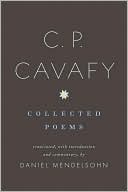
From C. P. Cavafy: Collected Poems, translated, with an introduction and commentary by Daniel Mendelsohn

VOICES

"Imagined voices, and beloved, too,
of those who died, or of those who are
lost unto us like the dead.

Sometimes in our dreams they speak to us:
sometimes in its thought the mind will hear them.

And with their sound for a moment there return
sounds from the first poetry of our life --
like music, in the night, far off, that fades away."

(offered here in memory of Peter Enright, my beloved friend)

Thursday, April 9, 2009

A Man Blessed With a City Like This

Poems travel. The best poems cross borders, languages, time. The best poems, those that last, are renewed as they go with new readers, to new generations, translations, editions, collections, study. How poems come to us, or rather, how we come to them, matters. The voice in which we first hear a poem may not be the author's, may only be an echo. Yet, the poem as it is first heard, first encountered, first read, may determine if that poem stays with us, or is left behind, is forgotten or misremembered or becomes the first of many poems we will know from the author of that first. The voice determines if the poet speaks to us, if we will seek him out again, if we will willingly return to the place he takes us and to him.

I am tired to death of being reminded that writers in translation are not the writers themselves, that the peculiarities, or glories, of any language not my own, and I have but the one, are the very thing that make this poet, from that tradition, in whatever language the poem was written, "untranslatable." That word! As if Shakespeare, in Russian, say, is somehow not different, but unrecognizable, ersatz, impossible. As if Dante in any language but Italian is unreadable. Whatever Dante was, in English he continues to be Dante. If he is not all he was, he never the less is. The suggestion that every reader of Dante, of Shakespeare, of Rimbaud, of Li Po, must know each and all the languages in which those poets wrote, or read them not at all, or incorrectly at best, is ridiculous. And yet, it is the common condescension of specialists that even the best available translation is far from good enough. Sniff. The whole point is lost. Sniff. The mood, the true atmosphere of the poem is
utterly undone. Sniff. And the humor of the thing, the joke, is lost. Sniff. The whole poem turns on this one word for which no other human language in the whole of human history has ever had just the right equivalent. Sniff. The sniff is as expected as the next translation, from the next expert, even the next poet. May we not all agree, at last, that there is little or nothing the poet or reader will gain by being reminded that Babel fell? Translations may be fair or literal, good or bad, but they are and they are for a reason, and that reason is not to just to provide translators with Sisyphean employment. Translations exist that poets may be read by readers elsewhere, that poems may travel. I am tired of being told that the road to enlightenment is impassible even as I am issued a passport, given a guide and translator, and have paid for transportation.

Some voices can be understood immediately, even in translation, coming from whatever place or language. If I concede not all, or without regret for the depredations of the journey, may that not be allowed, in exceptional instances, enough? Some poets, the greatest poets, survive even their first and their latest translators, may inspire admiration, even love, in a language other than their own. I should think, if not everything, that would be proof enough that Berlitz does not hold the only key to The Pantheon, that even the humblest of foreigners is welcome, if nowhere else, at least there. Some poets met in inferior translations remain familiar, admirable, loved, even in new and better ones. New translations, multiple translations, ought to be the occasion of new or renewed pleasure, if only the reader has the sense to skip the translator's "note on the translation." I do.

The place where we find the poet, the place in our lives, the place where the poem was first read, or read again, the place from which the poet and the poems came, all matter. For a poet to live beyond death, beyond translation, those places must all be made to intersect, again and again, the poems crossing and crisscrossing our lives, definitive and adaptable. If and when that happens, the poet ceases to be parochial, the poems become ours, the poet lives in a language he may never have known. The translation is or ought to be the means of such encounters, the best translations are. So when a new translation is announced and a new edition published, if the poet is known to me, has already crossed and recrossed my life, I am happy. How well the new translator does by the poet and the poems, I can judge only by his or her English, but my hopes are always high.

Just today I picked up two new translations by of a poet I love, if only in English.

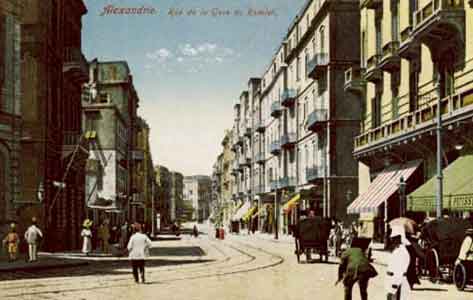
A cultivated little clerk, no more nor less than that, writing and correcting his poems over many years, poems in a language little read, in its modern form, outside his own country, begins publishing, or rather circulating among his friends, only those poems he is sure are his best. He speaks more than one language. He has lived in England, in France, he has travelled, but the language he writes in is his own, usually, as is the city he comes to live most of his life in. It is the city of his birth, the city where he will die seventy years later. Before his death his poems travel, but only so far. He will die with a secure reputation. He will be remembered. After his death, more poems will be found and published and his poems will continue, will travel further, will find new translators, find new readers in English, in French. In his poems, the world will find Alexandria, his city, ancient and alive. Alexandria, for me, is Constantine Petrou Cavafy. And now, thanks to Daniel Mendelsohn, whose criticism and essays I've enjoyed before, I get to go again.

I first read Cavafy because E. M. Forster knew and wrote about him (just as I read Forster first because Isherwood knew and wrote about Forster, just as I read Isherwood because I fell in love with Michael York... you get the idea.). If my first Alexandria was from movies and children's histories, and my next from Shakespeare, E. M. Forster's Alexandria introduced me to Alexandria's poet, Cavafy. I read his poems walking. I took the Rae Dalven translation (Cavafy's second translator in English, I think?) with me and read him in the streets of Pittsburgh, Pennsylvania. Auden wrote the introduction. I was in love and not loved. I was, what? Sixteen? Cavafy's elegiac poems spoke to me of admired beauties, of a hand held just above touch, of lonely walks, of encounters more meaningful to the poet than to the men he loved. Cavafy pressed an abandoned bandage to his lips and kissed the blood. He spoke to me. But he spoke to me of other things as well, of other times, other civilizations, other lovers. He spoke to me of Alexandria, his city, and we walked there together. I heard the street vendors and the shutters opening in the morning and closing at night. I heard them even on a noisy, filthy street clogged with buses, on a cold American morning in December. I did not envy the Greek poet his Egyptian city, because he shared it with me.

When I found another, later translation, I bought and read that too. I'd loved again, just as unhappily, since I'd read Cavafy first. Later still, when I'd found a love of my own, when that beautiful boy I'd loved last was dead, I read and read Cavafy, and found my boy, found Peter, in the streets of Alexandria, with Cavafy, sleeping in Cavafy's bed. Cavafy gave him back to me, with roses at his head and jasmine at his feet.

Now Daniel Mendelsohn has given me Cavafy again. The introductions look to be good, his notes extraordinarily extensive, presumably quite informative. I may read all that some day. But tonight, I'm reading Constantine Petrou Cavafy, my old friend. I hear the shutters open in the morning and closing at night. I walk with my friend again in Alexandria.