Poems travel. The best poems cross borders, languages, time. The best poems, those that last, are renewed as they go with new readers, to new generations, translations, editions, collections, study. How poems come to us, or rather, how we come to them, matters. The voice in which we first hear a poem may not be the author's, may only be an echo. Yet, the poem as it is first heard, first encountered, first read, may determine if that poem stays with us, or is left behind, is forgotten or misremembered or becomes the first of many poems we will know from the author of that first. The voice determines if the poet speaks to us, if we will seek him out again, if we will willingly return to the place he takes us and to him.
I am tired to death of being reminded that writers in translation are not the writers themselves, that the peculiarities, or glories, of any language not my own, and I have but the one, are the very thing that make this poet, from that tradition, in whatever language the poem was written, "untranslatable." That word! As if Shakespeare, in Russian, say, is somehow not different, but unrecognizable, ersatz, impossible. As if Dante in any language but Italian is unreadable. Whatever Dante was, in English he continues to be Dante. If he is not all he was, he never the less is. The suggestion that every reader of Dante, of Shakespeare, of Rimbaud, of Li Po, must know each and all the languages in which those poets wrote, or read them not at all, or incorrectly at best, is ridiculous. And yet, it is the common condescension of specialists that even the best available translation is far from good enough. Sniff. The whole point is lost. Sniff. The mood, the true atmosphere of the poem is
utterly undone. Sniff. And the humor of the thing, the joke, is lost. Sniff. The whole poem turns on this one word for which no other human language in the whole of human history has ever had just the right equivalent. Sniff. The sniff is as expected as the next translation, from the next expert, even the next poet. May we not all agree, at last, that there is little or nothing the poet or reader will gain by being reminded that Babel fell? Translations may be fair or literal, good or bad, but they are and they are for a reason, and that reason is not to just to provide translators with Sisyphean employment. Translations exist that poets may be read by readers elsewhere, that poems may travel. I am tired of being told that the road to enlightenment is impassible even as I am issued a passport, given a guide and translator, and have paid for transportation.
Some voices can be understood immediately, even in translation, coming from whatever place or language. If I concede not all, or without regret for the depredations of the journey, may that not be allowed, in exceptional instances, enough? Some poets, the greatest poets, survive even their first and their latest translators, may inspire admiration, even love, in a language other than their own. I should think, if not everything, that would be proof enough that Berlitz does not hold the only key to The Pantheon, that even the humblest of foreigners is welcome, if nowhere else, at least there. Some poets met in inferior translations remain familiar, admirable, loved, even in new and better ones. New translations, multiple translations, ought to be the occasion of new or renewed pleasure, if only the reader has the sense to skip the translator's "note on the translation." I do.
The place where we find the poet, the place in our lives, the place where the poem was first read, or read again, the place from which the poet and the poems came, all matter. For a poet to live beyond death, beyond translation, those places must all be made to intersect, again and again, the poems crossing and crisscrossing our lives, definitive and adaptable. If and when that happens, the poet ceases to be parochial, the poems become ours, the poet lives in a language he may never have known. The translation is or ought to be the means of such encounters, the best translations are. So when a new translation is announced and a new edition published, if the poet is known to me, has already crossed and recrossed my life, I am happy. How well the new translator does by the poet and the poems, I can judge only by his or her English, but my hopes are always high.

Just today I picked up two new translations by of a poet I love, if only in English.
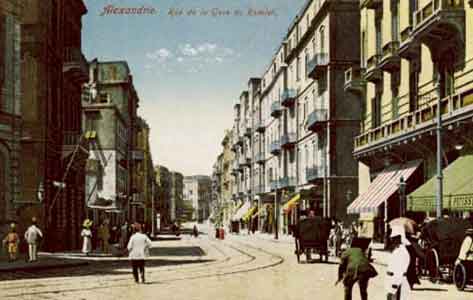
A cultivated little clerk, no more nor less than that, writing and correcting his poems over many years, poems in a language little read, in its modern form, outside his own country, begins publishing, or rather circulating among his friends, only those poems he is sure are his best. He speaks more than one language. He has lived in England, in France, he has travelled, but the language he writes in is his own, usually, as is the city he comes to live most of his life in. It is the city of his birth, the city where he will die seventy years later. Before his death his poems travel, but only so far. He will die with a secure reputation. He will be remembered. After his death, more poems will be found and published and his poems will continue, will travel further, will find new translators, find new readers in English, in French. In his poems, the world will find Alexandria, his city, ancient and alive. Alexandria, for me, is
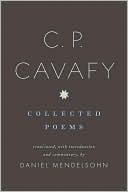
Constantine Petrou Cavafy. And now, thanks to Daniel Mendelsohn, whose criticism and essays I've enjoyed before, I get to go again.
I first read Cavafy because E. M. Forster knew and wrote about him (just as I read Forster first because Isherwood knew and wrote about Forster, just as I read Isherwood because I fell in love with Michael York... you get the idea.). If my first Alexandria was from movies and children's histories, and my next from Shakespeare, E. M. Forster's
Alexandria introduced me to Alexandria's poet, Cavafy. I read his poems walking. I took the Rae Dalven translation (Cavafy's second translator in English, I think?) with me and read him in the streets of Pittsburgh, Pennsylvania. Auden wrote the introduction. I was in love and not loved. I was, what? Sixteen? Cavafy's elegiac poems spoke to me of admired beauties, of a hand held just above touch, of lonely walks, of encounters more meaningful to the poet than to the men he loved. Cavafy pressed an abandoned bandage to his lips and kissed the blood. He spoke to me. But he spoke to me of other things as well, of other times, other civilizations, other lovers. He spoke to me of Alexandria, his city, and we walked there together. I heard the street vendors and the shutters opening in the morning and closing at night. I heard them even on a noisy, filthy street clogged with buses, on a cold American morning in December. I did not envy the Greek poet his Egyptian city, because he shared it with me.
When I found another, later translation, I bought and read that too. I'd loved again, just as unhappily, since I'd read Cavafy first. Later still, when I'd found a love of my own, when that beautiful boy I'd loved last was dead, I read and read Cavafy, and found my boy, found Peter, in the streets of Alexandria, with Cavafy, sleeping in Cavafy's bed. Cavafy gave him back to me, with roses at his head and jasmine at his feet.
Now Daniel Mendelsohn has given me Cavafy again. The introductions look to be good, his notes extraordinarily extensive, presumably quite informative. I may read all that some day. But tonight, I'm reading Constantine Petrou Cavafy, my old friend. I hear the shutters open in the morning and closing at night. I walk with my friend again in Alexandria.

 One can't work in retail for any length of days without a sigh, come May. For every innovative display, for every clever sign or surprising arrangement of stock in a window, come the first of May, mothering season comes again, and with it, the most awful insipidity. Now, every boy loves his mother, and I certainly love my own, but what gets put out for Mother's Day is always embarrassing. Booksellers tend to be clever people -- I make no other intellectual claims for my profession -- and, as such, we tend to try, at least, not to indulge too much in retail cliches. Good booksellers try to avoid the usual hearts & flowers come Valentine's Day, for instance, always pushing Pablo Neruda's Love: Ten Poems, rather than the more saccharine anthologies so favored by stationers and the like in February. Saint Patrick's Day tends to bring out genuine Irish history, travel narratives, and perhaps books on home-brewing or pub-guides. But Mother's Day displays, in even the best bookstores, are not exercises in subtlety. Books are displayed to sell and it does not pay to suggest that any customer's mother would be flattered to received a DVD of "Mommy Dearest," or a dark memoir of parental failure, such as Francine Du Plessix Gray's Them: A Memoir of Parents. Mary Gordon's Circling My Mother: A Memoir and Ruth Reichl's Not Becoming My Mother & Other Things She Taught Me Along the Way, are about as "edgy" as one can afford to be when making suggestions for mamas. And in a larger bookstore, such as the one in which I happily work, whatever books one might put out on the Mother's Day table, the signs produced, unless made on the sly and put up before more level heads are allowed to prevail, will always be in mild pastels and gentle florals. It's no good fighting.