Showing posts with label Terry Castle. Show all posts

Saturday, January 25, 2014

Daily Dose

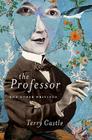
From The Professor and Other Writings, by Terry Castle

SO TELL ME

"So tell me, friends: why do storytellers use that phrase 'before I knew it'?  In my experience you only use that phrase when in fact you did know it.  It's like signing cordially at the end of a note: that's the word you employ when you hate the person's guts."

From The Professor

Monday, January 24, 2011

Let's Do the Numbers...

It has been two years now, since I started doing whatever it is I've been doing here nearly every night. I still don't know what to call this. My hobby? My public diary? Whatever it is, it continues to swell, even if my readership -- bless you all -- doesn't much. Looking at the thing objectively, I can't make much claim on the attention of the world, but then, luckily, why on earth would I? The numbers, for the most part, are enough to keep me humble. I've only just recently learned how to look at "stats." Still, it's been two years! Better say, seven hundred and thirty days of admittedly unequal effort, have produced to date 1650 entries of admittedly unequal value. Already, I'm getting a bit dizzy with the numbers. Patently, if I'd been doing the thing properly all this time, there ought to have be seven hundred and thirty quotations posted here under the heading of "Daily Dose," for example, and yet there are only six hundred and ninety-nine of these listed, so what's become of the rest? Did I fail to title the other thirty odd? Did I not post a quotation every day, as the title would imply I intended, for roughly a month together? No idea. Hardly seems worthwhile to pursue the problem now.

I don't really think about whatever it is I've been doing here in numerical terms, or rather, I wouldn't, had yesterday not marked an unanticipated anniversary. I can, in all modesty, call it so, not because I didn't foresee it, or try to generate some little interest in the occasion, but rather because I honestly never thought to see the day, at least not when I started. According to my first entry here, after what proved to be "a not particularly surprising, if singularly disappointing day at work at the bookstore," I came home, unquestionably feeling badly used, and my genius, such as it is, not properly appreciated. Poor me. Having contributed what I had hoped was... well, something anyway, to that other blog, I found myself on the outs. My little dignity outraged, I started this thing. When it lasted a year, I was surprised. Now it has lasted two, I stand amazed -- or rather, sit, admittedly mightily pleased with myself.

Please understand, I never do anything, at least not anything of which I might be proud, every single day, except read. I do not take exercise. I neither garden nor really cook. Other than brushing my teeth, I can't think of much that I've ever done every day that might please my mother. And yet, for all it's stuttering along from day to day, and the cheating I've done that has meant a week's worth of nonsense being added, after the fact, all on one guilty Sunday, this whatever it is has lasted. That's something, isn't it?

I intended, when I started this two years ago, to write about books. I have done. I'm not a reviewer. Perfectly honorable thing to do, and something I wish I had the discipline to do myself. Can't imagine how nowadays, but there are good people still earning a living from just such work. I admire anyone: writer, editor, publisher, critic, reviewer, who can make money from words. I think, all told, I've made about one hundred dollars in my lifetime, by writing. What the reviewers -- at least the best ones -- do, is provide a genuine service to the community of readers; promoting what's best and warning us away from the rest. For most who undertake this noble service, this means reading a lot of new books. I do that, appearances here to the contrary. What I can't seem to do is work up either enough enthusiasm, or originality, to say anything very interesting, even to me, about most of the new books I read. Might be different if someone offered to pay me, but nobody has. I've tried writing reviews before; not just of books, but of movies and television shows, and even art or music, and while I'm hardly a dab hand at it, I don't think I would muff the job, but it isn't something I specially want to do, at least for free. Honestly? It doesn't look to be much fun, -- trying to say something, anything, interesting or fresh about, for example, Jonathan Franzen. Put it another way, I simply do not know enough about literature, or anything else come to that, to contribute much to the conversation on most new books.

When I do write about books here, it is as a clerk in a bookstore, and a common reader, admittedly of some uncommon books. I see no contradiction in describing myself as such. The common reader, as traditionally understood, was no bad thing to be. All I mean by employing that somewhat antique phrase is that I have no specialized education -- or much education to speak of at all -- or knowledge, which would qualify me to offer my opinions on art, and be taken seriously as any kind of proper critic. Clerking in a bookstore is a job, not what might strictly be defined as a profession, and reading my way pell mell through something like the canon all these years, while it isn't something most sensible people would do just for pleasure, I have done to please myself. I don't believe that I'm entitled to claim any special wisdom as a result of my work-experience or my private reading, so I've tried to always keep my few good and loyal readers here always in mind of the narrowness of my perspective; I can speak only for myself. Hasn't prevented me from pontificating on matters well beyond my competence, true, but I like to think that even that's forgivable, at least among friends.

With one or two exceptions, everything I've done here has been addressed to no one else but my friends, really. Just as it should be. My friends have always had to put up with a certain amount of boredom: lots of all but mindless chatter from me about books they may never read, seemingly arbitrary quotations from unfamiliar sources, or made to no purpose other than because I thought the line pretty when I read it, or indicative of a style I appreciated. Poor you. I'm always telling what I think terribly interesting stories and anecdotes gleaned from my reading, and my friends always seem to nod and smile indulgently when I ramble on this way, though often as not, I suspect, they may have no idea what I'm on about, what point I may have hoped to make by starting off on some tangential tale of Dr. Johnson at table, or whatnot, or why they are being subjected again to such glossolalia, when all they meant to express was a polite interest in what I happened to be reading on the bus. The price of befriending the autodidact. I do apologize. I try not to be boring, honestly I do.

Looking at the numbers today, I can see where it might seem otherwise to even the kindest of my friends. What a nudnik. I'd like to flatter myself in calling attention to no less than fifty-five references to Dickens, and forty-six to Lamb, and fifty-one to Johnson, etc., but this is as nothing, if I'm trying to sound all erudite, rather than just stodgy, when I'm forced to admit that as a frequently employed "tag," Christmas -- at sixty-three times and counting -- beats out every one of my favorite authors. That suggests a certain childishness, now doesn't it? I'm not a Christian, after all, so it's safe to assume I wasn't on about theology. More like retail, and getting presents. (Who doesn't like getting presents?) With nearly two hundred posts listed as doodles, I think it's pretty clear that I'm too lazy and slack to even call most of what I've done here writing.

What I have written about, other than books, other than the books about me in this room, has been myself. This too is in keeping with an honorable tradition. I don't say the results are worthy of such company, but I have tried to be as honest as Michel de Montaigne would insist on being, and I see no reason to apologize if none of my attempts are the equal to even the least of his in the end. “Who is not sure of his memory should not attempt lying,” so I haven't.

The numbers do tell me something at least about what I've actually been up to most evenings for the last couple of years. Saw some good movies, old and new. Watched an absurd amount of television too. Made more than a few videos, too, to post here via Youtube.com -- eighty nine in all, to date. Other than the recordings I've made of readings at the bookstores, in the main, these have consisted of me sitting in a chair, reading out loud. My vanity hasn't allowed me to preserve, let alone post, the funniest bits of these brief performances; suffice it say, the sight and sound of my stumblings and fumblings, and cursing, through take after take, might have been better entertainment than most of the resulting readings, but I'm content.

I've posted roughly sixty-some of the caricatures I've drawn; some quite good likenesses, I think, and some amusing. For every one I've put up though, whole forests would seem to have perished to no good purpose in the attempt. The best have invariably been the ones that came most effortlessly, a lesson I may never learn.

What I've done mostly though is write. Just how many thousands of words I've put up here I don't know. Happily, there would seem to be no record of that. When I can think of nothing else, I resort to making clerihews, of which -- though this even I find hard to believe -- I would seem to have made nearly two hundred. When I'm trying harder, well... you can judge the results for yourselves, my friends.

What then am I to make of these numbers, and of this whole enterprise? Well, nothing I should think. (Oh. I did learn that if one wants to get noticed online, perhaps the best way is to put up a photograph of Clint Walker, shirtless.) I would seem to have amused some of my friends, at least some of the time, and even myself, now and again, and I may actually have encouraged someone out there who might never have otherwise to read The Letters of William Cowper, with some two dozen mentions of the poet, or to Terry Castle's essays, or to read a poem aloud, or to attempt something of their own.

I've enjoyed the experiment. Hope others have as well, and will. I have no plans to stop.

Thursday, December 16, 2010

My Unreserved List: 10 Favorite New Books of 2010

Having reviewed already the books I enjoyed despite myself, I thought I would just quickly remind readers of the new books I thought the very best among those published this year. This list, unlike the earlier one, ought not to require quite so much explanation for each title, as I have, one way and another, already made note of these books here, talked about them with anyone who would listen, and or done my level best to promote them at the bookstore where I work. While numbered, for the convenience of making a list, I would be hard pressed to say which I loved best, but as I may have already communicated as much to the party or parties responsible, I will just say here, these are all remarkable books of enduring value and I would encourage anyone to read the lot!

1) The Professor and Other Essays, by Terry Castle. Any one of these personal essays would have been enough to make this one of my favorite reading experiences -- ever. Uniformly brilliant, wickedly funny and full of unexpected warmth, there is not a rum effort in the book. My favorite? I've never read a better, less sentimentalized or more accurate depiction of first foolish love than that in the long, title essay. The best. I have a new favorite essayist.

2) How to Live: Or A Life of Montaigne in One Question and Twenty Attempts at an Answer, by Sarah Bakewell. I'd just had Bayle St. John's Victorian-era biography reprinted for me, for want of a good book about Montaigne, and read that, when I saw Bakewell's book displayed at a booksellers' convention and begged a copy from the publisher. So glad I did. Bakewell's is easily the best book on Montaigne I've ever read, or am likely to read. Anyone who's never read the great essayist, should read this book first. Anyone who loves Montaigne, should read this book. Everyone should read this book.

3) Role Models, by John Waters. This was an unexpected delight, from beginning to end. Whether profiling Johnny Mathis, or the little guy who made a one man industry of seducing jarheads on tape for the home video market, Waters proves himself to be the man one most wants to tell a story at any party. What a delightful writer!

4) Autobiography of Mark Twain, Volume 1, edited by Harriet Elinor Smith, et al. I can't help but smile at strenuousness of the effort, in the making, and the wading through to Twain in the middle, but here at last is the first volume of an epic reconstruction effort. While the full weight of the scholarship might sink a less buoyant document, Twain's dictated pages make even all the extra stuff interesting. An amazing accomplishment by the Twain Project.

5) Finishing the Hat: Collected Lyrics (1954-1981) with Attendant Comments, Principles, Heresies, Grudges, Whines and Anecdotes, by Stephen Sondheim. First pass through, I was riled by some of the sniping at his elders, and disappointed to find such an impersonal, wholly professional record of a life in the theater. When I finally settled down and read it straight through, I discovered a unique and minutely detailed self portrait of the greatest theatrical writer/composer of my lifetime. Fascinating man. Fascinating book. There's never been anything quite like either of them before. Can't wait for the next volume.

6) Secret Historian: The Life and Times of Samuel Steward, Professor, Tattoo Artist, and Sexual Renegade, by Justin Spring. This is the life I've been waiting to read since I briefly met the subject, decades ago, in San Francisco. Nobody had a more interesting life -- witness that subtitle -- or better deserved Justin Spring for his biographer. This is a meticulously researched and cleverly composed book about one of the most amazing men I will ever have met. I read it so fast, I had to go back immediately and do it again. It's that good.

7) A Life Like Other People's, by Alan Bennett. I read everything Bennett publishes. He is one of the great ironists in a competitively ironic time: dry, droll and yes, even quite dear, in his way. I was taken aback to find this little book so emotionally exhausting. In telling a son's story of his parents' marriage without a hint of sentimentality, and sparing himself nothing, Alan Bennet has written a simply beautiful book. I know these people. I'm genuinely grateful for the privilege.

8) While the Women Are Sleeping, by Javier Marias. A collection of short stories by the most exciting novelist I've read since I was a much younger, and more adventurous reader. I hesitated to pick this up, for fear it would disappoint after reading his masterful trilogy of novels, Your Face Tomorrow. These stories only reinforced my conviction that Marias is the most interesting writer working today. Such ease! I don't remember reading anything this entertaining in such brief performances since Calvino. This book proves it. I will read anything this man writes.

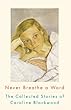
9) Never Breathe a Word: The Collected Stories of Caroline Blackwood. Another remarkable personality I'd only too recently discovered. Caustic and very carefully calibrated, each and every piece in this collection, fiction and memoir, just avoids being too bitter by being subtly forgiving, in ways that may only be appreciated in rereading. Blackwood was an accomplished stylist, as well as being uproariously attractive as a narrator, of her own life, or others', and this collection bottles what was best and brightest in her writing.

10) Half Empty, by David Rakoff. The writer's previous efforts represent a certain facile bad humor in short form that I've always found to be great fun. A bad attitude is all but required in the contemporary humorist, and I endorse the trend. What makes this book specially noteworthy is Rakoff's application of this formula to the unlikely subject of his own cancer treatment and remission. He is ruthlessly funny throughout, without once either descending into maudlin cliche or avoiding the genuinely complex and painful realities of what it means to become a patient when impatience is your style.

Already there are other books now crowding in on this list, books I ought to have thought of sooner, or somehow have made a place for before this comes to a quick close. Books like Harold Bloom's fascinating anthology, Till I End My Song: A Gathering of Last Poems, and the Library of America's beautiful boxed set of the "novels in pictures" by Lynd Ward, the reissue of Stuck Rubber Baby, but this will have to do.

It was a good year.

Thursday, August 5, 2010

Vacation Reading Supplemental

When I was at the Book Country warehouse, I couldn't help myself. I thought, "Surely to Gawd, there must be something in this big ol' place I will want, just to have for myself." I know that that was not the mission. I was there to buy remainders for the bookstore, not to shop for my library. But you must understand, there were huge bins, the size of movers' pallets, full of books. In each bin, and downstairs on the floor, there were stacks of books a yard high, sorted by publisher and title, and the place is huge.

Most of what was there was paperback. I don't really do paperbacks, unless I have no option otherwise. None of what I was sorting through was unfamiliar, or rather, what was was not the sort of thing I would feel much need of in my library. This was a good thing. I could concentrate on picking the books I thought would sell. That was the job. Even as I started sorting through bin after bin of Oxford University Press, I was not much tempted on a personal level. I was looking for reference books: foreign language dictionaries, scientific reference, a nice atlas (though someone shopping for another company snatched up all of the nicest of these. These people were there for a big company, shopping for other college bookstores, and they had a whole team deployed out on the floor the same days I was there. One tried not to get in the way of others. It did however make for a somewhat more competitive environment, specially after I'd had to call my boss to check on something like the atlas and, by the time I got back from my break, found the best books already gathered into my competitors' mountainous haul. Lesson learned.)

But then I did find, in an Oxford bin, just a couple of titles that proved to be irresistible. One of them heads this entry. In the bottom of one dusty stack, there were two hardcover volumes, still in their shrinkwrap, with the intriguing title: New Writings of William Hazlitt, edited by Duncan Wu. I was more than a little excited. Duncan Wu wrote a massive biography of Hazlitt not all that long ago, and while the book was far too weighted with academic seriousness and footnotes for my taste, and more interested in Hazlitt's politics than his style or his friends, it was a good book, and definitive in its way. Now I had before me, these too big volumes with the curious title. I set both sets in the bin aside.

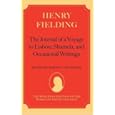
And then, from the very same bin, up came another treasure! A volume of The Oxford University Press' Complete Henry Fielding, The Journal of a Voyage to Lisbon, 'Shamela," and Occasional Writings, also in a fat, handsome hardcover, shrinkwraped and unmarked!

Happiness!

I'd taken three old paperback mystery novels, and a new copy of Agatha Christie's Curtain, the last case of Hercule Poirot, with me to read or reread. But I knew these would not last long. The television at my hotel was hardly adequate for a man much spoiled at home by the most expensive cable package, and so I knew I could not count on TV keeping me much company, even before I went north to stay with the elderly parents. Besides, one needs options, as a reader, no? One trip to the only used bookstore near that first hotel convinced me that I was not going to find much to supplement my traveling library in the area, and I knew there was nothing for miles around my hometown but one remainder shop in the outlet mall.

So imagine my delight in finding two old friends, in beautiful clean hardcovers, in one dirty bin in that big warehouse!

When I was done working the first day, I asked my helper if she would ask what might be the procedure for taking these two titles out of the shipment so that I might carry them off with me. The next day it became clear that this was not an issue that had previously come up at the wholesalers before. They had no problem with me having the books for myself, they simply had never had a buyer ask before. I figured I'd pay the bookstore for the books when I got back to Seattle. I'm sure I've made some kind of paperwork nightmare for somebody, if only myself, by doing this, but I still think it was well worth doing.

In the days since, I've read through all my little mystery novels, got a bit misty again rereading Christie's last Poirot, -- just as I did the first time years ago -- and have all but finished the book of ghost stories I found in the remainder shop in the mall. To whom then have I turned?

Well, the professor's two volumes of "New" Hazlitt have turned out to be masses of uncollected, and often unattributed reviews and occasional journalism, each with an introduction meant to justify their addition to the official Hazlitt canon. Sometimes, the introductions are longer that the essays they introduce. Doesn't much matter. The fascination has been in reading the things that the great essayist wrote, admittedly as he wrote nearly every word in his life, to earn his bread. Many of these pieces were recycled into the more famous essays and lectures by which the critic is already known; his reviews of plays and players like Mrs. Kemble, for instance or some of his thoughts on Shakespeare that later formed his famous lectures on the subject. An equal or even greater number are just light bits and pieces used to fill newspaper inches. I've been dipping then for a week. I can't say that I would have felt myself deprived of anything had I not found these books, but I am glad I did, so belated congratulations to Professor Wu for what must have been a Herculean effort in finding, collecting, and justifying such a weight of undiscovered or disputed Hazlitt. Bless 'im for it.

The Fielding I've only just begun rummaging through and already I've read a pamphlet on a once notorious case of a cross dressing lady who married multiple times. This sensational squib Fielding wrote to cash in on a scandalous trial of the day. In the introductory note, reference was made to my beloved Terry Castle, who evidently wrote about the case, Fielding's little toss off of it, and other such in her book, The Female Thermometer: Eighteenth-Century Culture and the Invention of the Uncanny (Ideologies of Desire), which I really hadn't thought to read, but now think I must -- as soon as I can get back to civilization and find it.

Who'd have thought I'd find Fielding & Hazlitt, and in books unknown to me and now part of my "permanent" collection -- for who can flatter themselves that such things last? -- in a dirty bin in a warehouse in McKeesport, Pennsylvania?

One finds old friends, it seems, everywhere.

Wednesday, June 30, 2010

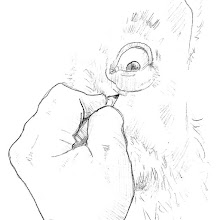
A Caricature


As part of my ongoing worship of the hippest chick in dyke lettres, a small tribute to the great Terry Castle, author of The Professor and Other Writings, The Literature of Lesbianism: A Historical Anthology From Ariosto To Stonewall, among others, and queen of my heart.

(She digs Art Pepper. Read her book.)

Sunday, June 13, 2010

Dyke Crush

I'm in love with a lesbian. This has happened before. (You know who you are.) Give me a woman with just the right smoky laugh, a dry wit and a dirty mouth, and I am generally as smitten as a Catholic school girl riding backwarmer on her first Harley. I know it's not all that common among gay men of my generation, but I have always loved dykes. And I've always loved butches, so long as they were female, specially. My grandma had a neighbor lady wore dungarees with the cuffs rolled and a man's cotton dress shirt with the sleeves cut out. I'd watch her when she worked in her vegetable garden. I liked the way she smoked: the cigarette between her lips until it was just a hot little butt that she'd take out and study between her finger and thumb before she'd draw one last hit and flick it up onto the road. I admired that quiet economy of motion. I liked the single-mindedness in everything she did, and the absence of waste. I liked that she could carry on a conversation without taking that cigarette out, and kill potato-bugs at the same time. Something told me we should be friends, and eventually, we were.

In high school, my two best girlfriends were both baby dykes. One was tough as the ratty old docksiders she wore without socks every day, summer and winter. She was something of a lipstick lezzie and wouldn't come to school when the power went off at home 'cause she couldn't use her hot-comb. That said, she cursed like a truck driver, lived on speed and Pepsi, and cut a wide swath through the local virgins. Crazy as Hell, but beautiful, that girl. Smart too. And funny? Never laughed so hard again in my life. She was so busy pretending to be tough in those days, I think she couldn't help but be later, when she needed to be. I was perfectly right in thinking she could survive The Flood. She has now, more than once. My other favorite was my first real intellectual, a great mountain of a girl in big laced boots, men's corduroys and buttoned up button-downs. She came to a kind of snowy peak at the top, where an unwashed bowl-cut framed a face and a mind of surprising delicacy. An odd, wall-eyed creature, a head or more taller than me, walking and talking together we must have looked like an anomaly in deep time; the mastodon and the vole. She was my first real loner, and a bit of a challenge, but behind thick glasses and that awkward reserve, I sensed there was someone extraordinary, and I was right. She had about the sharpest mind I've ever encountered. Every thought was a slow grind, but inexorable, and worth the wait.

Since then, there have always been dykes in my life. Women generally, as many or more than otherwise, but lesbians specially. I've never really questioned the affinity. Others have, other gay men specifically, though that was a long time ago and in a more gendered community and less enlightened time.

Looking back, it is amazing now to think how infrequently gay men and women mixed, back in the day. Even then I found the whole business ridiculous. I could however appreciate how any real distinction between gay and straight men was pretty negligible for a lot of gay women back then. Sexism, when I was coming up, while less obvious in the gay community than the straight, was still widespread and gynophobia accepted as a gay cultural norm. The atmosphere in most gay places was distinctly unfriendly to women, at least to any woman not prepared to enthuse about dick, and the bars, even the rare supposedly "mixed" ones, seemed to all be all about dick. Dick, dick, dick, dick, dick. (Thanks to poppers, the joints even smelled like an old jockstrap.) Even when one did find dykes out in a gay club, nobody seemed happy to see them. Seems obvious to me at least that while the boys had bigger mustaches, the dykes had had that whole drag down first, and I suspect they found the boys' efforts at being "hard" slightly risible. No one likes to have their new look challenged as tired. The only thing the new clones seemed to have in common with their nelly ancestors was a general disdain of the women. Still "no females allowed" in the all new He-Man Woman Haters' Clubhouse. Girls, you know, just spoil everything. (The women all just seemed pissed that they couldn't afford a place of their own.) Most social interactions that weren't yet specifically political were still willfully segregated by sex. The bars certainly were. In lesser cities where there weren't many options, this proved to be hilarious: the girls all to one side and the boys on the other, like a junior high dance. Sometimes it felt a little like rival gangs keeping a fragile truce. The gay disdain of lesbians struck me, even then, as being specially ironic, to say the least, considering how much the boys owed Feminists and the Women's Movement for our own Liberation, but then I was also shocked, at about the same time, when I discovered that there could even be such things as NRA dykes, Republican fags, and racist queers. (I think much of the old misogyny got knocked out of the boys when queer women saved our lives without being asked. Hope so, anyway.)

Coming from a straight little place, full of straight little people, I found the wider gay world still shockingly small minded. I'd expected... more, at least from my own. (Who would have guessed that grown men could still think girls had cooties?) My first gay mother was a woman, remember, and there were so few of us, in a small town like that, that when we found one another, boys and girls, we just naturally tended to hang together. Who else? When I finally had the chance to move in more exclusively male circles, I found it terribly exciting at first, but soon enough realized that I was no more comfortable in those dark, sticky, faux locker-rooms than I had ever been in the real ones.

When I met a few authentic old queens, still bullying the "trade" in dim old bars like The Jockey Club in Pittsburgh, PA, I was very much relieved to find that gay men needn't now all be glowering machos, silently tippin' long-necks and grunting. Sadly though, these antiques in angora were, if anything, even less inclined to appreciate any female not named Bette. The queens were more fun, and funnier, but just as primitive about the girls.

I've also met the unfunny, earnest dyke of queer mythology, by the way. The second of my two high school buddies, after years studying wymin's theology and the like, and finally finding herself a girlfriend with chin-whiskers, actually became something like, and dropped me. Understandable, in a way, I suppose. Her lesbianism, despite being rather obvious to everyone but her for years, was arrived at by means of ratiocination and thoughtful research as much as in answer to her nature. She had always about her an atmosphere of careful assessment, and like many of the real intellectuals I have encountered since, even her affection was less impulsive than a deliberate commitment, in principle. Love, for some people, seems just to be the right thing to do. When we parted ways, I was never made to feel I'd somehow disappointed her or done something wrong. Regrettably, I'd just somehow become irrelevant, if not an actual impediment, to her happiness thereafter. Sad for me, sad for her, but there we logically were. Hope that all worked out the way she wanted for her. (I suppose I'll never know. She doesn't seem to be on facebook.) Since then, I've met, if that's even the right word for the encounters I have in mind, some terrifyingly serious sisters, too. I still find myself attracted to the occasional laughless, intellectual dyke, to that kind of tweedy, theoretical lesbian. The rare times I've had the chance to actually interact with one, I've always been careful to respect their reservations about people with penises. They have their reasons. Far be it from me to oppress strangers. Obviously though, I'm more often drawn to dykes with a bit more blue than starch.

In contemporary lesbian literature, there seem to have been fewer real, solid dykes than one might have liked, though there've always been a few. (My definition of solidity, in the contemporary lesbian, being a capacity to discuss her sexuality and female anatomy in general honestly, and interestingly, without resort to either clinical abstraction or squeamish floral similes, and for whom the word "fucking" -- good ol' Saxon word like "cunt," -- is not considered either titillatingly transgressive or antifeminist.) I'll always love the literary dyke-mamas of my youth: Kate Millet, Lorde, Karla Jay, Lillian Faderman, Bishop. Solid. (Of the more Classic generation, I still owe a fierce loyalty to Willa and Sarah Orne Jewett, and those other more necessarily discreet maids. In the in-between, I can think only of Highsmith. Turns out, the woman was even creppier than her novels, but I still love her.) My last major literary dyke crush was Helen Humphries. Still not over that girl.

But now that I've met Terry Castle, in her new book The Professor and Other Writings, as I said right at the start, I'm in love all over again.

Professor Castle is the kind of feminist scholar with whom I haven't had much truck since I stopped trying to keep up with the girlfriend who read Mary Daly. The list of Castle's previous publications includes at least a few of the kind of titles I once toted dutifully in my knapsack when my friend and I went for long, late-night walks and she taught me how to think aloud. I don't imagine that Castle's earlier books, with titles like The Apparitional Lesbian: Female Homosexuality and Modern Culture, and The Female Thermometer: Eighteenth-Century Culture and the Invention of the Uncanny were written with me as the reader she had in mind. That's okay with me, if it's okay with her. (Don't want to piss her off.) But in this new book of personal essays, I've found perhaps the most congenial spirit, and the most welcome familiarity of voice, I've read in a lesbian writer, or writer with or without modifier, in years. Terry Castle is my kinda woman. I wanna be her faggot.

To begin with, she's solid. Witness this, on O'Keeffe, from her essay, "Travels with My Mom":

"... she is supposed to have celebrated – fairly unabashedly – something called ‘female sexuality’. Who can contemplate those swelling pink and purple flowers – or the roseate canyon-wombs opening up within them – without thinking of the plush, ding-donging joys of female genitalia? Georgia, by god, must have had orgasms to spare."

Now I have a only a quite limited experience of such "plush, ding-donging joys," but lord knows, I've looked into O'Keeffe's canyon a few too many times myself, and I've read far too much poetry in celebration of the female principle that might best be summarized by that deliciously spoofy phrase. I bless the womyn for it. I'll never read Adrienne Rich again without hearing Castle ringing somewhere in my head.

It is that kind of rough wit that really makes me go all swoony over a gal, that and real smarts. Castle -- or rather, Terry, 'cause that's what I call her now I'm her faggot -- is a full-on intellectual, with an obvious command of literary language and cultural history, of the kind at which I can only marvel. Had I first met her in her more studious books, academically robed, as it were, I should have been too intimidated to even be introduced, let alone offer my devotion, though perhaps, even then, that dead sexy, smoky laugh might have made me brave. (She must be both great fun and scary as Hell in a classroom. Can't imagine sitting anywhere but giggling in the back row. I'd love to hear her lecture though. I've always liked tops at the lectern. Bottoms always seem so needy when they have a larger audience.)

Like the best essayists, she's wonderfully unpredictable: taking off after such weird enthusiasms as WWI cemeteries in "Courage, Mon Amie," or shelter-porn -- wonderful phrase -- as in Elle Decor -- in "Home Alone," and the great, straight, junky, jazz musician/hipster Art Pepper, and his unbelievably filthy memoir that she reads with such barking delight in "My Heroin Christmas." (She digs on his butch. I get that.) Even in a book of occasional prose, this could seem random, rather than charmingly eccentric, but the author has produced a book, not just loose a folio of reprinted pieces. This is not journalism. Each of these essays is in fact nakedly personal, but made of more than autobiography. Castle is a daughter of Montaigne, so the object is not simple self-promotion or caricature, or comedy, but an exercise in sensibility, and hers is a charmingly mordant voice. She is a serious comic stylist. She doesn't just write comedy, though she can, as here, in a little run, from "Home Alone," about the "established interiors trope" in shelter-mags, of introducing the latest trends as "not your mother's (whatever.)"

“'Not Your Mother’s Tableware' is a typical heading—meant presumably to assure you that if you acquire the featured cutlery you will also, metaphorically speaking, be giving your mom the finger. (Other online items that are not your mother’s: wallpaper, mobile homes, Chinette, faucet sponges, slow cookers, backyard orchards, and Tupperware parties. Beyond the realm of interior decoration—it’s nice to learn—you can also avoid your mother’s menopause, divorce, Internet, hysterectomy, book club, Mormon music, hula dance, antibacterial soap, deviled eggs, and national security."

That's funny, and funnier in the context of her complex relationship with her own mother, to which she returns often in the book, but that is by no means all she can and does do, even in that essay.

Then there's this, from "Desperately Seeking Susan," a largely admiring, and very personal, and very funny assessment of the late Susan Sontag. (I'm tempted to quote at length here, -- as this essay is easily the best description I've read to date of the woman -- but instead I'll offer just this one perfectly pitched line to stand for the whole):

"The carefully cultivated moral seriousness -- strenuousness might be a better word -- coexisted with a fantastical, Mrs. Jellyby - like absurdity."

And there she is before us, Susan Sontag, Dowager Empress of the unfunny earnest dykes.

It might have been that Castle herself came close to being just such a one. She has all the intellectual qualifications, as I said before. It isn't obvious in the quote I pulled, but the essayist's admiration of Sontag is genuine, and her assessment considered. So it is not a want of seriousness, or even reverence, that prevents Terry Castle becoming yet another stone literary butch. For all I know that was just what she was when she was writing to a less popular tune. Perhaps all she lacks to be just such a one every time out is the inclination. Put it another way, to paraphrase The Wizard, she's got one thing they haven't got: a nerve.

There is a mistake made all too often by really superior minds when addressing themselves to inferior experience -- and let's face it, most of life is not so transcendental for any but I suppose the oldest souls -- a mistake, at least for the common reader for whom and to whom I can presume to speak, that undoes any real satisfaction, even intellectual, in reading someone like Susan Sontag when she would try to let all that glorious hair of hers down; she all but invariably mistakes communicating the idea, however brilliantly, for describing an experience. Nothing, not admiration, affection, outrage, not a book, not a trip, not a death, even the anticipation of her own, no piece of art, is ever unabstracted. Every telling instance, every example, from the most harrowing event to the happiest accident, or worse, every observation of the commonplace, is offered only postmortem, after thorough vivisection, and however careful the reconstruction, however flawless the presentation, there is always the smell of recent refrigeration. However noble or humane or eager for affection the impulse that instigates this kind of writing, and thinking, the results are at best a lifeless beauty, a barren gesture at expression, the abstraction of feeling.

There's a species of egotism, a refinement of the more usual bombast of say, politics, that is only possible in the real, if inferior artist, and most common in modern critics of serious reputation. It is there in the evident satisfaction taken in the rightness of every proof and the refusal of mess, romance, humor, happenstance, embarrassment, genuine spontaneity, emotion. (There is a reason modernist abstraction is so often praised for it's "experimental" intention.) There is a posture -- what after all am I trying to describe just here if not an insistent, rigid dignity --that once assumed can not be relaxed. In such sad cases, while almost any obscenity may be deemed interesting, any inconsistency telling, and any vulgarity indulged as amusing, the capacity to indulge in obscenity, to exhibit imperfection, to be vulgar, is made unthinkable. Amazingly enough, the one subject sooner or later invariably addressed, if not attempted, by just such proudly unfunny imaginations is humor. (See Sontag's "On Camp.") Everybody's a comedian. But to actually be funny, one has to admit the possibility of being found funny. It is not enough to study funny. It is not enough even to be seen to laugh at one's self. One must invite the laughter of other people. There's an inherent pusillanimity in the unfunny, a failure of nerve, in their incapacity not to get the joke, but to tell it on themselves that bespeaks a fundamental dishonesty, and a smallness of spirit.

Now, Terry Castle, (remember her?) is one solid dyke. In her essays, there is no failure of nerve. She's neither a clown nor a comedian. She won't abandon either sense or seriousness just to get a laugh, but she invites her readers to laugh at everything she finds funny and nothing seems to amuse her more than the fundamental ridiculousness of love, and her own disconcerting humanity in the face of it. It is the title essay in her new book, "The Professor," by far the longest and best thing in the book, that convinces me that she is the real deal and worthy of worship. I've read more than my share of coming out narratives, by men and women, old and new, and hers is perhaps the funniest and the most achingly honest I've ever read. It isn't just the familiarity of the protagonist's comical precocity and inexperience and the completely believable and complex portrait of the unworthy object of first love, it is rather the profound good humor with which she relates this oldest of old stories that makes me want to take her out and get her drunk and hear the whole thing again.

It is in her own "brusque, unselfconscious, even flagrant rejection of femininity," -- a quality she recognized as uniting her punk idol Patti Smith and her older and otherwise utterly unlike lover, the Professor, in an unexpected continuity of timeless style, and into which Terry has herself most happily relaxed -- that the writer has reclaimed something of that admirable, ineffable fuck-it I've always found so irresistible in my favorite dykes. It is this defiance of that supposedly gendered, mystically matriarchal, indiscriminate and undiscriminating womanishness that makes the forgiveness she offers not only her old lover, but her younger self, both admirable and palatable to a gay male reader like myself who has always thought the wholesale adoption by an earlier generation of lesbians of such watery spiritual slop the greatest disservice ever done to the real dignity my dear dykes. (Just as the worst turn gay men ever took, in my opinion, was the collective decision made some time after the coming of The Plague that we would hereafter strive to all becomes better patriots than our grandpas, better husbands than our fathers and better mothers than our own. If for quite awhile there it seemed like the women had gone to pray in a cave, we all looked to be pricing houses near "good elementary schools." Such passivity is unbecoming in a radically non-normative people.) This is a woman, finally, who didn't need to tell this story. Terry Castle, while admitting hilariously that she's been no better than her sisters when it comes to community trends, bad hair choices and all the rest, has settled into herself, as a person and a writer, and embraced her contradictions, found her own voice. Nobody has, or possibly could have told this tale better. The girl can blow, baby. She makes a joyous noise. The echos of days and dykes gone by no longer jar the ear, but delight because she can bounce them off the kind of solid prose missing from most romantic memoirs, queer or straight, and do it with a big, brash, happy sound. The woman knows who she is, as a writer and a person of some substance, or comes as near to knowing as any of us ever do, and that makes for instance the aching vulnerability of the girl she describes herself as having been funny rather than laughable, sad rather than tragic. This is a coming to maturity, this little book, for a still pretty new literature. (I know, I know, we've been around forever, but you know I mean just ours, the one we've made since coming out.) It's not the happy endings, or the first review in the New York Times Book Review, or the coming of "queer theory" that makes our arrival in literature real, it's writing so good, so genuinely fresh and funny and confident anyone can, and everyone should, read it. It's Ed White turning tricks in perfect American English. It's David Sedaris learning French for his boyfriend.

It's Terry Castle's The Professor and Other Writings.

I tell you, honestly, I'm her bitch, if she'll have me.

(Again, I get the whole Art Pepper thing. I so do.)

Saturday, June 12, 2010

Misidentified Clerihew

TERRY CASTLE

For Terry Castle
It's such a hassle
Being mistaken for a man,
Specially as she's not a fan.

Daily Dose


From The Professor and Other Writings, by Terry Castle

"Blakey informs me that it is called ‘blog whoring’ to publicise one’s blog in print, so I won’t even mention Fevered Brain Productions, my digital art website. Oops, it popped out."

From Travels with My Mom

Sunday, January 31, 2010

Daily Dose

From The Professor and Other Writings, by Terry Castle

ALLUDING

"Alluding to past struggles, she preserved a Jimmy Stewart-like delicacy."

From The Professor