Just as there are but so many plots, repeated with variations since at least Aeschylus said, "Hey, kids, let's put on a show!", so there are but so many biographies. Plutarch to Ellman, hagiographers to haters, most biographers, ancient to modern, follow some established pattern. Here then a new example of the "quest" biography, and not a bad one.
The form might as likely be called the "stalker" biography. It could be argued that Boswell himself meets most of the requirements, but his magnificent book is not ultimately the story of his quest to meet Samuel Johnson, but rather the Great Cham, whole. Rather, it is A. J. A. Symons, and his 1934 "experiment in biography," The Quest for Corvo to which I turn for the precedent. In that extraordinary classic, the biographer found himself in immediate, and seemingly insurmountable difficulties. Frederick Rolfe, the self-styled Baron Corvo, was the author of a number of eccentric novels, all now considered minor classics in the English canon, thanks in no small part to Symons' biography. In 1934, Rolfe was long dead. In life, he had also been homosexual, a compulsive liar, a paranoid and a notorious pimp of Venetian gondoliers. Considering Rolfe's penchant for self-invention and reinvention, his obscurity, and the times, Symons could not possibly have written either a straightforward, critical biography, or an honest book, without finding some new way to write it. He did. His book became a book about itself; his "quest" for the novelist, high and low, and a narrative as much about the search as the subject. It was a brilliant idea, beautifully executed. It allowed the biographer to mention, literally in passing, some of what he could not or dare not explore in depth. At the same time, it provided the central metaphor of a major critical work.
Neither the subject nor this new book are likely to be so long remembered as Symons and Corvo, but this is likely to be the best book we will ever get on Madame Nhu. Through sheer doggedness and charm, Monique Brinson Demery managed to track down the Dragon Lady in retirement, in Paris. She did not give interviews -- though possibly because it had been decades since anyone cared to remember she was still alive. Nonetheless, others had tried. Demery succeeded, starting in 2005, in part, by being a nice young woman, always respectful and attentive, and a new mother, which seems to have brought -- on occasion -- something almost maternal out of the old monster.
Monster she was. Demery is at pains to tell as much of the story of the beautiful young girl, Le Xuan, as she must the story of the notorious Madame Nhu; the woman who offered to buy gas and matches if any of the Buddhists who had set themselves on fire to protest her family's government decided "to have another barbeque." It's a fascinating story. Herself from a prominent family -- her mother was a Princess -- and sister-in-law to the President of Vietnam, Madame Nhu became the glamorous face of a corrupt, violent and feeble regime. In 1963, her husband and his brother were assassinated. Madame fled with just, it seems the clothes, jewels and money she could carry. That was the story, anyway. After that came decades of silence.
Demery then has to overcome not only that vacuum, but also the public assumption that her subject was long dead, evil, or at the very least irrelevant. The story of how she accomplished the first is threaded through her argument against the later. There were a lot of phone calls with the Dragon. Quite wisely, whenever Madame Nhu's story shades into conspiracy, or worse, the mytho-poetic -- brave little mother, struggles along a refugee road with her baby tucked up under a fur coat -- the biographer returns to her own "quest" narrative, free to comment on what she either can't or doesn't need to verify. It's a smart play, being seen to not trust entirely the story she is otherwise faithfully retelling. If neither narrative ends up being wholly convincing, that too is less a fault than a virtue of the form.
There really isn't much more tell here but those bits of the story not already in the history books, in other words, Madame Nhu's early life, her personal memories and her own version of public events. That's the exclusive. That's the peg on which the new book hangs. But this is not the story of a neglected heroine of Vietnamese history. This is the story of a fundamentally unpleasant woman, a member of not one, but two thoroughly unpleasant families, both in their ways representative of a not just thoroughly unpleasant, but tragic period in their country's history and ours. The obvious trap being that the sympathy needed to make and sustain a relationship with Madame Nhu is a not a sympathy ultimately which can or should be shared by the reader. Demery clearly understood this. Her solution isn't original, but it very nearly works.
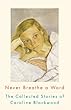
Ultimately, what seems lacking is neither fairness or facts, but perhaps ironically, something of Madame's own ruthlessness. In 1980, the late, great English writer, Caroline Blackwood, published, The Last of the Duchess, ostensibly a biography of the Duchess of Windsor. What the book became was a portrait of Suzanne Blum, aka "Maitre Bloom," Wallace Windsor's final gatekeeper and as grim an old villain as ever saw print. What made that book so memorable was that the author, herself a rather glamorous, if chilly beauty in her day, not only seemed to understand her glamorous, chilly and surprisingly empty subject, but also to relish, frankly, the cruel intellectual superiority of her keeper and tormentor. It was all a bit shocking, and no little bit thrilling, if ultimately very sad indeed. There was something of the same barely concealed disdain for stupidity and weakness in Blackwood's fiction, perhaps in Blackwood, so the Duchess, her lawyer and their biographer, at least in that perfect, hard little book, were set in a triangular balance, endlessly reflected back at one another a kind of pitiless realism that perfectly suited the subject.
Monique Brinson Demery seems a perfectly nice young woman. Madame Nhu was many things, some of them even admirable, as Demery convincingly shows, but nice, Madame Nhu never was. The very idea. Attractive, intelligent, tough, Nhu was all of these. Her biographer makes a convincing case for her as survivor and as a victim of both her circumstances and the public's perception of her as something much worse. That's the real problem here. Demery acknowledges the factors, including the sexism and racism that contribute to her subject's transformation into an oriental cliche. She tells what should be a compelling story of an astonishingly young woman's rise and fall, and what could have been a touching story of long exile and an amazingly unhappy family history. Madame Nhu, however flattered, resists. In the end, however much one might want better of her, she seems to have taken Shylock for her model:
"The villainy you teach me I will execute, and it shall go hard but I will better the instruction."
There just wasn't much more to her, however she got to be what she was. That being the case, as a reader, I rather resented the biographer's efforts as well. Madame Nhu turns out to be not much a mystery. But, like Madame in this if nothing else, her biographer has made what she could from what she had to work with.
Fey.
The real tragedy of Madame Nhu it seems, never quite the subject of this book, is what happened to Vietnam, back before everyone, blessedly was able to forget her.