Showing posts with label Samuel Richardson. Show all posts
Showing posts with label Samuel Richardson. Show all posts
Friday, February 20, 2015


Wednesday, June 26, 2013
A Nice Curiosity: Samuel Rogers

She is also, in her leisure, a photographer and finder of curiosities of all sorts. She can take a bit of gum on a lamp-post, or rocks in a ditch, find a doll's head in a patch of moss or a fallen bird's nest just by the root of a tree, put a scrap of one thing next to another, and make the viewer see something new and beautiful and wonderful; a discovery made, a color reconsidered, detritus transformed -- if for just a moment and only by her art -- into treasure.
I've known a lot of people make displays. I've never known anyone with quite her sorcery. Treasure indeed, she is herself.
Tempted by her tables of things, I was set to musing on curios and the curio-cabinets I remember being in every grandmother's parlor when and where I grew up. Remember those homely, glass-fronted bureaus? Not the stately china-cupboards that displayed the unused mass of every lady's better bone and silver, but the smaller furniture, often as not a "corner-cupboard", or even just a narrow box of glass shelves. The curios displayed, as I remember them anyway from my own grandmothers' houses, might be china figurines, and delicate dolls, cut-glass dishes and baby's shoes cast in brass, but just as likely tourist trash from otherwise forgotten trips; like a fringed, silk pillow from Rehoboth Beach, or a celluloid elephant that walked in a wobbly way on weird, rectangular feet if bumped gently enough from behind.
Literature tends to be taught, and rightly enough, from the china cupboard; all that weight of important books, the great masterpieces and collateral sets; Austen and Dickens stacked, with Richardson and Tolstoy, displayed like massy punch-bowls and soup-tureens. I've always had a certain affection for the curios, myself. One of the wonders of having access to an Espresso Book Machine has been the ability to browse among the lesser shelves of literature and dust off forgotten titles and the barely remembered authors now largely confined to footnotes, even in the big Nortons.
Samuel Rogers (1763 - 1855) was a poet between two times. As a boy, he twice went to knock on Dr. Johnson's front door. The first time he was told the Doctor was not home. The second time, he lost his nerve. That would be perhaps the last times Samuel Rogers failed to meet a famous man. The son of a successful banker, and despite his own youthful leanings to both poetry and the pulpit, Rogers would himself follow his father into the bank. Though he abandoned all thought of preaching, young Samuel did publish his first book of poems at 23. (He would publish his last original work fifty years later.) When he inherited his father's fortune, the banker's son promptly retired from trade, built a fine house in London and became one of the literary lions of the age. An invitation to breakfast was a sign of arrival for new writers. An invitation to his more intimate dinners was a more singular honor. Rogers published a book with Byron, unlikely as it sounds, counted both Shelley and Edmund Burke as friends, and lived to read, meet and like Charles Dickens. He used a considerable part of his personal fortune to relieve artists and writers down on their luck. He paid to keep Richard Brinsley Sheridan from dying in utter want. When his friend Wordsworth died, Rogers declined the post of poet laureate due to his great age, and happily endorsed his friend Tennyson's appointment in his stead. His own early style owed more to Thomas Gray and Goldsmith than to his Romantic contemporaries, but his latter writing might be said to be representative of a high-minded Victorianism. Neither quite fish nor fowl then for the anthologists, though he still figures in at least the history of English literature, if nowhere else. I confess, I'd never read him until just now.
So... where'd he go? In his day, as I've already suggested, Rogers' poetry was much admired by many poets now better known -- his' "Jacqueline" was published with Byron's "Lara" in 1814 --and a number of Rogers poems, like "Human Life" were once as popular as anything by Shelley or Keats. Critics as late as the turn of the last Century could still be understood when using only his surname. Even now, I would be hard pressed to think of another poet more often sourced in the biographies of his contemporaries. Nonetheless, I suspect that the answer to where he went is as much in his biography as in his poetry. Rogers did not have the mixed blessing of dying Romantically young, like "Byron and Shelley and Keats," in Dorothy Parker's memorable line. Instead he lived and wrote to a ripe, and largely contented old age. More importantly still, and unfortunately for his later reputation, the poetry of Samuel Rogers was nice. (He was himself invariably kind, but not always nice. Fanny Kemble said, "He certainly had the kindest heart and unkindest tongue of any one I ever knew." He said of himself that having such a small voice, no one listened when he said pleasant things.) Here I mean nice in both the Eighteenth Century sense of an elevated subject expressed in a well regulated line, and the Nineteen Century sense of poetry suitable to be read by virgins.
Witness this, from the aforesaid "Human Life":
Now, seraph-winged, among the stars we soar;
Now distant ages, like a day, explore,
And judge the act, the actor now no more;
Or, in a thankless hour condemned to live,
From others claim what these refuse to give,
And dart, like Milton, an unerring eye
Through the dim curtains of Futurity.
That is as well-turned as the leg of of Georgian secretary, and as smoothly pleasant. Hardly the sort of thing to inspire much in the way of new dissertation on his inoffensive metrical form or his equally unremarkable morals.
To the extent then that Rogers has survived it has been because of his conversation; the "table-talk" recorded in not one, but two separate and distinct volumes and comprised of the kind of casual remarks and reminiscences of his contemporaries and friends that make him such a bottomless well of anecdote and quotation for modern biographers of the Romantics and early Victorians alike. (As I learned from one of the volumes I had reprinted on the bookstore's EBM, Wordsworth, for brief example, had a strained laugh. No surprise there, egh?)
That's how I found the old boy myself. Dickens scholars invariably make mention of the novelist's first success and celebrity being recognized in an invitation to breakfast with the old poet. Rogers also figures in the memoirs and journals of the Irish poet, Thomas Moore -- likewise a great source now for writing mostly about other people. So, like Henry James later when he was at the height of his dining out, one meets the man everywhere.
The grand thing about having access to these inexpensive but sturdy reprints is the opportunity afforded to poke around in some of the dustier corners of English literature; to shop, as it were, from the back shelves and among the smaller treasures. Having found not one, but two versions of Rogers' "Table-Talk" and reminiscences, I can for roughly a sawbuck more, have the old boy's Poems - most of 'em, anyway, as well.
The last great literary success of Samuel Rogers came from the volumes of expensively illustrated narrative verse he made of his trips with his maiden sister to Italy. As it stands, I might have those as well whenever and if I ever feel the want of them. For now though, I am content with the very good poems -- some of 'em -- and the heaping notebooks of his talk, large and small. (I even had reprinted for me a short biography Rogers in a volume of Edwardian essays on various subjects. At about 50 pages, that proved about right for my attention to the poet.)
And all these curiosities now home with me, snug in just the pocket of my bathrobe of a warm, new Summer's evening.
Monday, March 12, 2012
The Inward and Outward History: "Liking" Hawthorne
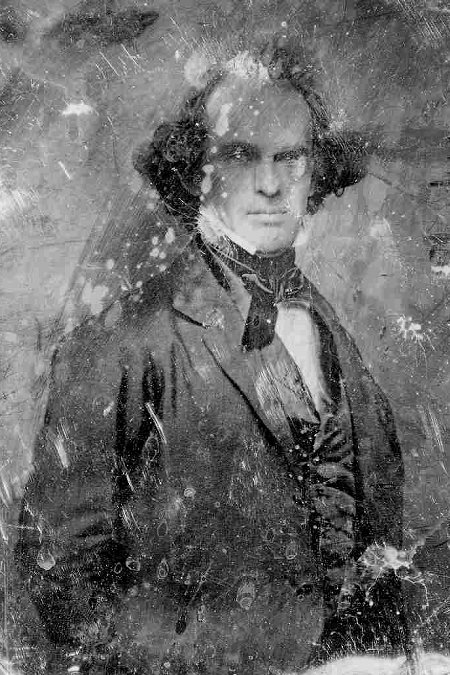
Another of the unexpected pleasures of my life online -- a life that I, like most of my generation never anticipated and for which I have become increasingly thankful as I find myself happiest now when home -- has proved to be how easy it is to find like-minded readers I would not otherwise have ever encountered. Working in a bookstore, I have had the happy recurrence of acquaintance with all kinds of enthusiasts with whom I share a fondness, say, for Emma in preference to Clarissa, and that has been an instant bond. With some customers, and not a few coworkers, I have come to share whole shelves together, and found in just this way, true friends. It's a very common usage now to speak of communities and mean not neighborhoods or towns, or even the old affinities of sect, but rather the commonalities of reading; most obviously in genre, but also, and better I think for not being so narrowly defined, just reading as either a pastime or, in many cases including my own, a way of life. I see it as such for me, and more so now that the idea that all culture is equally worthy, all expression valid, and all effort commendable would seem to be making every passing day the reading of books but one among the all but innumerable ways in which the good citizen-consumer may harmlessly entertain the stray hour -- neither more nor less, really, than knitting or shooting cartoon zombies -- both activities, I hasten to add, the practitioners of which I honestly hold in some awe as being so far outside my ken or skill. Even as good bookstores vanish, and the ideal of the book as the best and most affordable means of intellectual satisfaction continues to decline, the means of finding other readers, of discussing, recommending and reading books, as it were, together, has expanded so that now, I can read Austen with an Australian, a Greek and a woman from Des Moines, and all of us chat and exchange impressions, facts and whatnot in real, or nearly "real time," and none of us not in just a housedress. (Mine's a nightshirt, to be accurate, but it comes to the same thing as I'm wearing it in the daytime and with just slippers.)
I'm speaking again of Goodreads, of course, the social site with which I've recently become a little obsessed, but not to say that everything from Facebook to Twitter doesn't offer similar opportunities to connect reader with reader, at home and abroad. It's all good. I mean that. I know I can be seen here, often enough, and in the bookstore, to speak for just the Luddite and the print-stained, but I genuinely love the new immediacy and range that reading, writing and being online has provided to even musty old inklings like me. I confess myself ecstatic to read, for example, a nineteen year old girl from the other side of the world carefully explicating the universal appeal of Becky Sharp! Then there's another young reader -- this one Portuguese! -- with whom I have become, in this curious new way, fast friends through a shared affection for Tobias Smollett, through whose collected works the boy has just read! No lie! What, I ask you, are the chances of that?! What were the chances before this miraculous technological age of ours that I would ever have come across such a prodigy, or more accurately, that he might have found me?
For every favorite book I've bothered to look up on Goodreads and follow the thread of comments down, I have found, with real admiration, all kinds of enthusiastic readers, of every level of education, from all sorts of places, and of nearly every age, race or what-have-you, offering genuinely interesting reviews, remarks, posing questions and or answering them for other. (The group specifically devoted to reading the great Victorians, for a more organized example, is to my mind a model of good, democratic reading and full of very thoughtful help. Can't recommend them enough.)
There is also, of course, some shocking nonsense, but then when is there not in a public space? (Anyone who has ever hosted a reading in a bookstore or read a poem at a mic in a coffee-house will confirm the inevitable mad person, just vibrating to participate, come their turn or the Q&A.)
I must say, the strangest reviews I've read on my new favorite site? All to do with one novel, for which many readers seems to have neither any reverence nor points of reference. Very odd. Even those who've made a point of mentioning their previous reading of Hawthorne in school, and one must assume that meant either short stories and or The Scarlet Letter, would seem to find Hawthorne's style, and The House of Seven Gables specifically, pointless and confusing. I hadn't thought about this book, or the reading of it much since I had done years ago, when I myself was still a student. Rereading it now in middle age, I was struck most by how truly strange the book is, though, I find, in a wonderful way. There would not seem to have been an intellectual fad or technological innovation, from mesmerism to photography and the railroad that Hawthorne did not incorporate into his novel -- however ridiculous or barely understood -- and about which the novelist was not prepared the enthuse, all by way of contrast and celebration of the modern against the dead hand of history. If Hawthorne did not do specially well as a prophet of the coming age, he nevertheless created one of the most telling and atmospheric depictions of not only the dark and remoter origins of his country, but of the strangely violent clash, in even the remotest corners of the Republic of his own day, between the calcified and decaying traditions of the old world in the New, and the new age just then gathering steam, as it were, and barreling past everyone and everything in its path.
And yet! I was fascinated by the delicacy and affection with which he treats all the survivors of the disappearing New England: from the itinerant on the road to dear, dry old Hepzibah and her aesthetic ghost of a brother, and of course the country innocent, their angel, cousin Phoebe, the very last blossom & fruit of their rude and withered old stock. Curiously, the only truly modern men, the grasping Judge, and the young daguerreotypist upstairs -- as close as the novel comes to a hero -- are both dangerous; the one ruthless in his selfishness and the other, for all his weird science and powers of unearthly influence, little better than a magician, specially as compared to the solid, Christian virtues embodied in dear Phoebe and even the rigid devotion of Hepzibah Pyncheon to her name, and more and better, to her brother. Oh! And the other modern and most sympathetic, at least in my reading? That wonderfully greedy little Ned Higgins, the boy who would eat Creation, gingerbread by gingerbread, if they let him! Marvelous, dangerous boy!
Anyway, that's my gush, having just finished the book for only the second time. I don't remember what I made of it the first time I read it, or if I made much of anything of it at the time at all. (I can only hope that there are no surviving records of what I thought, about anything, at eighteen.) Obviously though, this is a complex novel, and not perhaps the easiest book then, I grant you, to talk or write about without considerably more study and or seriousness of purpose than I might ever bring to the task.
That said, I was still shocked by much of the posted comment on this book. Strong feeling, and much of it, frankly bad. But why so much? And why this book? Granting the usual contingent of snarky teenagers who may not think it wise to like things generally -- for fear of getting it wrong, again -- I can't quite understand the number of unhappy readers compelled to comment on this book.
I suspect that that word, "Romance," which Hawthorne so purposefully chose to describe his book, and the reputation this novel was awarded for weirdness by later, lesser talents like H. P. Lovecraft, have made much of the mischief for new readers. That word "Romance" has sadly shrunk in our time to just the thin stuff of sentimental sex, whereas for Hawthorne it would still have had all the thrilling mystery of history, myth and larger than life characters, and I suspect, already for a novelist of Hawthorne's generation, a pungent, not to say irresistible irony in what was already an unromantic and overwhelmingly materialistic country, or soon, as he quite rightly saw, his was to be. As for the weirdness, it's there, aplenty, but not as we've come to expect it; in gory spooks, butcher's paper, labyrinthine private mythologies and like childish silliness we think of now as "horror." Hawthorne is a serious artist, and even at his silliest, he doesn't stoop to such crude invention. Hawthorne's horror, and his romance, is all in the detailed description of place and people, in the influence of superstition and the potential for harm in even the greatest innovations of the dawning Industrial Age: it is in the Pyncheons then, and in us, and not in rotting timbers and weedy walks and dim rooms.
There are also lingering influences from the last century, and some of them like Freudianism, almost exclusively silly, that can still result in the most astonishing, and entertaining nonsense being posted. One gentleman from the Philippines, posting as Joselito, bless 'im, has a relatively lengthy review of Hawthorne's novel that has to be either a delightful, tongue-in-cheek parody of the ol' psychological criticism, or just a wildly inappropriate, and entertaining reading of the text, but either way the most hilarious bit of criticism I've come across since a certain little Big Noise out of Iowa defined the "lyric essay" as, well... anything written down.
Nevertheless, for all the unhappy comment and or unsympathetic reading of Hawthorne, the point is that one has only to look a little further down the line to find someone's comment that may inform, amuse and or suggest yet another kindred spirit:
Said one April Murphy, "My favorite quotation involving the reversal of Jonah and the Whale when the boy devours a whale-shaped cookie." -- There's our boy, Ned, again.
And next comes, Kimberly, with "Hawthorne has popped up in a couple of biographies I've read recently: he was part of Louisa May Alcott's circle; and his time in Paris was mentioned by David McCullough." -- Did not know either of those things. You get the idea.
I wish I could communicate better the pleasure to be had, for even the reader, like myself, inadequately versed in the history of New England, and Hawthorne, in reading such a masterful novelist let loose in such wonderful extravagance as this! No wonder Melville worshiped him and wanted him as his friend! I can only suggest any who haven't tried this book, or read it, as I hadn't, for thirty years, pick it up and allow themselves the pleasure of a visit to this marvelously strange corner, and major landmark of our literature. The House of Seven Gables deserves more visitors and finer sensibilities than the likes of what it seems sometimes to attract these days, myself included -- though, I had a grand time! And I've throughly enjoyed finding that I am far from alone.
Monday, June 28, 2010
Daily Dose
 From The Haunting of Hill House, by Shirley Jackson
SAMUEL RICHARDSON
"If any of you has trouble sleeping, I will read aloud to you. I never yet knew anyone who could not fall asleep with Richardson being read aloud to him."
Dr. John Montague, from Chapter 3
Wednesday, October 14, 2009
My Sentiments Exactly
 My friend and I reread a book together while he was up here for a visit. We've done this a few times over the years, with varying success, but always with great initial enthusiasm and never to any result less than good. We've tried a variety of titles since our first, I think, Emma, which we read on a trip together to the Russian River, in California, many years ago. Some books he's finished, and I haven't. Some I've read straight through and he didn't. Hardly the point of the exercise, really. The best of it has been having a book between us, to which we might, for a time, return whenever we wished, to discuss or not as our conversation carried us, and in knowing that the other was off somewhere, in the house, or far off, turning the same pages, laughing at the same scene, noting some felicity to quote to the other later, or thinking of a question from the text to ask the other when we spoke of the book again. Reading a novel, at least once one has left school, is largely a solitary pursuit, but it can be a means by which to know, or know better, not only the author but other readers, even or specially old friends. In my first book club now for just shy of a year, I've had the chance to appreciate the strangers' opinions of favorite books of mine, and that has been most interesting, and a most pleasant challenge: to many of my own preconceptions, to my memory, and to my ability to contribute something to a general discussion with a diverse collection of readers, young, old, men and women, whose reading and experience has often been very unlike my own. It has been an education for me, reading to a purpose other than to please myself, or to simply talk about a book with a friend, and something of a welcome communion; to meet regularly faces familiar and new, and books likewise.
At my work, I talk about books throughout the day, but seldom at any length or to any purpose other than to recommend and or to sell them. But, as evidenced already by this writing, if nowhere else, it is not enough. Books, unlike the visual or performing arts, can only be shared among the community of common readers, each reading on his or her own, and brought together not so much by an experience remembered together, or apportioned like a task in a classroom, but by mutual interest in a specific work, admiration of an author, sympathy with a philosophy or theme, in short, by a choice to know another person better by what that person's read. I may like the same movies as someone I may not like at all. I may stand in a museum, next to a maniac or a fool, and admire the same painting. I may listen to music in a concert hall and tap my foot in time with a stranger who remains a stranger thereafter. But to have read the same books, or better, to be reading the same book as the person next to me on the bus, or unknown to me, on a bus in Bangalore, is to be, already in a conversation with the book's author and if unknowingly, with any and all the other readers of that book. Discussing books then is to join in a conversation already started.
A few years ago, I noticed a handsome little man, of college age, every day reading further through a great, fat Penguin paperback. I couldn't make out the title and finally asked him what it was. Shyly, he turned the cover to me and I saw that he was reading Richardson's Clarissa. I expressed my sympathy. He averred it wasn't a bad book, though he would never have read it but for having been required to do so for a class in English literature. When I asked if he at least was to read Fielding after, he admitted his innocence of Tom Jones. And there our converse ended. I could not however stop thinking about the boy reading that ponderous big book and not knowing that Henry Fielding existed. Finding a handsome, inexpensive copy of Fielding's novel in a used bookstore shortly after my exchange with the boy at the bus-stop, I bought and carried it in my bag for some days, until I chanced to see the boy again and gave it to him, both of us blushing, him from shyness and me from brass, telling him it was his reward for having read the Richardson. He thanked me for it, with a charming confusion, and we never spoke again.
Briefly set free from other commitments by my vacation, and before beginning the book my friend and I were to read together, I took up a fine old copy of Fielding's Joseph Andrews and read what I assumed would be but a few pages of it, just to amuse an hour or two. I read quite a bit more before my friend arrived, and I've finished it since he left. Bagehot called Fielding "a reckless enjoyer," in that he saw the good in everything, high and low, and communicated "this elemental energy of keen delight" in all he wrote. I turned to Fielding then in need of just such an infusion of delight, and found it. That was what I hoped to give the boy at the bus-stop. It is no bad thing, I suppose, to read Richardson in a class on the novel. To read Fielding though is to experience something of the fun it is to be human, to have senses, to drink and eat and fuck, to be a fool, be made wiser, and to laugh, forgivingly, at the folly of of the whole species. Byron called him "the prose Homer of human nature," and whatever his shortcomings as a novelist for the modern reader, just as for the Victorians who insisted on his shortcomings as a moralist, Fielding is a delight still and will be so long as people read English novels.
I hope that boy at the bus-stop read the book I gave him, so that wherever he is now, we might have that at least in common here after -- delight. And should we chance to meet again, and should he now know Tom Jones, I'd like to know what that boy thought of him. We might yet meet as friends, if he liked the book. Samuel Richardson would not be enough to that purpose. Fielding would.
Monday, May 18, 2009
Daily Dose
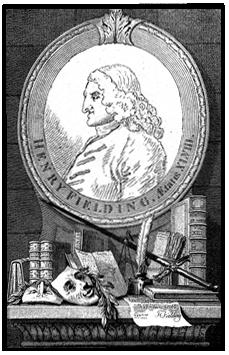 From Table Talk, by Samuel Taylor Coleridge
FIELDING
"How charming, how wholesome, Fielding always is! To take him up after Richardson is like emerging from a sick room heated by stoves into an open lawn, on a breezy day in May."
Saturday, April 4, 2009
The Confession, Not the Priest
 I have been corrected. It seems I have yet again made too much of modesty and been called to task for it. A friend wrote, having read my last, and told me to "stop going on and on about all the books you haven't read, especially the ones you have." It seems I do that quite a bit. My friend goes on to write flatteringly about my own reading, as just a bookseller and bibliophile, in comparison to his as a more educated and accomplished critic, though he didn't put it in quite those terms.
"You make too much of your lack of education. You own more books than any sane person I've ever met, and you've read more of what you own than I ever will."
I quote him here, and I hope he will forgive the liberty, because, while I am proud of his good esteem, and inclined to let him brag a bit for me, I question how he came to think that what I've read matters as much as how he has. My friend has always read to a purpose. He has studied and thought and considered in a way I never could, with tools I never acquired, with a discipline I lack, and always in pursuit of an entirely respectable goal; a degree, and then another, employment that pays more than a living wage, his own education and the opportunity to put that education to good use. It's true, I have read widely, obsessively and long, but I have never read anything with the intention of teaching it. If he has a list in mind of "all the classics" I've read that he hasn't, of "all the poetry and history" he never will read that I have, I'm inclined to ask him, in response, if he really believes he's suffered any more, and contributed less as a result of what he hasn't read, than I have done with my failure to do anything much with all I have? Who is the better man, for all our books?
I concede my vanity. It is no small thing I think, to cause such irritation to a good and faithful friend. But I do believe he misunderstands my modesty as false. My embarrassment at all I do not know, of all I have not read, or read well, or am unlikely to ever read, is genuine. Obviously he shares this with me, though he seems to feel he has a better right to it. I disagree. "Amusement is the happiness of those who cannot think," Alexander Pope said. Mine has been the happiness of an easily amused man. My friend has known the enviable satisfaction of thinking, and writing, more deliberately than that. It is a question of volition, as well as condition. He has made much of the less he's read, but then he had, and took the chance to do so. If my choices were more circumscribed, they were none the less my own. If all I have to show for the education I did not get from schools, but from books, is the library I sit in, writing just this, then I have every right to preface my remarks with any apology I think appropriate for the opinions I herein express. If I harp too much on the same string, reminding my few but faithful readers and friends that my only qualification for writing here at all, namely my acquaintance with the books I sell, the books I own, and the books I've read, what else, pray tell, should I do but ask for their indulgence of my presumption? I've never had to teach anyone else how or what to read. I've seldom written anything that has earned me so much as the price of a good lunch, or with any more lofty aim than the entertainment of my friends and the passage of a happy hour or two at my desk.
"You are no dilettante," he tells me, but how else define the word if not by my example?
As to my education and the want I've felt of a better all my life, again, there is, in the end, no one more responsible for that than I am. Such correction as I've made of the inadequacies I've experienced may seem admirable, at least in the absence of any substantial accomplishment resulting, and yes, I am not too little proud of what I have managed lazily to read, but the central lesson of my reading life has been an appreciation, an awe of all I do not know. If in communicating that I've failed, or if, in the attempt, I've given the impression that my intention was to parade such erudition as I can claim, then I would as soon not write here again or at all. But I am willing to risk misunderstanding of my motives, if I can communicate at least something of my reverence for my books.
Evidently, I need to stop being so unforgiving of the education I did get. At least I was taught enough to know I was not being taught enough. That's something more than many might claim. But every discovery I make, later and later in life, makes me wonder that such good things were never put before me when I might have put them to better use?
How was this possible? How had I never read Pope but in passing and with so little remembered pleasure? My assumption has been that my lack of a higher education had kept me from appreciating the poet's place in our literature and language. I must have missed out on the class or classes that might have taught me better. Turns out, from subsequent conversation with my friend, and with other equally accomplished English majors from respectable colleges, they were no more likely to have read Pope at length than I had been with a rather modest high school diploma. Seems Pope need not be any better taught, or taught at better length, nowadays, than any other dead white male. I was reminded that professors teach to the length of a lesson plan, just as their inferiors do in public high schools, and that other than what can be passed over in a survey of The Norton Anthology, is no more likely to register with an undergraduate at Harvard than it might have done with me. It seems, at least according to my friend, that most better educated people in this country are no more likely than I was to have read much of anything by any given author, whatever his place in that now somewhat discredited, rather ramshackle Holy that used to be reverently called The Pantheon. Now, those with decent degrees will have learned, it seems, to read deeper, and presumably more thoroughly and thoughtfully than I am ever likely to on my own, a fact I've come sadly to accept as irreparable, but as to what they've read in learning these enviable critical skills, that, it seems, is now something of a crapshoot.
And yet, having come to accept that one need not have read Dickens or Dryden, or even Pope or much of Shakespeare (!) to deserve and receive a degree in English, I am so regularly mortified by my own ignorance of so much that by right is understood to be "essential reading," I can not shake the nagging thought that too much that is not only good but great, too much that is not only important and worthy, but more entertaining, enlarging and fun than a goodly portion of the literature that is used and taught, has been allowed to fall into the shade of considerably lesser, if more easily taught, talents. Who, for example, chose The Rape of the Lock and why, if not for the most obvious reason of length? If that work is even still taught at all, in high school or after, there must be a better reason for preferring it to all the other products of Pope's pen? I wish this could be explained to me. It seems, even on rereading, an unlikely choice, requiring as it seems to, more reading about than reading, if it is to be understood by contemporary students? I know I was glad to come to it again after I'd read not just a biography of Pope, but much of the rest of his work. And while my instructor was about it, he or she could also tell me why any poor soul is made to march through the whole vast acreage of Clarissa, and never let to run with Tom Jones or Perigrine Pickle? Why the pleasures of Vanity Fair might not suit the purpose as well as any earnest "problem" novel of the period?
But now here I am presuming too much again on my own experience, criticizing institutions of which I have had entirely too little experience, and, it would appear, risking again being thought a popinjay for reviewing my own reading even as I lament my lack of higher education. It seems I am exactly the kind of hopelessly woolly-minded egotist my friend so gently tried to stop me being here.
Give it up, my dear, I am incorrigible.
Monday, January 26, 2009
A Very Desperate Habit
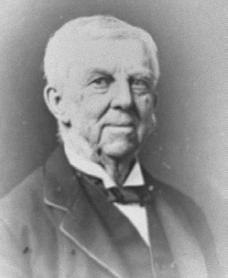
"Apologizing - a very desperate habit - one that is rarely cured. Apology is only egotism wrong side out." ~Oliver Wendell Holmes, Sr., The Professor at the Breakfast-Table
Oh dear. I have been called to task on two points. First, I was reminded by an acquaintance that "people do not read long entries on a blog," which will mean, I'm afraid, said people will not be reading this. Nothing to be done about it. I am long-winded; I write as I talk and talk, when granted a listener, until I'm stopped. On more than one occasion I've talked even the most attentive listeners to sleep. When I was writing for work, I tried rather desperately to keep things light and quick, adding pictures seemed to help when I was blogging, and after many years in the book business, I may finally have mastered writing Staff Recommendations that actually fit on the requisite card -- in a very small font, but still. Here I seem, to myself, to be rushing, even racing to the end of each entry in what feels like the fewest possible words. It does not, evidently, seem so to others.
I bought a new camera before Christmas. To call it a "video camera" seems wrong. It is smaller than my first cigarette-case. My intention was to film my own reading of Capote's "A Christmas Memory" to distribute in place of Christmas cards. Only after I bought it and tried to work the thing, did I decide instead to hire a professional to film the reading and make the DVDs for me. His only complaint in trying to do so? My reading, which to me always seems rushed, was simply too long to be easily accommodated in a computer, at least as I understood what he was telling me. It seems, yet again, I did go on.
An old friend -- himself a former newspaper man, now in advertising -- wrote to tell me that, having read something of what I've written here, while I can write, my habit of apologizing was driving him crazy. Do I do that? I do. He's right, of course. I would apologize... but you do see the problem.
These are bad habits. They make for bad writing. I really must amend. I will try. But, ( you had to have seen that conjunction coming, no?) I have read too much in the old essayists, and affected, I think, a modesty I may not have earned. Johnson said, in a letter to Richardson, "what is modesty, if it deserts from truth? Of what use is the disguise by which nothing is concealed?" But then Johnson, and even Samuel Richardson, whose books may be masterpieces though I can't seem to read them, were voluble men, as well as great writers, and their modesty is admirable because of their achievements. Mine is inbred. The first lessons of my childhood were all chiefly to do with minding my manners, and my place. Attention could be given, but was never to be rudely drawn to one's self. Having offered this excuse, I would supply another. I learned, as a queer but clever, sly boy, that I might say almost anything, if said in an amusing way, and so long as the requisite apology afterwards was sincere. My apologies are still and almost always sincere.
Our oldest, true arms in this life are the defenses we are given at home and acquire on the playground; the bully in rompers will bully his wife, the coquette in pigtails will cage drinks when she's wearing a wig, and the sassy sissy, will still grovel and snap as he passes forty and five. To promise I will go and sin no more would be... insincere.
I will try, however, as I said, to amend. I may never have the confidence to say just what I think, and the consequences be damned, anymore than I will ever stop thinking and saying what I ought perhaps not. I think in qualifications. I express my regrets as easily as my opinions because I have the reflex of the former at the expression of the latter. What if I am wrong? Who the Hell am I to say? It is the best I can do. Maddening, ain't it?
Subscribe to:
Posts (Atom)