Showing posts with label Musicals. Show all posts
Monday, November 18, 2019
Daily Dose
From The Movie Musical!, by Jeanine Basinger
KNOW
"The production was lavish (you know that when the credits say 'Furs by...')"
From page 493, on the film, Funny Girl
Labels:
Barbara Streisand,
film,
Funny Girl,
Hollywood,
Jeanine Basinger,
money,
Musicals,
New Books,
nonfiction
Saturday, July 2, 2016
Daily Dose
From Then and Now: A Memoir, by Barbara Cook
THE MUSIC MAN ON FILM
"The problem with the movie was that there was no dirt -- it was too clean. Put bluntly, the horses never shit in those streets. The movie wasn't bad -- it was just... too clean. I think The Music Man is an earthy show, and that really didn't come across on screen."
From Chapter 9, The Music Man
Labels:
Barbara Cook,
Daily Dose,
film adaptation,
memoirs,
Musicals,
New Books,
Quotations
Friday, December 6, 2013
Quick Review
It is just so easy to make fun of Nascar; the noise, the crowds, the meaningless devotion to speed. Then there's the bloodthirsty anticipation of flame-outs and fiery crashes. It's all just so awful, isn't it? Beneath contempt.
Now, admit it, queen. Much as we thrill to the perfection of the overture to Carousel, however unforgettable the night Tyne Daly opened in Gypsy, much as we treasure our rare Barbara Cook vinyl, for all of us who love musical theater unreservedly, there is also, always. a secret, blushing fascination with the flop. How can one resist the tales of what might have been, or better yet, what should never have happened?
Who among us hasn't paused to study the carnage of some unnatural disaster, stared spellbound at the collapse of some grand folly, marvelled at the waste and devastation of some truly spectacular mistake?
Among my theater books and Broadway memoirs, hard-by the wonderful Ethan Mordden histories, and my James Agate Egos, and the rest, I still treasure Not Since Carrie: Forty Years of Broadway Musical Flops, by Ken Mandelbaum as a special favorite. (If you've not read it, do. The horror, the horror.) That book inspired a long and satisfying, if largely fruitless search for the original cast recordings of many an otherwise lost and unknowable show. It also gave me a taste not just for the neglected little gem, but also a new appreciation for the really Big, Bad Idea.
Just above, nine blue-thighed beauties at the Tony Awards. This photograph represents perhaps the only truly happy moment anyone connected with the show these boys were in ever experienced that night. Please note the obvious, healthy vigour, the pure, youthful innocence on those handsome faces, because this may also have been one of the few evenings when no one in this cast was not in a cast. Still, aren't they pretty?
When I saw the new book by the co-writer of one of the most notorious shows in recent Broadway history, I knew it was something I had to read. Truth be told, I've been waiting for this book for years, at least since I read some of the original press coverage, certainly since I first saw the hyphen in the title, Spider-Man: Turn Off the Dark, and knew there was something very, very wrong. Too true. Since I read the book, it's been announced that the show is closing on Broadway, and moving to Vegas. And there we are.
Glen Berger's new book is the story of one Big, Bad Idea after another, but the one that seems clearly to have led to all the others is right there. on just page twenty-three. It's the Spring of 2005. The author's just been hired on to write the thing, based on one rough scene, which even he admits he wrote on spec, in one night, as something of a lark. The producers liked it. He was in. Berger's long collaboration with the director and co-writer, Julie Taymor has barely begun. There is, as yet, no show. Berger has just met for the first time with the composers Bono and "The Edge" of U2, and as Taymor & Berger walk away from that rather heady encounter, Berger offers the following:"Finally, I blurted out, 'You know, Julie, in a certain light, Spider-Man the Musical is kind of a ridiculous idea.'
Julie frowned, furrowed her brow, and said, 'Ridiculous? I don't think so. No.'
She wasn't just serious, she was solemn. I stammered out a 'Oh -- but I'm certain -- well, no, I didn't really think that either.' But now I was scared. I just assumed everyone thought this project was potentially ridiculous. Obviously it wouldn't be ridiculous by opening night, because Julie Taymor would make sure of that. But -- hoo -- was I really working with someone who hadn't once entertained the notion that perhaps a musical about Spider-Man was... just... you know... ludicrous?"
There it is. There's the show, the book, the whole sad story, as it were, in roughly one hundred words. Note the italics -- the dashes -- the ellipses...
To quote Glen Berger again, "hoo."
Millions of dollars and much, much later, on the very edge of Taymor being fired and Berger among others being sued by her, at least according to the author, the director herself will finally say something of the kind to her erstwhile collaborator; ridiculous indeed.
In his book at least, Berger is at some pains to give the lady, always, her due. If anything, he's surprisingly kind, even affectionate, if not obsequious, in his respectful portrayal of her here. Remember, by his own confession, he was an active participant in getting Taymor the boot. It's frankly a fascinating, perhaps unintentionally disquieting thing to read; all that kow-towing before, during and now after the fact to the genius of Julie Taymor.
What, if anything, Julie Taymor will ever say or write about this show, in Berger's book we have at least one side of a surprisingly complicated story. Complicated and no. It's true, there were entirely too many moving parts in this contraption, too many people with a stake in the show, and an opinion of it. Just moving all the dramatis personae on and off, even in just Berger's book, can be a bit of a chore. Nevertheless, from it's inception, the fatal flaw in this show would seem to have been in the collaborator's making of it in the first place.
It was, frankly, a dumb idea. Good shows have been made from less, and worse, it's true. As this book shows, if anyone might have made something from this particular nothing, it ought to have been Taymor. This, after all, is the woman who made The Lion King into a Broadway Behemoth, the great cash-machine that it is still. That was clearly the problem here, ironically enough. (Any discussion of that show, which I've seen and enjoyed royally, always reminds me of something another of Taymor's former collaborators, the actor and comedian, Mario Cantone said about it in his one man show on Broadway. The actor hilariously explained at some length why he turned down the chance to play Timon on Broadway, after creating the role in an earlier workshop. When his audience clearly expressed some shock at his bitchiness about this now beloved Broadway institution, Cantone, devastatingly, shrieks, "It's a PUPPET SHOW!") Perhaps then the Big, Bad Idea here, the point of departure for all the years of bad ideas to come, was not Spider-Man The Musical, while that is certainly bad enough, but trying to make of such a thing another Taymor spectacle; another inflated children's cartoon, decked in pennants and masks, and weighted with adult metaphor, in other words, another Lion King. What this show was perhaps always destined to be was what it will shortly become when it transfers to Las Vegas: Cirque de Spider-Man.
Berger bears a larger share in that than almost anyone else on "the creative team." He wrote the version that cut most of Taymor's more labored metaphysics and unworkable production numbers from the final show. Even he seems to find this betrayal almost as unforgivable as Taymor did. But then, unlike the lady genius, poor little Glen wasn't making Lion King money, or really any money at all until and unless this Spider-Man made it onto the stage and into the black. His ultimate justification for sticking it out and sticking it to Julie Taymor? His kids gotta eat. As arguments go, his is not without an obvious merit.
And now he's written his revenge, after a rather cringing fashion. For me at least, this last little betrayal was more fun than I might admit without blushing. Hope he's made some money at last. Hope Taymor does something more worthy of her talents hereafter. Hope all those adorable Spider-Boys can stay out of the hospital.
Hope the next guy to collaborate in a major Broadway debacle keeps such careful notes of the process.
Not that I'm hoping for a crash again, or anything.
Break a leg, everybody.
Wednesday, July 31, 2013
Quick Review
Poppers make Mrs. Partridge cum harder. I paraphrase, but not by much, honest. She's said so herself, in her latest autobiography. She has a lot to say, and from the get in this new book, about her private life, if it can still be called so now, and about her sexuality specifically. So, if anybody was expecting Shirley Jones to be just the the sugar-sweet ingénue of those Rogers and Hammerstein musicals, or the nice lady in pant-suits driving the bus in that Seventies sitcom, think again.She's led an interesting life, has Shirley. Her people were Pittsburgh brewers and bartenders. (And yes, she was in fact Miss Pittsburgh early on.) Discovered -- and groped a bit -- and signed to a personal contract by the great composer, Richard Rogers, our Shirley has been a star since she was a teenager. As Laurey, in the film of Oklahoma!, she won many a heart singing "Many a New Day" in perfect, virginal white, and broke many another as Julie Jordan in Carousel, singing "If I Loved You," again with the stalwart Gordon MacRae. (It was supposed to be Frank Sinatra, playing Billy Bigelow, but Ol' Blue Eyes funked out the first day of shooting, the reader discovers here, to go fuck Ava Gardner.) She went on to win an Oscar, lest we forget, playing a prostitute in Elmer Gantry.
For those of us now of a certain age, for good and ill, she will always be the matriarch of The Partridge Family on the hugely popular television show. She's quick to acknowledge that the phenomenal success of that show eventually had everything to do with her stepson, David Cassidy. While he was her costar on that show, he became the biggest pop star of his generation, for a hot minute there, with one of her own three kids, Sean Cassidy, following after.
At the heart of her personal story is her long and troubled marriage to the great love of her life, the equally beautiful Jack Cassidy. When they met and fell in love, he was a married man, and a star on Broadway. She was the new kid. Theirs was a justly storied romance. They went on to have three beautiful children together. She went on to become a movie and television star. Jack Cassidy never quite did. A man whose talents were only exceeded by his insecurities, miseries for everyone involved ensued. Eventually her marriage to Cassidy would end in divorce, and his life would end tragically, after many professional disappointments and repeated hospitalizations for mental illness, in an accidental fire set by his own cigarette.
Jones is blunt in her assessment of both of her marriages, as she is in nearly everything else, (from suave to nuts, as it were: as her second marriage, to the deeply eccentric comedian Marty Ingels, not without it's own very public trials, has lasted. He makes her laugh. I get that.)
The headlines for this book have come from some of the hotter revelations therein: Anthony Newley and his then wife, Joan Collins, suggesting a four-way with the Cassidys -- Shirley declined, Jack Cassidy slipping on Shirley's peignoir, stockings and slippers on their wedding night, etc. All good clean fun in a movie star's memoirs, as far as I'm concerned, and I've read a lot of 'em. What's missed in just retelling those stories out of the context of the book is, for me the real revelation of the thing. Here's an eighty-year-old dame, a genuine star of some of the last great movie musicals, a television star, and an Oscar winner, no less, who doesn't hesitate to share that sex, and masturbation for that matter, are still a vital part of the old girl's routine. When it comes to sex in general, she digs it. Always has, probably always will. Cassidy taught her a lot. He was really good at it, evidently and had the tool for the job. (Inherited, our Shirley proudly tells us, by all his sons -- in the one instance of truly questionable taste in the whole book. Not like I wasn't tickled to read that about all dear old, once dreamy Cassidy men.) More than that though, this isn't just some celebrity nonentity's kiss and tell, but rather a damned fine actress, and a mature woman honestly recounting her experience, her love life, yes, but also her life, as lived, all of it. Sad to say, I don't think there's a male actor of her generation we would be quite so much aflutter over had it been a man saying the same damned things.
Still, our Shirley is a Republican, so there's that potential invitation or two she might not be getting again -- she should live so long, we should all live so long as to see another Republican Inaugural. ("Not", as the kids I suppose still say.)
I think her an admirable character, all in all, and I do not doubt, a helluva lot of fun, our Shirley, in and out of the sack. Her book anyway was worth the evening it took to read.
(Meanwhile, it's not a song actually associated with her career that's played in my head since I read the book, but an old Sinatra tune:
"Have you met Miss Jones?" someone said as we shook hands,
She was just Miss Jones to me...
Not so much now.)
Tuesday, April 5, 2011
Reading Notes
I don't read much about music, some, but not much. The little I do read tends to be about Broadway musicals, or jazz vocalists, because, yes, I am that queer fellow. Even then, my curiosity tends to the personal story and the performer rather than the form. I listen to a great deal of music, but that doesn't mean I understand it, or could say much that would be meaningful about it. I don't read music. I can't make music. I can't even sing, though I can just carry a tune, sober, but only so far. In fact, I can't pretend to expertise of any description in musical matters, neither by way of education or experience, and can not even flatter myself that I have a specially good ear. Music however is the one art about which we are all allowed our opinions and may express our personal preferences without fear of censure, so long as we are sure of the company, and in the right place at the right time. It would not do, I suppose, to espouse Patsy Cline in preference to Tebaldi while at the opera, any more than it would make new friends to hum a catchy tune from Brigadoon, standing in line for tickets to see a band called "Napalm Death." My husband and I share a surprisingly narrow range of music in common. Despite his superior age, he keeps up with pop better than most teenagers, loves Katy Perry and Bruno Mars, and so forth, and what he would call "jazz" I would not dignify with that name, any more, I suppose, than a devotee of hard bop would have much patience with my devotion to the latter albums of Rosemary Clooney. We are what we are.
Besides theatrical history and memoirs, and the occasional biography of a great musical Dame like Mabel Mercer, or the more cautionary tales of singers like Anita O'Day or Billie, about the only serious books on music that I own would be criticism and profiles by great jazz writers like Gary Giddins and Whitney Balliett; New Yorker types, otherwise, no.
But reading too many books, and too many books all at roughly the same time, can produce in the aggregate something very like an inquiry, and so it seems I have taken up with reading musically, for the moment. Not sure how that happens, but here we are.
It started with a book that took me in, I'll admit it, for a good while. A remainder called An Incomplete History of The Art of Funerary Violin, by Rohan Kriwaczek, caught my eye on the table, first because of the rather wonderfully somber cover, and the very intriguing title. Never heard of such a thing. Reading just the littlest bit of it, I bought into it, and bought it, before I'd examined the thing too closely. Seems the good Protestants needed a music to replace the Mass at laying in. A tradition of lachrymose fiddle music came to fit the bill. What do I know? Could have happened. I'd read a dozen pages before I even began to suspect the surprisingly elaborate prank. The tone was just that much too much solemn, and defensive. Surely, any scholar and musician, having rediscovered an all but lost musical history would have been less beady-eyed about it? Why this stink of grievance? Then came the first mention of plotting in the Vatican...
It's a shame, really, to spoil the fun, but delighted as I was to discover I'd been hoodwinked, I was disappointed that the jokes weren't very good, once got, just elaborated like some teenager's telling of a once funny Python sketch; silly fake names under anonymous old photos, hints of paranoia and dark doings and... oh dear, a conspiracy. It's a pretty elaborate premise in service, sadly, of a gloomy cabaret act. Still, it was fun for a minute there.
Actually, the last book by a musician that I was surprised to find I genuinely loved was written by a woman I've never been much moved to listen to before. I remember the seventies rather vaguely, but I was there for the eighties from jump, though never really of them. Unlike all those reedy waifs who listened to the Smiths and thought Morrissey adorable, in a never quite up to it way, I make no claim to having ever been distangay, back in the day. I did not having the Patti Smith poster on my wall, wear eyeliner or ever think much of either her poetry or her records. Truth be told, when it was something very much to be done, I did not think of her at all. But Mapplethorpe? Him I remember. And I remember immediately after, when his notoriety, and his death, allowed all the critics who fancied that they mattered more than they may have, to have a go, not just at his work, but at anyone who liked it. Here I speak not of all that scary, silly business of the Philistines on picket-lines, or the bumptious politicians of the day, but of all those aesthetic gentlemen in expensive soft shoes who padded 'round the galleries, and Mapplethorpe's bones, making much of how little they'd actually ever thought of him. This, after they'd made him famous, and rich. Fascinating to watch how happy they were to gossip darkly about his taste for strange, his unfaithfulness to his friends, the shallowness of his pretty pictures. For a decade or more after he died, I wondered there was no one, it seemed, who had actually much liked what they saw after all, and had never really cared for the man, personally. The first biography was a hateful thing. Yet I resisted reading Patti Smith's book, Just Kids, for the longest time, despite the glowing reviews and the prizes, though I knew that she would provide the answer to all that bullshit that was still being talked, here and there, about an artist I'd found fascinating from at least the first book of photographs he'd had published. When I did finally take up Ms. Smith's memoir, I still worried she might not write in a way I would like reading, but I was a fool. It's a wonderfully written book; charming and simple and deeply felt. And quite fascinating, not just because it would seem to be the first honest portrait of her greatest friend, but because Patti Smith herself -- as I might have know had her many young fans back in the day not mumbled so -- is herself, it seems a brilliant woman and a very dear soul, and a very serious artist. I blush to think how stupid this, quite rightly, must make me sound to any and all my friends who already knew that.
Much more usual for me, was the night I took home The Hammersteins: A Musical Theater Family, by Oscar Andrew Hammerstein. I know, I know, but I warned you quite awhile back that I was really just another of those old darlings, didn't I? The book is a lavish thing, full of playbills reproduced next to ancient theatrical stills, show posters and backyard snaps, family history and famous anecdotes, and what is actually a remarkable history of the American musical theater, as told through one remarkable family. This, you see, is the book silly people like myself were rather expecting when the first volume of Sondheim's acerbic memoirs came out for Christmas last year. Something like this, anyway. Knew better, but didn't, somehow. I was fascinated by that book, and made unhappy by much of it being so willfully mean to so many artists long dead, though I came to admire Sondheim's book more once I'd got over it being so very true -- to the nature of its author. This Hammerstein object, judged by the same standard, is just as true to Oscar the lyricist, and his illustrious ancestors and heirs: goodhearted, is what it is, and fun.
Now, of all the unlikely things, a little book I've fallen in love with in just the past day or so, is by the mystery novelist, Donna Leon. It's called, Handel's Bestiary: In Search of Animals in Handel's Operas, charmingly illustrated by Michael Sowa, and with a CD of the referenced music, with Alan Curtis conducting Il Complesso Barocco. Who knew? Seems Ms. Leon is something of a serious scholar of medieval bestiaries and Baroque music, of all things, and with her talented collaborators has made a charming little something out of this. The pictures are charmingly painted cartoons --of two bees on a blanket under the stars for example -- along with some wonderfully bright explanations of what that sort of thing may mean in terms of the stately Herr Handel's music. I know it's all a little darling, but it really is well done, and actually great fun.
And finally, to come to something very new, and yet predictably familiar if one knew me at all, there is the new biography I've been anticipating now for at least a month. No Regrets: The Life of Edith Piaf, by Carolyn Burke, just came out and went to lunch with me that very same day. What, I ask you, is not to love? Now it has come home with me. I can't really speak as yet to the value of the book, which will after all be my third reading of the great singer's life, but as I've been clattering away, typing up this ramble, I have of course been belting out L'Accordéoniste, etc., right along with La môme all night. How, you say, when I don't speak a word of French? Well, that's true, so you won't hear me doing Hymne à l'amour at karaoke night any time soon, no matter how many Lemon Drops you buy me. Still, a girl can dream, can't she?
I never said I was musical, not in the proper sense anyway, now did I?
Encore une fois!
Elle écoute la java...
... elle entend la java
... elle a fermé les yeux
... et les doigts secs et nerveux ...
Ça lui rentre dans la peau
Par le bas, par le haut
Elle a envie de gueuler
C'est physique
Alors pour oublier
Elle s'est mise à danser, à tourner
Au son de la musique...
Besides theatrical history and memoirs, and the occasional biography of a great musical Dame like Mabel Mercer, or the more cautionary tales of singers like Anita O'Day or Billie, about the only serious books on music that I own would be criticism and profiles by great jazz writers like Gary Giddins and Whitney Balliett; New Yorker types, otherwise, no.
But reading too many books, and too many books all at roughly the same time, can produce in the aggregate something very like an inquiry, and so it seems I have taken up with reading musically, for the moment. Not sure how that happens, but here we are.
It's a shame, really, to spoil the fun, but delighted as I was to discover I'd been hoodwinked, I was disappointed that the jokes weren't very good, once got, just elaborated like some teenager's telling of a once funny Python sketch; silly fake names under anonymous old photos, hints of paranoia and dark doings and... oh dear, a conspiracy. It's a pretty elaborate premise in service, sadly, of a gloomy cabaret act. Still, it was fun for a minute there.
Much more usual for me, was the night I took home The Hammersteins: A Musical Theater Family, by Oscar Andrew Hammerstein. I know, I know, but I warned you quite awhile back that I was really just another of those old darlings, didn't I? The book is a lavish thing, full of playbills reproduced next to ancient theatrical stills, show posters and backyard snaps, family history and famous anecdotes, and what is actually a remarkable history of the American musical theater, as told through one remarkable family. This, you see, is the book silly people like myself were rather expecting when the first volume of Sondheim's acerbic memoirs came out for Christmas last year. Something like this, anyway. Knew better, but didn't, somehow. I was fascinated by that book, and made unhappy by much of it being so willfully mean to so many artists long dead, though I came to admire Sondheim's book more once I'd got over it being so very true -- to the nature of its author. This Hammerstein object, judged by the same standard, is just as true to Oscar the lyricist, and his illustrious ancestors and heirs: goodhearted, is what it is, and fun. I never said I was musical, not in the proper sense anyway, now did I?
Encore une fois!
Elle écoute la java...
... elle entend la java
... elle a fermé les yeux
... et les doigts secs et nerveux ...
Ça lui rentre dans la peau
Par le bas, par le haut
Elle a envie de gueuler
C'est physique
Alors pour oublier
Elle s'est mise à danser, à tourner
Au son de la musique...
Wednesday, January 27, 2010
Doin' It the Hard Way: Remembering Betty Hutton
My old friend Buff didn't have much in her house that hadn't been there since well before I was born. Everything from the furniture to the paper on the walls dated to roughly the time of the Second World War. Buffy was poor. She lived in the house in which she'd grown up. She kept the place clean, but that was about all she could afford to do. Among the old things in that house were treasures she kept, not out of necessity, or even nostalgia, but because these things were good of themselves: books she read and reread, a beautiful velvet skirt she wore only annually, at her Christmas party, the tools she used in her garden and kept in good working order so as to never need others, seeds and pots and dishes and string. Symbols of her self-sufficiency, these things all had a clear and continuing use. That made them good. Among her most treasured possessions was a small collection of records. She played these rarely, as they were as old and as fragile, most of them, as the machine on which she played them. To be offered the chance to listen to Miss Lena Horne "live!" was a treat reserved for special occasions. I first heard Mabel Mercer on one of these old records. Buff played me but one song, "Ballad of the Sad Young Men," knowing it was something I needed to hear; because it was exquisite, and perhaps as a warning. And one late night, to cheer the company, and to explain the small sign, made by another young friend years before and posted on the corkboard in her kitchen, proclaiming her house as an official meeting-place of "The Where the Hell is Betty Hutton Society & Unofficial Fan Club," Buff played me a record of Betty Hutton, singing "I Wake Up in the Morning Feeling Fine."
"I never rub the goose-grease on my skin/I open up the window and let the SMOG roll in..." Delight.
Off today for the holiday just past a week or so ago, -- adaptable bookstore scheduling -- I sat in bed this morning, watching a not very good Paramount picture from 1949, recorded from a recent broadcast on Turner Classic Movies. TCM host, Robert Osborne made no claims for "Red, Hot and Blue" being either great cinematic art, or even one of Betty Hutton's better musical/comedy vehicles. But he didn't apologize for showing the movie though, and why should he? "The always entertaining Betty" was how he introduced her here, and as he was her friend, he knew how right that was.
Delight.
I had to fast forward through some of of tedious bits of poor Victor Mature talking about "theatre" as Betty's miscast boyfriend,
a little-theater director trying to make the star-struck and publicity hungry Betty, as Eleanor "Yum-Yum" Collier, be serious. (The presence of dear, droll June Havoc as one of Betty's roommates was however an unexpected, camp pleasure.) But really, I watched the movie, just as audiences in the forties did, just to see Betty singing novelties, and one lovely ballad, not by Cole Porter, from an earlier and infinitely better musical of the same name, but by the great Frank Loesser, Betty's favorite songwriter, and the one who understood her style best.
As I first heard on that old 78 in Buff's living room all those years ago, nearly every song Betty sang was cocked with the first verse: Betty's voice as warm and smooth as Alice Faye's, almost maternal in it's sweetness, and then, at the first chorus, the trigger's pulled, the hammer drops and... BANG! The lyrics move into a nutty kind of near nonsense, the pace sometimes jerking up into the realms of W. S. Gilbert, but the beat invariably boogie. In "That's Loyalty," for example, Betty all but threatens to fly off the screen in a whirling pantomime of a date with a romantic brute who won't let anybody say what he can about his gal. Betty whoops, hollers, and giggles throughout the number, even playing both partners in a dance, rolling and pitching madly across an alley, while never losing either the beat or her uniquely hammering charm. It was a comedic formula that served Betty's outrageous clowning, and sweet innocent attractiveness, perfectly, throughout her Paramount career as the studio's greatest musical star and recording artist.
It was an unusual stardom, and all too brief. There were funny chicks in the movies then, with great pipes, like Martha Raye, and cute, like Betty Garrett, but forever either the comic sidekick or, at best, settling for the secondary romance. Betty Hutton blew through a few of these parts on Broadway. She even survived a ruthless Merman, cutting her best number on opening night. Betty had always been more of a speciality number than an ingenue; a band-singer with a good voice, great rhythm, and an explosive energy that was both wildly funny and more than a little surreal.
But Betty, as I saw today, could also be a fine torch, as when she sang "Now That I Need You," to a framed photograph of her exasperated and absent boyfriend. Her tears seemed quite genuine, her voice a lovely, plaintive and pretty thing.
Hutton's life was a disaster, largely of her own making, admittedly, but that she survived even her childhood was remarkable. Raised in abject poverty by a single, drunken mother -- to whom she remained fiercely loyal throughout her life -- Betty sang and clowned and earned a living at an age when she ought not to have had to even think of taking care of such things herself. And she went on taking care of herself, and of various lovers, producers, dependents, hangers-on, husbands, and scoundrels, for a very long time thereafter. When, barely in the middle of what should have been a much longer career, Betty Hutton, already dependent on pills and badly mistreated by the men who'd made millions of dollars from her performances, she lost it, she lost it all. For decades, Betty disappeared.
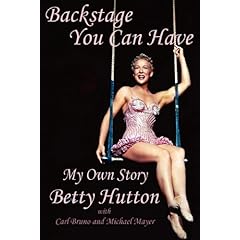
How I wish my friend Buff had lived to see Betty in revival! How Buff would have enjoyed seeing Betty's movies again on TCM, seeing her incredibly moving interview with Osborne in 2000, and recently rebroadcast. And how Buffy would have thrilled to read Hutton's autobiography, posthumously published just this past year, Backstage You Can Have: My Own Story, finally written at the end of her life with the help of two remarkably good, gay friends and fans, Carl Bruno and Michael Mayer. I can't recommend the book enough to anyone who loved Betty Hutton, or thank her coauthors enough for seeing what must have been an almost impossible project through to publication. Clearly, it was a labor of love.

So now, as I write this, I'm thumbing through the wonderful pictures in the book, and listening to Betty's smiling Columbia recording of "Blue Skies," and remembering dear Betty Hutton, and my old friend Buff, and
delight.
Monday, August 17, 2009
Gypsy in My Soul
After my trip to the country, I admit, I was anxious to be back among books, new books and old, but that was not so high-minded an impulse as it may sound. Working in a bookstore affords me access not only to literature and scholarship and art, but to the entertaining, empty calories of junk. I will not here treat all the trash I've read in the past couple of weeks as if I was a reviewer -- no one pays me to write seriously about the books I read in an hour -- and neither will I waste this space recommending all the slipshod, wide-margined, celebrations of celebrity ego that passed guiltily through my hands in recent days, when I might have been reading Murdoch for Book Club. The kind of books I'm on about just now do not require or deserve any promotion in addition to the moneys already spent by their publishers on ads, television appearances, and the rest. Obviously, I found and read these things just wandering the Biography and True Crime aisles in the bookstore. I read them because I knew the names, admired the actors, remembered a headline, or was titillated by the subject. I read this kind of thing just as I read the magazines each week; not because I want or expect anything much from them, but because it is just good, mindless fun. If the reader is a fan of a particular actress, or wants the cozy chill of a senseless murder or two, such may be found without any assistance from me -- unless as a customer in the bookstore, where I will be obliged, and as happy to pass along the ephemeral as I am to sell the rest.The phrase, "guilty pleasures," comes here to mind, but what makes a pleasurable reading experience a sin -- for such is the origin of guilt -- is not to my mind sex, celebrity, or voyeuristic violence, but bad writing. Knowing a book to be bad, and reading it anyway, is and ought to be embarrassing. I am then disinclined to list the bad books I read, one after another, in just these few days. Better they should slip unrecorded, as they have already from my memory. Why should anyone have to have my thoughts on these things? Enough to admit I read a bunch, just as I watch "Big Brother," and "Wipe-Out," without suggesting that anyone else need go and do likewise.
I ask only that we all admit our own low amusements, that I might blush less at mine.

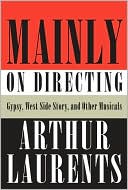
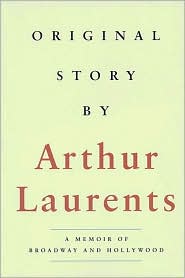
That said, there was a little book in the pile of quick pleasures that made more than a passing impression, because, as a musical theater queen, third class, I can recommend it to my fellows without shame. Such fun! (The classification system for musical theater queens, for any who might be wondering, is actually pretty simple. If one actually makes professional musical theater; singin', dancin', performing, producing, promoting, even if only on a cruise ship, or even if just washing out the jocks of bus-and-truck, road-company gypsies, that makes the maker a first class queen. If one could restock the Library of Congress with recordings from one's own collection of original cast recordings, or if you bought Ethel Merman's wig at a charity auction, and, horrified of the idea of anyone else's head ever sporting it again, thus potentially diluting the juju and or muddling the Merman DNA, instead keeping the ratty old red relic, tastefully lit, under glass, in your Merman Shrine, etc., that earns a 2nd class stripe. If you know all the words to "Gypsy," say, and have watched every version of "Rose's Turn" on Youtube, even the amateurs, and always cry a little, then we're sisters in musical theater steerage. Anyone other, and you're really just a fellow traveler, darling; welcome to come along to a revival or to the piano bar after, but not quite of the party. See? Simple.) What made this slim coda to his already published memoirs such fun, is that the writer, besides being a very good writer, and director, etc., is something of a sonofabitch. Not just any sonofabitch, either, but one of the great sonsofbitches in musical theater, or theatre, as he seems to prefer, history.
Arthur Laurents is old. With age has come not only wisdom, but further justification, beyond achievement and talent, for just not giving a shit about anything much but his art, the work, as theatre types call it, and the memory of his beloved partner of more than fifty years. (I was reminded of Thomas Carlyle's sanctification, after death, of old Jane. Don't know that Arthur was so difficult to love and live with, but it can't have been all quiet afternoons in the garden, either.) Old friends, famous actresses, composers, producers, none need now be spared a kind word unless, in the author's settled opinion, they've earned it. Besides the usual villains in theatrical memoirs, like David Merrick and Jerome Robbins, both here given their due as having been touched with genius, if also having been first class shits, the pair of 'em, there are lots of talented people in the author's life who, it seems, he doesn't nowadays feel the slightest hesitation in rating, professionally and personally, and many, many are found wanting either artistically or as people, or both. In one's nineties, it would appear, there simply isn't time for bullshit. Understandable. What then makes for such breathtaking fun in both his memoirs, Original Story by Arthur Laurents: a Memoir of Broadway and Hollywood, and now in the more modest, if that's the word, sequel, Mainly on Directing: Gypsy, West Side Story and Other Musicals, is Laurents' genuine insight into what does and does not contribute to a successful musical, and his attitude to life. That seems just the right word for it, as attitude is as much a part of Laurents' considerable charm, on the page, as his talent. His premise in this latest book, that musical theatre is something bred in the bones, something that can be neither taught nor learned, that this is something that, as the lyrics in his greatest show once put it, though actually in the words of Stephen Sondheim, "You either got it, or you've had it," would not really be a defensible position, in a book at least in part meant to be instructive, were this position occupied by any other than so enduring a master of the form as Arthur Laurents. If anyone has earned the right to be both right, and ruthlessly, unreservedly confident that he and often he alone is right, both brilliantly analytical, and frankly cranky, even a little crass, it's this guy. He isn't, necessarily, very nice, and he may not have much to contribute to the deeper meditations of art, but he knows what he's talking about, and he would seem to know more about what does and does not work in making a musical than almost any living soul. He certainly seems to think so. Who am I to disagree? I believed every word. In truth, he's a little scary, but in a very good way; he's dead serious about how to rehearse strippers, for instance, and that is just a blast to read, if you're into musical comedy strippers -- pardon me, musical theatre strippers, with back-stories, and good motivations, yet.
It is his very seriousness that makes him endearing. Arthur Laurents is an artist, and at ninety-whatever, he doesn't have a damned thing to prove. Doubt that? Check the man's credits. Unbelievably good stuff. If his theatrical vocabulary can't quite accommodate Samuel Beckett, so what? The man understands how to get the best out of Patti Lupone. That, my friends, is a rare gift. What's more, he can describe the process in such thrilling detail as to make yet another revival of "Gypsy" sound every bit as important as he seems to think it ought to be. I'm convinced. Working with him must be terribly exciting and rewarding, if, again, a little terrifying. Reading him less so, but only just.
That Arthur Laurents exists is, for a fan, a wonderful thing. That he's written another book, likewise. Bless 'im. Now I have to go get the bilingual cast album of "West Side Story." (It's important, trust me.)
Monday, May 4, 2009
Sunday at the Play with George
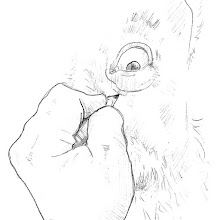
A. does not use his first name, which actually is George. I've always assumed that this was because it is also his father's name and, at least from the time his father and mother separated, when A. was all of nine years old, my husband has had little to do with his father. They still speak. Their adult relationship is cordial enough, but that is all it will ever be. From the time he was nine, A. assumed an adult's role in his family, in effect becoming something more than an older brother to his siblings, taking care of his mother until her death some years ago, maintaining the connections with his extended family even now as something like a patriarch, though he would find that term overstated. Yet I've seen the way not only his family but his friends tend to come to him, as they would to a respected elder, even before his hair was gray, even when he still had hair. When I met him he was still a young man, just thirty five, but then I was a kid and thirty five seemed a terribly substantial age to me then. If, as is often said of couples long together, we have come to be more alike, in age as in most other things, I can not help but still see him as the senior partner in our life together. He is a better man than me, kinder, more forgiving, gentler, but he is also stronger, far more practical, his character admirably settled and honest, his nature less intemperate, even placid. A friend once made a sketch of us that I'm sorry to say has since been lost. In the sketch, A. was a large bear and I was a buzzing bee, circling near his ear. In the drawing, as in our life together, he has resisted any urge to swat me away, however much I may have disturbed his meditations. I feel confident in saying he has even come to find my buzzing pleasant enough, or at least a natural part of the environment. But then, I've tried very hard to resist stinging, even unintentionally. And truth be told, I tend less to buzzing than I used to.A few years ago, we were amused to be asked to speak to a gathering of younger GLBTQ people about the success of our relationship. We were asked to describe our "strategies" for staying together; what we had in common, how we had "negotiated" our differences, etc. We agreed, or rather I agreed on our behalf, and A. consented, as I knew he would, but nothing ever came of it. I think the rather earnest lesbian who had asked us to speak was nonplussed when my response to her first question, "What's the secret of your relationship's longevity?" was "lethargy." Likewise she seemed genuinely distressed to learn that A. and I both found any attempt to winkle out our "secret" as hilarious as it was impertinent. Who the hell knows why we love each other? We do love each other, and that's enough, in fact,that's more than a little miraculous, considering.
He does not read what I read. We do not often like the same music. I could offer up endless lists of differences in taste. Imagine my delight and surprise then when, having informed my husband that I'd bought tickets with two dear friends to go see the revival of Sunday in the Park with George, A. told me he rather wanted to see that show himself. This simply does not happen, you understand. A. is not a musical theater sort. He generally subscribes to the notion that anytime people cease to behave naturally and instead decide to express themselves in song and dance, there must be something lacking in the storytelling. This despite the fact that in the privacy of our home, A. himself regularly breaks into song, though not usually of the Broadway kind, and has been known to almost daily shake, rattle and roll about the place, often as not holding the hem of his nightshirt like a Spanish gypsy, whatever the tune he's humming. I suspect he just finds this sort of thing unseemly in public. Still, to the 5th Avenue Theater with us he was this time determined to go.
And so, we all went. The production was rather spectacular, the show having benefited from the advances in technology over the decades since its original production, so that various elements of the story, once dependent on somewhat clumsy mechanical stage properties being made to glide and jitter on and off, now could be magically projected onto the set itself: drawings appearing and being erased, colors being "painted" before our eyes, the changes of scene achieved with light, color and composition, echoing perfectly the themes of the show, which is all about an artist and the act of creation, its mystery and its consequences. So now, a drape becomes a tree, a frame recreates a tableau from a famous painting, but the famous painting can now also be reproduced as part of the background, or, in perhaps the most dazzling small moment, a drawing of a dog can be made to not just appear on a blank pad, but the dog can be made to move as a dog. It was wonderful.
The notoriously difficult second act of the show, when the story moves forward in time from the 1880s of Georges Seurat and his magnificent painting, "A Sunday Afternoon on the Island of La Grande Jatte" to the 1980s -- the original "now" of the first production -- works considerably more smoothly than it ever did before, allowing the invented descendant of Seaurat, the second George in the show, to become an animated figure at his own opening, appearing in conversation all over the stage, simultaneously schmoozing here there and everywhere. If the art created by this Second Act George still suffers by comparison with the real masterpiece reproduced in the First, now at least, with the further passage of time, it seems quaint rather than just silly.
There is one song and bit of business in the first act that worked better with the inanimate cut-outs that used to populate the painting and the production. A soldier, however crudely animated, still seems too animated for the joke of a girl being stuck with him on a double-date to be as funny as it used to be when he was obviously inert and two dimensional. Otherwise, the whole show was quite wonderful.
Naturally, I and my regular theater pals all teared up at the finale, still my favorite Sondheim chorus. For this show, we were determined to sit down in the good seats with the middle classes, and so we all splurged on the highest priced tickets. It was well worth it, for once, not to be lost up in the Gods. And there was my own beloved A., on my left, genuinely enjoying himself, from all I could tell, though a little embarrassed I think when I had to repeatedly blow my honker during the curtain-calls.
Not long ago, A. even expressed an interest in the new documentary that follows the auditions for the revival of A Chorus Line. Imagine. Now I think it is fair to say I may have had at least a little influence on my partner, but I have no more explanation for this, than I had for his unexpected appreciation for the score of the Sondheim show. I'm afraid we would still confound earnest enquiries into the "secret" of us.
Just today, for instance, he spent a good part of the morning watching "Gun for Hire" on his new computer while I dozed in bed, reading the new novel by Ismail Kadare, with an endless loop of "The Golden Girls" running all the time. I'm just damned lucky, is what it is.
Tuesday, February 10, 2009
An Open Invitation

Years ago, when I worked off the sales floor doing publisher returns, I kept candy at my desk, whatever was on sale at Bartell's Drug Store, up the block. Coworkers would come by my desk, bringing me books to return, to chat, or because it was widely known that there was in fact, free candy at the Returns Desk. It might have seemed like pandering, because it was. "Would you like a piece of candy?" (-- "Hi there, stranger. Like me!" classic fat kid thinking. Works too.)
If more than one kind of sweet was on sale, there might even be more than one kind of candy on my desk. If, for example, both plain and peanut M&Ms were on sale, I might have one kind in the dish and the other, if no additional dish was available, just in an open bag. Once I came back to the desk to find a note attached to an open bag of peanut M&Ms. The note read:
"An open bag of M&Ms is an invitation to sin."
I kept that note posted on a cork board for many years. Words to live by, no?
Now I keep no candy at the Used Books Desk, at least not in a visible place. Too public. One doesn't need to make that many friends.
But, because the Buying Desk is right off the lobby, I look out every day at tables and tables of Bargain Books; publishers' clearance, remainders, reprints... for a bibliophile, this is very much the ethical equivalent of an open bag of M&Ms. I try very hard to ignore these books every day. I have, for example, made myself pass by all the lovely Lincoln hardcovers we've been getting in for the Bicentennial. I do not need to own another book about Lincoln, even at $7.98. My dears, it's dieting while working behind the dessert table at a smorgasbord.
But some things can not, and ought not be ignored. Ethan Mordden is a writer I've enjoyed since his serial stories appeared in the long-gone Christopher Street Magazine. He's marvelous. Ethan Mordden, you see, is Gay New York. That's right. All of it in one mustached fag. In addition to the "Buddies Stories" and his other fiction, for a decade or more, he's been producing a marvelous history of the American Musical Comedy, each volume deliciously reviewing a decade on the Broadway stage. Pure gay goodness. I bought and greedily gobbled each volume as they came out. But his last, The Happiest Corpse I've Ever Seen: The Last 25 Years of the Broadway Musical, was I understood the last. Then today I spotted, on the Bargain Table, marred only by an ugly black remainder mark of the top page-edge, All that Glittered: The Golden Age of Drama on Broadway 1919 - 1959. Not fair, I tell you, an eclair right there calling to my sugar-starved greed. I've been so good; reading serious fiction, quotable essays, The New York Review of Books, freaking Bronte, for heaven's sake, all to avoid writing about trivial nonsense on this blog. (--"Hi there, stranger. Like me!")
I broke. $6.98. I will not be rereading anymore of my Jeanette Winterson for the Seattle Gay & Lesbian Book Club tonight. Just dessert for me, thank you.
Labels:
Bargain Books,
Broadway,
Ethan Mordden,
Musicals
Subscribe to:
Posts (Atom)