Suddenly free from obligations, deadlines and the like, I find myself drifting tonight through my books, unmoored. Our houseguests are gone. A good time was had by all. I've made my presentation to the business conference I was so unexpectedly asked to address. I've already reread the novel for the next meeting of the Book Club. I am done, or nearly so, with the commission I was lucky enough to receive through the good offices of a good friend. Of that, I have only to wait and see if the editor is pleased. Not having written much to such a purpose in years, I've no idea if what I've written will do, but I have the satisfaction at least of being done with the writing of it. As to possibly rewriting, as I said, remains to be seen. Other than books yet to be read for the committee on which I sit, there is nothing I need do, nothing I need read now but what I will. It is not an easy thing.
So long as I am reading to some purpose, even if only to write a staff-recommendation card, or here, I can steal my pleasures as I find them; at lunch, before bed, in any guilty moment when I may have the mischievous joy of putting done the needed book to take up the useless. The trouble is, I have arranged my life in such a way that my responsibilities are few, my services seldom required after regular business hours. I owe almost nothing to anyone but friends and creditors. The former indulge and forgive me my neglect, for the most part, and the latter can be satisfied by most of my paycheck, every two weeks. My life then is all lazily arranged. I am, unhappily, content.
Rereading Hugo is less fun when there's nothing to keep me from enjoying it. I've kept two translations of
Les Misérables, the old and a new, on my nightstand for weeks, if not months, dipping into one then the other, excusing the indulgence as an appropriate diversion before bed. The title pops up. I joined the many millions recently in watching on Youtube an unlikely Scots lady conquering Britain with a song from the musical, and then turned to the death of Fantine so as to extend my happy blubbing for another hour. I caught a broadcast of Ryszard Bolesławski's film on Turner Classic Movies, and watched it straight through, again utterly fascinated by the astonishing portrayal of Inspector Javert by the great Charles Laughton. I then had to reread the death of Javert. Not long ago, I reread the whole first part of the book, after watching a documentary about a murdered nun, just to spend time again with the good Bishop -- still a character I find impossible and profoundly attractive. But tonight I might take up either of my Hugo translations and read at will, and yet I don't know that I have any desire to do so.
I have just read
Lord Arthur Savile's Crime, by Oscar Wilde, though that took no time at all. It is a wonderful story, of a murder predicted by a parlor trick, of Fate, and wit, and woe. We had a lovely little book, a selection of Wilde's longer short stories, come across the Used Desk last week. It was first issued, amazingly, very near the time of Oscar's fall and this handsome little book is the fifth impression, made in 1911, so suggesting his disgrace may not have undone him so completely as I'd always assumed, at least so far as his continued sales were concerned. The book was sadly cocked, so that the covers no longer aligned, but after carefully pressing pages, back to front, it was largely righted and again looks all but new. I dropped it into the bag I took with me for my presentation at a booksellers' conference on Saturday, thinking I might use it as an example of a book that has lasted. I never took it out of the bag, as it turned out. Finding it yesterday, I realized it had yet to be priced, to say nothing of being purchased by me. Knowing I would now want to keep it, I decided to read a little in it, guiltily noting the necessity of returning it to work tomorrow so that I might pay for my inadvertently stolen pleasure. See my theme coming back, just then?
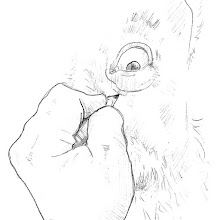
I suppose what's wanted tonight is some guidance, supernatural or otherwise, to set me off reading, if not what I should, then what I shouldn't. I rather wish Oscar's unassuming little palmist, or "cheiromantist," as Lady Windermere insists on calling him, Mr. Septimus R. Podgers, were here tonight to provide me with some direction, though I have absolutely no desire to learn of any future murders I might yet commit. He could keep all that to himself. But I do wonder what, if anything, my hand says I ought to read next?
I have an advance readers' copy of a new book,
Built of Books: How Reading Defined the Life of Oscar Wilde, by Thomas Wright. I've been taking that in snatches for a week or two and I've enjoyed it, but rather than read it straight through, as I thought I might earlier today, I've instead let it send me off looking at some of the various books referenced from Oscar's enviable library. And now, tonight, I find myself reading bits of Oscar's poetry, with no plan, mind, even of quoting any of it here. And then I came to this, an early poem in which Oscar, little more than a boy, memorializes the sister he lost, Isola, when she was only nine years old:
REQUIESCAT
by: Oscar Wilde
Tread lightly, she is near
Under the snow,
Speak gently, she can hear
The daisies grow.
All her bright golden hair
Tarnished with rust,
She that was young and fair
Fallen to dust.
Lily-like, white as snow,
She hardly knew
She was a woman, so
Sweetly she grew.
Coffin-board, heavy stone,
Lie on her breast,
I vex my heart alone,
She is at rest.
Peace, peace, she cannot hear
Lyre or sonnet,
All my life's buried here,
Heap earth upon it.
Now that is a lovely thing, isn't it? The last stanza, even with a "lyre" in it, is as good as anything he ever wrote, I think. But I find few other satisfactions in dear Oscar's poetry. Hitting on that sad little poem, and rereading a bit about it in Ellmann's biography, seems to have satisfied my curiosity so far as it went.
So, perhaps I'll be satisfied tonight with just rereading Oscar's
The Canterville Ghost, and not worry about what book I ought to take up, from the many I might. It seems enough for now that I read this little book I swiped from work, that being quite bad enough, and before I pay for it and spoil the fun. So at least my hand seems to tell me, as I find Oscar's book in it again as I close here.
 From Tell Me Story: An Anthology, by Charles Laughton