To kick off the second part of this post, I thought I'd just mention that not every book I'm recommending this Christmas season is something I didn't think I'd like. Despite what seems to be my now established reputation as a curmudgeon, most of the books I try to slip into customers' shopping baskets are titles I came to promote more directly. I have my enthusiasms, and not all of them are out of print. Honest. That said, here are five more that surprised me:

6)
Dog Stories, selected and edited by Diana Secker Tesdell. I am not the dog person in the bookstore where I work. In fact, there are probably as many canine enthusiasts in the bookstore as there are cat-fanciers. Then there are people like my beloved work-wife, Ms. T., who are just plain animal fanatics. Ms. T. lives with dogs, cats, and lord knows what else, besides her dear husband, Michael. I know for a fact that if she could, she'd have timber wolves living under her porch. Ms. T. just has a whole lot o' love for the furry folks. I grew up with animals, most of them meant to be working animals: barn-cats, hunting dogs, orphaned ponies and horses rescued by my father, a raccoon, and of course the chickens and pigs that were meant for their usual fate, but most of these ended up being pets. The pigs did eventually get to the freezer and the smokehouse, but my sentimental father, though a country boy born and raised, had to hire Amish to do the butchering when the time came. He couldn't even be on the place while it happened.
I liked having dogs and the rest around the homestead, until it was time to feed them, etc. I hated chores. I've never had a dog of my own, or any pet, since manumission from home. The husband and I don't have pets, or children. Instead, we have "nice things": books that don't smell like pee, unbroken crockery, bibelots, lazy Sunday mornings in bed, meals made just for two. I've always imagined, should I outlive my old man, I'd get me a bulldog; a nice affectionate, sedentary beast, with a healthy appetite, limited mobility and a proper appreciation for a warm, unmade bed, to remind me... (If I should predecease, I'm pretty sure he'd get a cat, with similar attributes; something fat, and orange, that preferred naps to wandering.)
Many of the dog people at the bookstore can not or will not read dog stories, for fear the dog might die. Me, I usually won't read them for fear the dog will talk like Garth Stein.
I am not then the perfect reader for animal stories. I've collected these handsome little short story anthologies from the
Everyman's Pocket Classics series since they started with a wonderful collection of
Christmas Stories. Still my favorite Holiday recommendation, at only fifteen bucks a book, these handsome volumes are a great gift. I've liked some volumes better than others, and the best to date have all been edited, as this latest one is, by Diana Secker Tesdell. She's got a gift for making anthologies, and that is rarer than one might think. I knew I'd buy the
Dog Stories, to keep the series complete, and maybe even browse it, because of the great editor, but I didn't think I'd ever read the whole thing. Well, I have. It's marvelous. Thurber, Penelope Lively, Wodehouse, Lethem; there is something surprising with almost every story. I loved the Kipling story, "Garm," so much, and the whole book, I'm thinking we need to have a reading at the store, come February or thereabouts, and invite folks to bring their dogs.

7) I'm old enough to remember something of what is now just history, not so old though that I have anything like a detached view of certain scoundrels, villains and blowhards that I remember only too well. So I still haven't the faintest idea what made me pick this book up off the pile of advance-readers-copies one day and take it with me to lunch. Never thought I'd end up reading another book about this particular president after Greg Mitchell's excellent, and infuriating,
Tricky Dick and the Pink Lady: Richard Nixon vs Helen Gahagan Douglas-Sexual Politics and the Red Scare, 1950. Time spent, even on the page, with our disgraced 37th, is time spent in very bad company indeed. Yet, once I'd started
Poisoning the Press: Richard Nixon, Jack Anderson, and the Rise of Washington's Scandal Culture, by Mark Feldstein, I couldn't stop. It is the portrait of Anderson; now perhaps largely a forgotten name, but once the journalist most hated, and feared, by Richard Milhous Nixon, that I think pulled me in. I remember Anderson well on television as an acidulous, middle-aged windbag in a good blazer and a loud tie, when I was a youth. Just another talking-head to ruin Sunday morning television, I probably thought at the time. Turns out, he was also a great, Pulitzer Prize winning investigative reporter, who broke, among others stories, the one about the CIA trying to kill Castro with an exploding cigar, J. Edgar Hoover's friends in the Mafia, and the Reagan era criminal folly that came to be remembered as the rather mildly named "Iran-Contra affair." Feldstein's book does both the reporter, and the politician, full justice, but it is in Anderson that he has found a fascinating, flinty character with which to strike fresh sparks from the stone-dead Nixon. Their's was a mighty blaze up, and Feldstein's book rekindles what must have been a fascinating contest between two powerful, pompous, deadly rivals. By the time I'd read of Nixon's plot to get Anderson discredited in a fake homosexual scandal, I simply had to read on to the end.
Then there is the author's acute analysis of just how this ugliness directly contributed to the pervading atmosphere in DC of mutual one-ups-manship that has defined, and undone, the relationship between the Presidency and the press ever since. Disheartening, but fascinating reading.
8) There are lots of writers I like best when they stick closest to home, mostly in nonfiction and poetry that doesn't require much in the way of invention and that may only need a walk out into the fields. I don't think of such writers as professional naturalists, as such, as I almost always get all too quickly bored by mountains, and sermons on mountains, to read much in the way of that sort of thing. I've found that the kind of writer-in-nature I like best, if not writing poetry, keeps the prose to a manageable length, to essays, in other words, as these take roughly the length of, say, a walk, rather than a hike. I'm a walker, when it comes to nature, not a hiker. There are few writers of this type that I've come to respect and enjoy better than Rick Bass. The man also writes fiction, often using similar settings and themes, and I've liked his shorter fiction that I've read just fine. A novel, even a short novel, for me though is an awful long time to spend out of doors.
But then comes a new novel, called
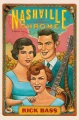
Nashville Chrome, by Rick Bass, and it defies my expectations of the writer, and of my usual interests, by being about something I would usually care to read about even less than chiggers, camping and stream-wading: namely, country music. Music is something that does not always play well in a novel, any kind of music. As a background, all kinds of music can work in all kinds of stories -- except rock & roll, which in my experience tends to be absolutely deadly in fiction -- but music and musicians at the center of a novel all too often can make even the best, most sophisticated novelist sound like a right fool at worst, or at best, a pedant. Anthony Burgess, a brilliant novelist, and no doubt a remarkable musical mind, could get his fictional invention and musical appreciation so tangled together, in a book like his near masterpiece,
Napoleon Symphony, as to make much of what he'd put in the novel all but unreadable to a musical lightweight like me. What's more, in that book, even a novelist as dazzlingly entertaining as Burgess, when too rhapsodically musical, can be, frankly, boring. I could never quite get that book, or at least, I felt myself made to feel that I hadn't. Now Bass has written a novel by no means so sophisticated or complex as Burgess's book, any more than the music Bass is writing about is as glorious as Beethoven, but in a way, that was all to the advantage of Rick Bass.
I like more country music as I get older and further away from the sound of it endlessly playing through my childhood. It is, after all, at least in the classic period when Bass sets his book, primarily a music about adult -- which is honestly to say mostly middle-aged and male -- concerns like fidelity, faith, and hard knocks. In the story of siblings Maxine, Bonnie, and Jim Ed Brown, their rise to country music, and even pop stardom, and their inevitable fall when popular music left them behind, the novelist has found a well neigh perfect vehicle to ruminate on America's rather shallow emotional and musical culture, on the failures of family, and records that spoke to and for people like, well, my people.
This new novel by Bass, I would never have read, had it not been required of me, but I am damned glad I did. Made me listen to the Carter Family, and George Jones singing, "He Stopped Loving Her Today," and it made me homesick.
9) Were I to have to pick the one popular genre in contemporary publishing of which entirely too much is now being made, both critically and by folks I respect who happen to be, for the most part, considerably younger than myself, I would have to say that the so called "graphic novel" is the single most overrated artistic development of my lifetime. It isn't just all the rather wonderful old comic book junk that is being resurrected, which has been rather fun, and then written about with all the awe and piety of medieval monks fussing over nearly lost Aristotle, which is not. The rise of a new generation of very talented comix artists, most with a much more personal and self-consciously artful style, has rather ridiculously been treated as the next big thing in literature, and these sometimes quite gifted young ink spillers have been treated not just as interesting visual artists, which a small number of them actually are, but instead, they and their scenarists, have been widely proclaimed as important writers, which none of them -- not a blessed one of them -- are. Apples, my dear, and oranges. I would not be so riled by this, if I did not see so many younger readers who are encouraged in conflating something like the appealingly facile, but actually quite banal writing and art in a book like
Blankets by Craig Thompson, with a novel like
Revolutionary Road, or, as I saw in a review, and even heard with genuine shock from a friend, that
Persepolis: The Story of a Childhood by Marjane Satrapi, was the equal as a finished work of art, of a novel like Koestler's
Darkness at Noon, or even Dostoevsky! That's like saying, charming as it is, that watching "Gerald McBoing Boing" again is as satisfying an experience for a literate adult as rereading
Huckleberry Finn. No. Graphic novels are "written," most of 'em, the same way a ballet is "written," and who can name me the scenarists of Swan Lake? What all this confusion of form actually does is teach a whole generation of readers that literature, and thence art, is anything, and what that means is that it is nothing much. An artist may make art from anything, or nothing, I suppose, but I can't, and neither can most people, and telling us that all art, good and bad, is indistinguishably equal robs each art of not only its uniqueness, but its value.
The idea then -- having ranted away again about this,
in a Christmas list, no less --that I would then go on to recommend
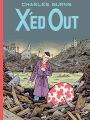
X'ed Out, by Charles Burns, might strike more than one reader as ridiculous. That's as may be. This guy is brilliant. If you've missed his earlier book,
Black Hole, you've missed an amazing experience. This new book, the first of what's meant, as I understand it, to be a trilogy, is every bit as complex, disturbing and exhilarating as was that. I won't begin to try to describe the plot, for want of a better word, in Burns' book. Forget that. What this man makes are gloriously realized nightmares, and like our own nightmares, for all that is unpleasant or ugly in them, there can also be a truly strange and moving beauty. His drawing and coloring style are both heavily influenced by earlier comic book artists, and full of sly and accomplished references to their work. Burns is not, however just someone who works in pastiche. The list of his possible influences would, I should think, run the very long way from Beardsey to Burroughs, with plenty of input from the pulp artists, possibly as obscure as Steve Ditko. I don't know and I don't much care. If anything, this new title is even more interesting than his last.
While I could hardly recommend giving a book by Burns to one's grandmother, unless one had a very special grandmother indeed, I do think anyone already expressing an interest in science fiction, new comix or graphics in general, really needs to see this guy's work. It is extraordinary. What's more, I feel sure that when most of what is now being ballyhooed as important in this field looks quaint and is left to just the fanboys and collectors, Charles Burns will still be important. He's that good.

10) And finally, to round out my own top ten of unlikely favorites, I must put in a word, not that it will need it this Christmas, for
Colonel Roosevelt, the concluding volume of Emund Morris' grand, three volume biography of TR. Morris, sadly, might still best be remembered by readers for his disastrous authorized biography of Ronald "Dutch" Reagan. That would be a damned shame. I can think of no other respected biographer and historian who dropped a bigger, noisier, or smellier stink bomb than that book. It wasn't just the invented voice of Reagan's imaginary friend, or the resulting scandal when this device was revealed, that made that such a terrible book. The biographer went, I think, a little mad, after the contracts were all signed, when he discovered after years of careful research that in Ronald Reagan, there was no there there. Lots of people could've told him that. They probably did. Maybe he thought there just had to be... something. Well, there wasn't, in the man or in the biography.
But before Morris took up with that empty suit, he was already hard at work on a masterful biography of one of the most interesting men to ever occupy the White House, Theodore Roosevelt. In two previous volumes, Morris has already traced the rise and the presidency of this fascinating character. Now, in his concluding volume, he writes of the last great burst and tragic extinguishing of that remarkable mind. I read both of the earlier books straight through -- a rare thing with me -- because they were just so full of incident, charm and wit. If in reading this last volume, I remain unconvinced of Roosevelt's greatness, it is no fault of Edmund Morris. It would be easy enough to argue that for every grand thing that TR did or said or wrote, he did almost as much or more that rather dims the shine, at least for a reader like me. The magic of Morris' biography, even in this last book, is that while one might feel a hectoring distrust of the author's conclusions, and of the President's intentions and effect, while reading at least, it is all too easy to just love TR. What a grand character!
I have no Republican heros much after Lincoln, and TR will never be my kind of guy, but I do enjoy him, and this biography. I'm not finished with it yet, but I know I will, and that I shall miss the man when I'm done. That must have as much or more to do with the skill with which Morris has written him, as it may with the very charismatic man himself.
And so, there's an end to this. I still plan to make a proper list of my favorite books this year, books not offered with so much equivocation perhaps, or with the need to state my reservations, or describe quite so clearly the limits of my taste, but for now, this will have to do. So, read these books! Trust me, it will be well worth the doing.