Showing posts with label Albert Camus. Show all posts
Tuesday, January 28, 2020
Daily Dose
From The Stranger, by Albert Camus, translated by Matthew Ward
FUMBLING
"Fumbling a little with my words and realizing how ridiculous I sounded, I blurted out that it was because of the sun. People laughed."
From Chapter 4
Labels:
Albert Camus,
Daily Dose,
French literature,
novelists,
Quotations
Sunday, October 6, 2019
Daily Dose
From Exile and the Kingdom, by Albert Camus, translated by Justin O'Brien
THE SCENT
"The scent of burning shavings began to fill the shop. Years, who was planing and fitting the staves cut our by Esposito, recognized the old scent and his heart relaxed somewhat. All were working in silence, but a warmth, a life was gradually beginning to reawaken in the shop. Through the broad windows a clean, fresh light began to fill the shed."
From The Silent Men
THE SCENT
"The scent of burning shavings began to fill the shop. Years, who was planing and fitting the staves cut our by Esposito, recognized the old scent and his heart relaxed somewhat. All were working in silence, but a warmth, a life was gradually beginning to reawaken in the shop. Through the broad windows a clean, fresh light began to fill the shed."
From The Silent Men
Labels:
Albert Camus,
Daily Dose,
French literature,
novelists,
Quotations,
short stories,
translations,
work
Friday, October 4, 2019
Thursday, July 13, 2017
Daily Dose
From Lyrical and Critical Essays, by Albert Camus, translated Ellen Conroy Kennedy
GIDE
"... people are indignant at such serenity."
From Encounters with Andre Gide
Labels:
Albert Camus,
Andre Gide,
criticism,
Daily Dose,
Essays,
Quotations,
translations
Saturday, March 4, 2017
Daily Dose
From The Stranger, by Albert Camus, translated by Matthew Ward
BUT
"But I was tired of repeating the same story over and over. It seemed as if I had never talked so much in my life."
From Part Two, Chapter One
Labels:
Albert Camus,
Daily Dose,
David Lynch,
Quotations,
talk,
translations
Monday, February 22, 2016
Daily Dose
From The Plague, by Albert Camus, translated by Stuart Gilbert
NOW
"Now, at least, the position was clear; this calamity was everybody's business."
From Part Three
Labels:
Albert Camus,
classics,
Donald Trump,
elections,
novelists,
politics,
Republicans,
The Plague,
translations
Thursday, January 14, 2016
Thursday, January 7, 2016
Thursday, December 31, 2015
Monday, August 24, 2015
Daily Dose
From The Plague, by Albert Camus, translated by Stuart Gilbert
PLETHORA
"Thw plethora of sibilants in the sentence still offended his ear, but he saw no way of amending them without using what were, to his mind, inferior synonyms."
From Part Two, page 129, this edition
Labels:
Albert Camus,
Daily Dose,
language,
Quotations,
The Plague,
translations
Friday, June 5, 2015
Daily Dose
From The Stranger, by Albert Camus, translated by Stuart Gilbert
JUST THEN
"Just then the street lamps came on, all together, and they made the stars that were beginning to glimmer in the night sky paler still. I felt my eyes getting tired, what with the lights and all the movement I'd been watching in the street. There were little pools of brightness under the lamps, and now and then a streetcar passed, lighting up a girl's hair, or a smile, or a silver bangle."
From Chapter II, page 29
JUST THEN
"Just then the street lamps came on, all together, and they made the stars that were beginning to glimmer in the night sky paler still. I felt my eyes getting tired, what with the lights and all the movement I'd been watching in the street. There were little pools of brightness under the lamps, and now and then a streetcar passed, lighting up a girl's hair, or a smile, or a silver bangle."
From Chapter II, page 29
Labels:
Albert Camus,
classics,
Daily Dose,
night,
novelists,
Quotations,
The Stranger
Tuesday, March 31, 2015
Tuesday, January 13, 2015
Daily Dose
From The Plague. by Albert Camus, translated by Stuart Gilbert
NO DOUBT
"He made no doubt that the ugly word 'fatalism' would be applied to what he said. Well, he would not boggle at the word, provided he was allowed to qualify it with the adjective 'active.'"
From Part Four
NO DOUBT
"He made no doubt that the ugly word 'fatalism' would be applied to what he said. Well, he would not boggle at the word, provided he was allowed to qualify it with the adjective 'active.'"
From Part Four
Labels:
Albert Camus,
Daily Dose,
novelists,
Quotations,
The Plague,
translations
Wednesday, October 1, 2014
Daily Dose
From The Plague, by Albert Camus, translated by Stuart Gilbert
THROUGHOUT
"Throughout September and October the town lay prostrate, at the mercy of the plague."
From Part IV
Labels:
Albert Camus,
Daily Dose,
novelists,
Quotations,
translations
Sunday, August 3, 2014
Daily Dose
From The Myth of Sisyphus and Other Essays, by Albert Camus, translated by Justin O'Brien
ABOVE ALL
"The Distinguishing mark of youth is perhaps a magnificent vocation for facile joys. But, above all, it is a haste to live that borders on waste."
From Summer in Algiers
Labels:
Albert Camus,
Daily Dose,
Essays,
novelists,
Quotations,
translations,
youth
Monday, March 31, 2014
Daily Dose
From A Life Worth Living: Albert Camus and the Quest for Meaning, by Robert Zaretsky
CAMUS
"Camus grasped far better than most of his contemporaries that Combat's slogan, 'From Resistance to Revolution' had inspired not just men and women living under the Nazi occupation, but also men and women living under French colonial rule."
From Chapter 3, Measure
CAMUS
"Camus grasped far better than most of his contemporaries that Combat's slogan, 'From Resistance to Revolution' had inspired not just men and women living under the Nazi occupation, but also men and women living under French colonial rule."
From Chapter 3, Measure
Labels:
Albert Camus,
biography,
colonialism,
criticism,
Daily Dose,
France,
New Books,
novelists,
Quotations,
Robert Zaretsky
Monday, August 26, 2013
Apology to the Reader, and M. Camus
I feel an idiot.
In the post I put up Friday, up until a minute ago or so, the following appeared:
"The penultimate word on the subject of the next used buyer, I leave then to Camus:
'Don't walk behind me; I may not lead. Don't walk in front of me; I may not follow. Just walk beside me and be my friend.'"
That, along with the title I took from it, I've just deleted.
Let me first apologize for any confusion this may cause, and for making a fuss about it now. Of the couple of dozen people likely to have read the thing, there's not likely to have been all that much notice taken of those lines. (Only takes one, though.) The piece as a whole is still there, still what I wrote, still something I wanted to say and said as best I could. I wanted people to read that post and, hopefully, appreciate it as a tribute to coworkers I love and will miss. That was it's purpose. Still is. Let it stand.
Rather than delete the post, I took out the two lines above and took Albert Camus' name out of the tags. Least I could do, because as it turns out, Camus probably never said or wrote anything of the kind.
I did something I don't usually do, used the Internet in a way I don't usually, and it bit me on the ass. I deserved that. I've posted hundreds of quotations here, day after day. Most have come from my own reading. I've found some of them on the Internet. I've learned to check those against the actual sources. The Internet is full, you know, of stuff from who knows where. I trust books. Stands to reason, doesn't it? Considering what I do for a living. I know, I know, I write for the Internet, don't I? Doesn't mean I trust it though. Best to check. This time I didn't.
The supposed Camus quote seemed to suit my purpose, to say something I wanted to better than I could -- rather the point of quotation generally -- and if it was perhaps uncharacteristically sentimental -- uncharacteristic of Camus I mean, not me -- then all the more reason I should have vetted it. I didn't. I meant to. Normally, before posting such a quote, say as a "Daily Dose," I would have done. I was feeling very sorry for myself when I wrote that piece, and yes, more than a little sentimental. I didn't check the quote.
When I'd posted a link to the piece on facebook, an old friend rather quickly called me out on the sentimentality of the quote, on what Darran Anderson, in the piece I've just read, quite rightly calls it's "triteness." Reminded me that I hadn't checked to find the source of the quote. Sinking feeling. I should have known better. I do know better. Should have checked. Wish now sorely that I had. Very embarrassing. Entirely my fault. (And thanks, dear G., for the heads up, sincerely.)
I've had hold of this problem from the other end before. More than once I've been suspicious of quotes appearing in social media and reposted by friends, one quote supposedly from George Orwell in particular that turned out to not be his, and one by John Adams about God that was completely distorted by having the context conveniently trimmed away. I've also encountered any number of misattributed or mangled quotes endlessly recycled through the online quotations and or "inspirational" sites. I've actually written here before, at some length, on just how unreliable such quotations can be, and the disservice they do the authors to whom they are attributed incorrectly.
And then I did just what I've railed against other people doing and used a quote I didn't know, from a writer I don't know well at all, and without checking to see where it came from.
Damn.
I don't usually edit my posts here after the fact. What I wrote stands as just what I've written at the time. No good going back to fix things. When I've gotten something wrong -- misread a poem in a video, mis-attributed a quote, mis-remembered an event -- unless there was some question of hurting someone else by letting it stand, I've simply apologized for my mistakes and left the evidence where it was found. In the four + years I've been doing this, I've taken down maybe half a dozen posts in all, none because I changed my mind. When I've changed my mind, then I write about that. I've addressed my mistakes, when brought to my attention, in the comments, and let it be. This blog is meant to be a record of my thoughts and opinions, my memories, reading and experience down to the day. No use trying to go back and tidy myself up. Better to just apologize and have done, mostly. The immediacy of thing is probably as near as it comes to having any lasting value beyond the day it's posted. I make no claims to any journalistic standard of objectivity. I try to be honest. I think I am. When I make an honest mistake then, I'm okay with that. I can be wrong here. People can see when and where I have been, can agree or disagree with whatever it was I wrote. I've corrected birthdays and that sort of thing, corrected my misquotations when I've caught them. I've added a modifier here and there when I sounded sure and wasn't. But really, I am not much interested in going back and correcting my own misperceptions or misstatements, or fixing anything beyond grammar and spelling as needed. That's my idea of how best to do this. This time, not so much.
My friend didn't exactly say I'd got it wrong, by the way. What he did do was suggest that the quote seemed likelier to be from some sentimental song than from Camus. He was right, about it not being Camus anyway. No idea where it actually comes from. I've tried hunting it down online, without success. Seems it is indeed one of those misquotations, one of those mistakes that gets perpetuated, well, by people like me, not checking.
So why not just quietly delete the lines and never say another word about it? Who would know, after all? Not like there are legal implications or a staff of fact-checkers to come after me. And who does it hurt, this sort of seemingly harmless bit of misinformation?
The answer to that, most obviously is me. It pains me to contribute, if only here to this self-perpetuating digital inaccuracy. If I say it's Camus when it wasn't, then I'm adding to the legitimacy of the whoever said it was Camus when it wasn't in the first place. It's not really even that first person saying it that is the problem so much as the fact that once it's been posted on the Internet, then it's somehow real. Do you see? I've no idea of the motivation of the person who said it first and claimed it was Albert Camus. May have been a perfectly honest mistake, back wherever that was. Might have been a bad paraphrase of an equally bad translation, for all I know. Once it made it's way, as it were, into the system, there's no one way to correct the mistake except to correct it when it's discovered, as here.
It matters, not just because I'm usually more fastidious about these things, and not only because even so small an audience as mine shouldn't be mislead simply because I was too lazy to check for a source, but because it matters, who said what.
There's a tendency nowadays -- call it a fashion -- for claiming the whole of literature, of culture as just so much stuff; socks in a laundry basket. Does it really matter whose sock it is, or was, does it? Like it, take it, pair it with another if you like. Wear them as your own.
I don't like it. I don't approve, because I don't accept the premise. I think it false, and dangerous to the whole enterprise of expression. I post things here to amuse and inform such of my friends, and the general public as may find their way here, by invitation or accident. Every one's welcome to whatever I've offered. But I do try, and really mean to emphasize that most of what I do here, even the very personal stuff, is directed at an audience in whom I may inspire some curiosity to seek out more than just the bits and bobs I post here. What I most want in doing what I do here is to invite others to read some of what I've read, to think about some of the things that preoccupy me: books, bookselling, reading aloud, literacy, television, movies, art. I don't approve of the suggestion that simply because this is mine that everything I do here is sufficient either to me or my readers. Simply because I write, and quote from and write primarily about other people's art, doesn't make it mine. I think that that is a frivolous argument, made by second-rate intellectuals, and tired academics, usually in an attempt to elevate what they do with other people's art rather than make it themselves.
Yet, in an admittedly minor and thoroughly modern way, I do this too. I use pictures, pictures from the Internet, without attribution. I post quotes, some of them from books very much in print, by authors still very much alive. I try, with the latter, to always include where they've come from. With the pictures, I try to use what isn't proprietary; I avoid anything that looks to be some one's artistic property, anything that someone intends to earn a living from, anything my use of which will infringe on either the rights or expression of anyone else. (I've only been challenged about two pictures -- a logo, interestingly enough -- and a photograph of an insect that evidently came from a museum's private collection. Soon as I was notified, I immediately took them down.) I've tried, always to be respectful of other people's stuff. I've tried not to be dishonest.
That wasn't exactly what happened this time. This time I was just lazy, and emotional and feeling sentimental and in need of -- I thought -- an admittedly sentimental quote. Turns out, I was wrong on all points. The piece I wrote now seems fine without it. Camus never said it. I was wrong to use it without making sure it was real. Wrong, wrong, and wrong again.
A whole generation may well be coming up now for whom all of this business of who said what where is not terribly important. Somebody said it. There it is, all over the Internet, with this guy, Camus's name attached to it. What's the big deal if he said it or not? I don't believe that for a minute. I don't believe that it doesn't matter and I don't believe that it won't continue to matter just because technology now allows, even encourages us to perpetuate our mistakes, honest or otherwise. And I don't believe in this invented young person, this abstract consumer of digital information without the faculties or the decency to care who made the words they read or the things they look at. Setting aside any academic standards that may still require accuracy and honesty in attribution, I still believe that the primary function of quotation, for example isn't just to lend legitimacy to one's argument, but to suggest better ideas, further reading, new readers to old books. Doesn't mean of course that I can't be just as stupid as the next fellow.
Having embarrassed myself already in this way, why compound the embarrassment here, by blathering on about it now? Because it matters more to me, getting Albert Camus right, than it does admitting I was wrong. As I've said already, I'm not even all that familiar with, and certainly not specially fond of the writing of Albert Camus. Doesn't mean I don't owe him an apology.
So why not just quietly delete the lines and never say another word about it? Who would know, after all? Not like there are legal implications or a staff of fact-checkers to come after me. And who does it hurt, this sort of seemingly harmless bit of misinformation?
The answer to that, most obviously is me. It pains me to contribute, if only here to this self-perpetuating digital inaccuracy. If I say it's Camus when it wasn't, then I'm adding to the legitimacy of the whoever said it was Camus when it wasn't in the first place. It's not really even that first person saying it that is the problem so much as the fact that once it's been posted on the Internet, then it's somehow real. Do you see? I've no idea of the motivation of the person who said it first and claimed it was Albert Camus. May have been a perfectly honest mistake, back wherever that was. Might have been a bad paraphrase of an equally bad translation, for all I know. Once it made it's way, as it were, into the system, there's no one way to correct the mistake except to correct it when it's discovered, as here.
It matters, not just because I'm usually more fastidious about these things, and not only because even so small an audience as mine shouldn't be mislead simply because I was too lazy to check for a source, but because it matters, who said what.
There's a tendency nowadays -- call it a fashion -- for claiming the whole of literature, of culture as just so much stuff; socks in a laundry basket. Does it really matter whose sock it is, or was, does it? Like it, take it, pair it with another if you like. Wear them as your own.
I don't like it. I don't approve, because I don't accept the premise. I think it false, and dangerous to the whole enterprise of expression. I post things here to amuse and inform such of my friends, and the general public as may find their way here, by invitation or accident. Every one's welcome to whatever I've offered. But I do try, and really mean to emphasize that most of what I do here, even the very personal stuff, is directed at an audience in whom I may inspire some curiosity to seek out more than just the bits and bobs I post here. What I most want in doing what I do here is to invite others to read some of what I've read, to think about some of the things that preoccupy me: books, bookselling, reading aloud, literacy, television, movies, art. I don't approve of the suggestion that simply because this is mine that everything I do here is sufficient either to me or my readers. Simply because I write, and quote from and write primarily about other people's art, doesn't make it mine. I think that that is a frivolous argument, made by second-rate intellectuals, and tired academics, usually in an attempt to elevate what they do with other people's art rather than make it themselves.
Yet, in an admittedly minor and thoroughly modern way, I do this too. I use pictures, pictures from the Internet, without attribution. I post quotes, some of them from books very much in print, by authors still very much alive. I try, with the latter, to always include where they've come from. With the pictures, I try to use what isn't proprietary; I avoid anything that looks to be some one's artistic property, anything that someone intends to earn a living from, anything my use of which will infringe on either the rights or expression of anyone else. (I've only been challenged about two pictures -- a logo, interestingly enough -- and a photograph of an insect that evidently came from a museum's private collection. Soon as I was notified, I immediately took them down.) I've tried, always to be respectful of other people's stuff. I've tried not to be dishonest.
That wasn't exactly what happened this time. This time I was just lazy, and emotional and feeling sentimental and in need of -- I thought -- an admittedly sentimental quote. Turns out, I was wrong on all points. The piece I wrote now seems fine without it. Camus never said it. I was wrong to use it without making sure it was real. Wrong, wrong, and wrong again.
A whole generation may well be coming up now for whom all of this business of who said what where is not terribly important. Somebody said it. There it is, all over the Internet, with this guy, Camus's name attached to it. What's the big deal if he said it or not? I don't believe that for a minute. I don't believe that it doesn't matter and I don't believe that it won't continue to matter just because technology now allows, even encourages us to perpetuate our mistakes, honest or otherwise. And I don't believe in this invented young person, this abstract consumer of digital information without the faculties or the decency to care who made the words they read or the things they look at. Setting aside any academic standards that may still require accuracy and honesty in attribution, I still believe that the primary function of quotation, for example isn't just to lend legitimacy to one's argument, but to suggest better ideas, further reading, new readers to old books. Doesn't mean of course that I can't be just as stupid as the next fellow.
Having embarrassed myself already in this way, why compound the embarrassment here, by blathering on about it now? Because it matters more to me, getting Albert Camus right, than it does admitting I was wrong. As I've said already, I'm not even all that familiar with, and certainly not specially fond of the writing of Albert Camus. Doesn't mean I don't owe him an apology.
So, rather than just say "sorry," may I say, in my potentially bad, Internet-translated French, "Je suis désolé, M. Camus."
Hope that's right, at least.
Labels:
Albert Camus,
blogging,
Darran Anderson,
internet,
Quotations,
writing
Wednesday, July 3, 2013
Daily Dose
From The Myth of Sisyphus and Other Essays, by Albert Camus, translated by Justin O'Brien
BETWEEN
"Between history and the eternal I have chosen history because I like certanties."
From The Absurd Man, Conquest
BETWEEN
"Between history and the eternal I have chosen history because I like certanties."
From The Absurd Man, Conquest
Labels:
Albert Camus,
Daily Dose,
Essays,
history,
novelists,
Quotations,
translations
Thursday, February 21, 2013
Daily Dose
From The Stranger, by Albert Camus, translated by Stuart GilbertAS
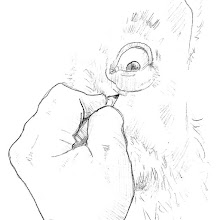
"As I usually do when I want to get rid of someone whose conversation bores me, I pretended to agree. At which, rather to my surprise, his face lit up."
From Part Two, Chapter One
Labels:
Albert Camus,
Daily Dose,
novelists,
Quotations,
The Stranger,
translations
Subscribe to:
Posts (Atom)


