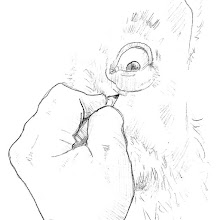
HERVE GUIBERT
Whose vanity compares
With Hervé Guibert's?
Yet, even today,
One can't look away.
HERVE GUIBERT From The Skeptical Romancer: Selected Travel Writing, by W. Somerset Maugham
 MARY RENAULT
 From Your Face Tomorrow: Fever and Spear, by Javier Marias
 CARMEN
 From Colomba, by Prosper Mérimée
 Everyone has an uncle who dances at weddings. He is well past his dancing days, and any sense of decorum after a drink or two, and yet not so ancient as to be thought "adorable" for attempting the Electric Slide while quite properly sidelined with a bum hip. No. This is that peripheral relation whose presence is little noted and or explained with tight smiles at most family functions, invited sadly as a matter of course, but about whom the bride and her intended know mostly only what they've heard, and of whom all but his otherwise nearest and dearest have heard little and remember less. An inoffensive person, naturally shy in any other circumstances, he has but the one fault really, other than his age. Often as not, the bar has been warned. As has the DJ, who however, forgetting who has paid him for the night and not really seeing the harm, after much research, strikes up the otherwise unremembered and distinctly unavuncular number specially requested. All is amazement, at first, as Uncle busts moves unseen in a generation. Sharp looks find their targets even in the haze of general confusion and amusement. Fraternal heads are hung in weary resignation to the inevitable, even as the dear man finds his feet and shows the youngsters "how it's done." Only then is he really remembered from high school, recognized by distant cousins, and made familiar to the rising age. As he gyrates inappropriately near the the other dancers, all becomes clear, including the dance-floor. The previously uninstructed young offer giggly imitations from the safety of the doorway of his unfamiliar if all too imitable steps and the toddlers are barely restrained from joining him. The waiters stop clearing to watch. Some dotty old party claps him arithmetically on. Surprise turns to smug disapproval among the matrons his own age when he pulls the least attractive and most loaded of the bridesmaids into his performance, and his masculine contemporaries can't help but admire, however grudgingly, his unexpected upper-body-strength when he lifts his giddy partner off the floor where she's fallen and almost above his head. To conclude this exhibition, the DJ, now much mortified and remembering the other half of his fee, will have sensibly and seamlessly transitioned into something irresistible to the general run of wedding guests, by Kool & The Gang, or Louis Prima if the crowd is older and Italian. Relief will bring even bride and groom and their footsore parents back to the floor. Anything to move things along. The bridesmaids move in quickly to rescue the stray, and hold her loose hair back as she loses more than her share of the wedding cake and all memory of her moment in the spotlight.
 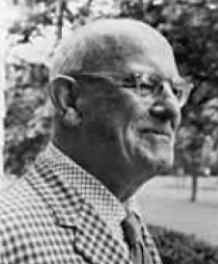 From Blandings Castle, by P. G. Wodehouse
 NAGUIB MAHFOUZ
 From The Master and Margarita, by Mikhail Bulgakov
 JOAN DIDION
 From Snow, by Orhan Pamuk
 From The Holly Tree, by Charles Dickens
 ROBERT MUSIL
 From Pascal's Pensées, by Blaise Pascal, translated by W. F. Trotter
 WILLIAM DEAN HOWELLS
 From Jane Eyre, by Charlotte Bronte
 ALICE B. TOKLAS
 From The Complete Poems of Rudyard Kipling
 From The Pleasure of Reading, Edited by Antonia Fraser
 From Magic Land of Toys, by Alberto Manguel
 When I went to Bellevue a year ago to read "A Christmas Memory" aloud, the weather was spectacularly awful: snow, and freezing rain, and everywhere ice -- worn smooth in patches on the roads and pitched up into stiles on the sidewalks. It was not a hospitable environment even to walk in. I wore dress shoes that night that might as well have been skates. Pacing behind the bookstore, I was sure no one would come. But they did. I read to just a dozen people that night, but they were an excellent audience; attentive, sentimental, amused, and brave to even have ventured out that night, and for so slight an entertainment! It was wonderful. When it was over, I went to my car and saw that a new storm had come up while I was reading. The streets were white with it. Crossing the floating bridge to come back to Seattle took an hour! Getting up the West Seattle bridge to come home was the most difficult driving I've ever done. I never took the car out of second gear. Cars were skidding down the rise, a truck was facing the wrong way, stuck against the rail. It was terrifying. When I finally made it to our street, I had to park at the bottom of it and walk up. I could never have made it into the garage.
  From The Wind in the Willows, by Kenneth Grahame
 From Bartleby in New York & Other Essays, by Elizabeth Hardwick
 JOHN CLARE
 From Our Hearts Were Young and Gay, by Cornelia Otis Skinner and Emily Kimbrough
 From Dickens' Christmas: A Victorian Celebration, by Simon Callow
 The reader completes a bit of awkward choreography.
 The reader in full flight.
 The reader, seated.
 Gingerbread et al. (All et.)
 From The Pickwick Papers, by Charles Dickens
 Tonight, we went to a Christmas party. It was our annual holiday celebration where I work. Last year, this party was held at my house, in the first serious snow storm of what proved to be an almost impossible winter for us: snow, ice, blocked streets, closed stores, missed work. By the end of last year's party, our guests had to scramble into their cars and race to their buses just to try to outrun the worst of the weather. Some of the younger people spent awhile on our sidewalk, tossing snowballs before they had to leave, but leave they all had to, and quickly, once the snow really started coming down. Still, I think it was a good party, before the blizzard. This year, at the home of a dear friend and coworker, things went better. Her house was delightfully decorated for the season, roomy enough to accommodate the crowd, while never feeling less than happily crowded: with friends and the families of friends, food of every description, and all of it delicious, drink, treats, music and merriment, -- and the weather was splendid. I even got in a bit of Christmas caterwauling with a few game and or tipsy souls, trapped with me, and a Christmas songbook, in the kitchen. We may not have completed a single carol, and I doubt I stayed on pitch for three notes together, but still, it was great fun, and reminded me at least that Christmas, indeed, is upon us. Dearest A. and I had a grand time! We retired from the festivities fairly early as I'd worked all day and still had readings to rehearse for Monday, and A. has a mathematics final exam for which he still needed to study. We couldn't have liked it more, but...
 From With My Trousers Rolled: Familiar Essays, by Joseph Epstein
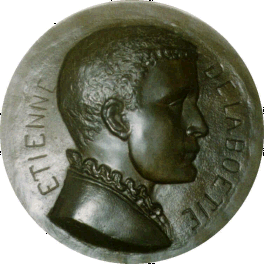 From Thirteen Worthies, by Llewelyn Powys
 There was an odd old woman in my home town, or at least, so she seemed always to me. Her name was Rosemary and she lived very much alone. She was a strange character; often ill with frankly one tedious complaint or another, not altogether in her right mind, inclined to wander. While she was what was called then, "a good soul," she had few friends. My Aunt Gladys was one, my mother another. Both had known her all their lives, and that counted. Both made a point, particularly at Christmas time, to see her, bring her some small gift, and she in turn always had something for each of them, usually cookies, or a fruitcake. To be honest, now she's well past knowing, we didn't eat what Rosemary made, though my mother always made a great fuss over whatever it was. Rosemary was not a very clean person. What she made was not always immediately recognizable, and never very appetizing. The thought then was very much considered what counted. While my grandmother was still alive, Rosemary would come to see her. Rosemary said very little. Mostly, they would sit. My mother and her sister remembered that, and it counted as well. Rosemary could be a bit of trial; her conversation, such of it as there was, did not always make perfect sense, and her person was usually as unappetizing as her cooking, but she meant well, or as my Grandmother would put it, after a visit, or when Rosemary brought her some useless oddment she'd found somewhere on her walk, "It's only a kindness she means by it."
  From Five Hundred Points of Good Husbandry, 1580, by Thomas Tusser
 From Sartor Resartus, by Thomas Carlyle
 Here then, a doodle of my good coworker, "St'rt" in response to his of me. And so "Doodle Fights" are peacefully resolved.
 Our first "guest doodler" here contributes a quick sketch of the Usedbuyer, as harmless representative from children's preschool television. Only too easy to see, frankly.
  From The Pickwick Papers, by Charles Dickens